


PIOJ Launches Preparation Process For Review Of SDG Goals
By: , December 10, 2021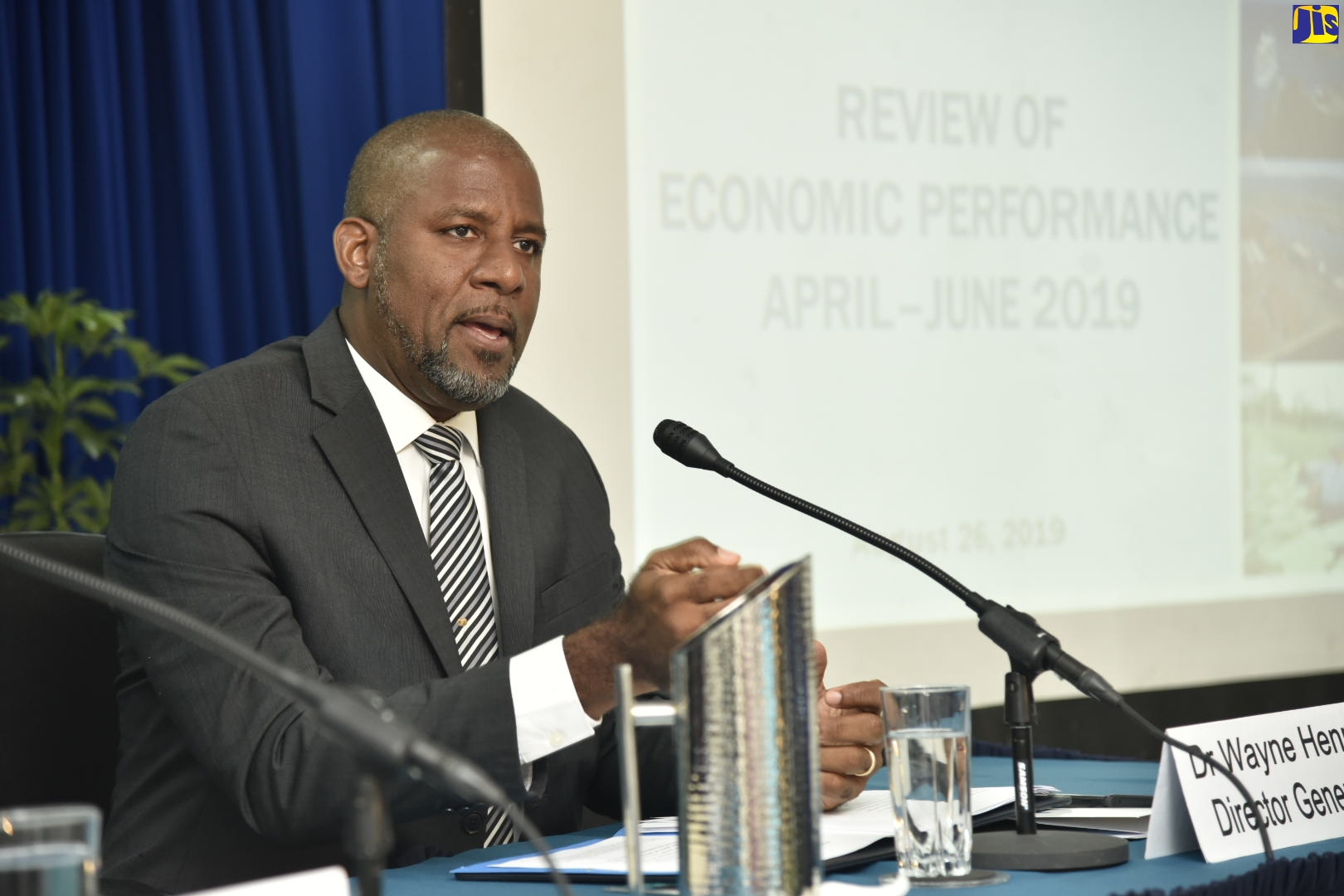
Photo: JIS File
Chairman of the Jamaica Social Investment Fund (JSIF), Dr. Wayne Henry.The Full Story
The Planning Institute of Jamaica (PIOJ) has launched the preparation process for the country’s second Voluntary National Review (VNR) on the Sustainable Development Goals (SDG).
The country is preparing to present its progress in achieving the United Nation’s SDGs, at the 2022 High Level Political Forum (HLPF) scheduled for July 2022.
Director General of the PIOJ, Dr. Wayne Henry, speaking at the launch held on December 9 at the entity’s head office in Kingston, said that the VNR is being conducted within the context of the impact of the coronavirus (COVID-19) pandemic, and will be guided by the theme of the HLPF: ‘Building Back Better From COVID-19 While Advancing the Full Implementation of the 2030 Agenda’.
Dr. Henry said the general focus of HLPF 2022, will be on the impact that COVID-19 has had on countries and their ability to meet the global targets, with specific emphasis on five goals.
These are: Goal Number 4: Quality Education; Goal Number 5: Gender Equality; Goal Number 14: Life Below Water; Goal Number 15: Life Above Land; and Goal Number 17: Partnerships.
“The VNR will include two thematic reports on strengthening the corporate social responsibility framework for the SDGs in Jamaica, and an assessment of local level alignment with the SDGs in acknowledgement of the role of private sector stakeholders and local actors in national development,” Dr. Henry indicated.
He noted that the first VNR process in 2018, bolstered by other local review processes, identified various needs including that of strengthening the framework of engagement and partnerships; localisation, alignment, and mainstreaming; monitoring and evaluation; and capacity building to effectively implement the SDGs and leave no one behind.
He pointed out that in recognition of these gaps, the second VNR will assess the level of alignment and mainstreaming of the SDGs at the local level, to inform a more
continuous and sustained programme of engagement.
“While challenges remain, we continue to prioritise monitoring the SDGs on an ongoing basis, producing a progress report and statistical report 2019/2020. Subsequent to the 2018 VNR process, the 2022 VNR will further interrogate these issues identified in these reports, to inform action and strengthen delivery to meet the 2030 commitments,” Dr. Henry indicated.
Meanwhile, Dr. Henry underscored Jamaica’s leadership in major global issues including SDG financing and environmental and social issues.
“Under the Paris Agreement, Jamaica revised its nationally determined contributions under the UN Framework Convention on Climate Change, setting more ambitious targets for reducing emissions by 2030 from 7.8 per cent to 10 per cent.
“We achieved target 14.5 of the SDGs set for 2020, having met the 10 per cent target of coverage of protected coastal and marine areas within the context of the COVID-19 pandemic, and challenges in development financing,” he noted.
The target is for conservation of at least 10 per cent of coastal and marine areas, consistent with national and international law and based on the best available scientific information.
In keeping with the recommendations of the 2017 roadmap for SDG implementation, Dr. Henry noted that innovative mechanisms are being developed to address the financing gap.
“Recovery and rebuilding require entities and networks to solidify their commitment to achieving the 2030 agenda and ensure that the gains of development are shared and felt by all Jamaicans. This Voluntary National Review process presents an opportunity for meaningful systematic evaluation of the country’s performance against its commitments and facilitating inclusive and direct discussions on the issues and pathways to achieve the 2030 commitments,” Dr. Henry said.
VNRs are a critical component of the monitoring framework for the SDGs, intended to track implementation of Agenda 2030.
They are robust, effective, participatory, transparent, and integrated tools, that promote accountability to citizens, foster exchanges of best practices across countries, and support mutual learning.