


JSLC to Capture Impact of Hurricane Melissa on Households
By: , September 25, 2026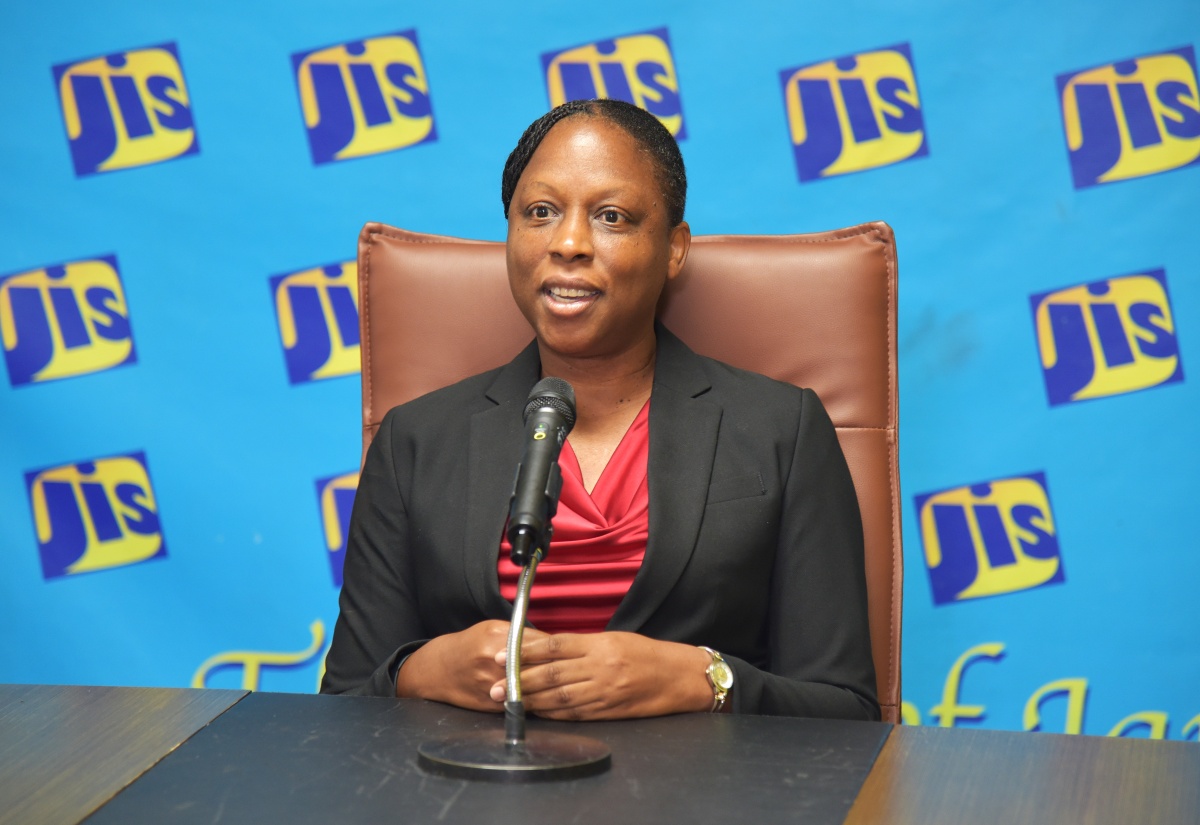
Photo: Mark Bell
Director of Policy Research in the Social Policy Planning and Research Division of the Planning Institute of Jamaica (PIOJ), Suzette Johnson.The Full Story
The 2026 Jamaica Survey of Living Conditions (JSLC) will capture the impact of Hurricane Melissa on households, including the extent to which the disaster disrupted education, affected health and livelihoods, and damaged homes and other infrastructure.
Director of Policy Research in the Social Policy Planning and Research Division at the Planning Institute of Jamaica (PIOJ), Suzette Johnson, says the data will also help to assess how households responded to the shock and the resources they received to support their recovery.
“The questionnaire is very comprehensive. It asks questions on a wide range of areas that affect the Jamaican household,” she says.
Speaking with JIS News, she explains that the survey will allow researchers to observe changes in indicators that can respond quickly to major shocks.
Using education as an example, she says the survey will determine whether Hurricane Melissa interrupted schooling and “the extent to which this happened and the adjustments that were made by the household and by the education facilities”.
The survey will also capture the impact on housing and infrastructure, including the damage sustained and measures taken by households to strengthen their resilience to future shocks.
Mrs. Johnson says the information on insurance coverage will be particularly useful, given its role as a safety net when households experience damage.
“We also are aware of the damage that occurred to infrastructure, to households, to the housing stock. Are households more responsive in building their own resilience to shocks that may occur in subsequent periods?” she notes.
Health is another area that will be examined, including whether the hurricane affected the health of household members and their ability to access services.
“The health condition of the population – how was that affected by the hurricane? Does it affect health-seeking behaviours? Are persons able to access the services that they would normally access even before the hurricane?” Mrs. Johnson says.
The survey will also examine the impact on livelihoods, including whether people were able to maintain their jobs during the storm, how they responded afterwards and whether their income was sufficient to meet expenses and support recovery.
Questions on assistance received from government and non-governmental organisations will further help to determine whether the resources available to households were adequate.
“Are these benefits or resources adequate to assist households in the recovery process?” Mrs. Johnson says.
She explains that the information collected will provide an indication of the resources households received, the condition of their housing following the hurricane and how those resources were used.
“We’re able to make inferences about how households manage that recovery process and things that we can do to better assist them in making it smoother for subsequent storms,” she says.
Mrs. Johnson says the survey’s sample is designed to provide representation across the island, ensuring that households affected by Hurricane Melissa are included.
“The sample is designed to have representation across the entire island. So, it will definitely include households that have been affected by the storm,” she says.
Acting Director of the Surveys Division at the Statistical Institute of Jamaica (STATIN), Nichole Allen, also gave a snapshot of the JSLC’s detailed questions on household conditions.

She explains that the interview begins with a roster capturing information on each member of the household, including name, age, sex, marital status and union status.
The survey then examines the physical conditions of the home through its housing and related expenses module.
“One of our most detailed modules is the housing and related expenses module. It has several parts to it,” Ms. Allen says. She explains that interviewers observe some aspects of the home, such as the materials used in its construction.
“So, what kind of material is used? What is used to make the roof? Things like that can be observed,” she says.
The survey also asks about access to kitchen and toilet facilities, as well as different water facilities.
Ms. Allen emphasises that these questions are asked of every participating household, regardless of socioeconomic status.
“Every single household that does the questionnaire, who participates in the JSLC, gets the same questions,” she says.
The survey also looks at changing household practices, including the use of renewable energy. “We also try to determine if people are using more renewable energy now than before,” Ms. Allen says.
Information collected through these and other areas of the JSLC will contribute to a clearer understanding of household conditions following Hurricane Melissa, while providing evidence to support planning and interventions aimed at strengthening recovery and resilience.
The JSLC is an annual household survey that provides important information on the social and economic well-being of Jamaicans. The survey is a joint exercise between STATIN and the PIOJ.