


JSIF Expanding Access to Safe, Legal Electricity Through Energy Poverty Reduction Project
By: , September 25, 2026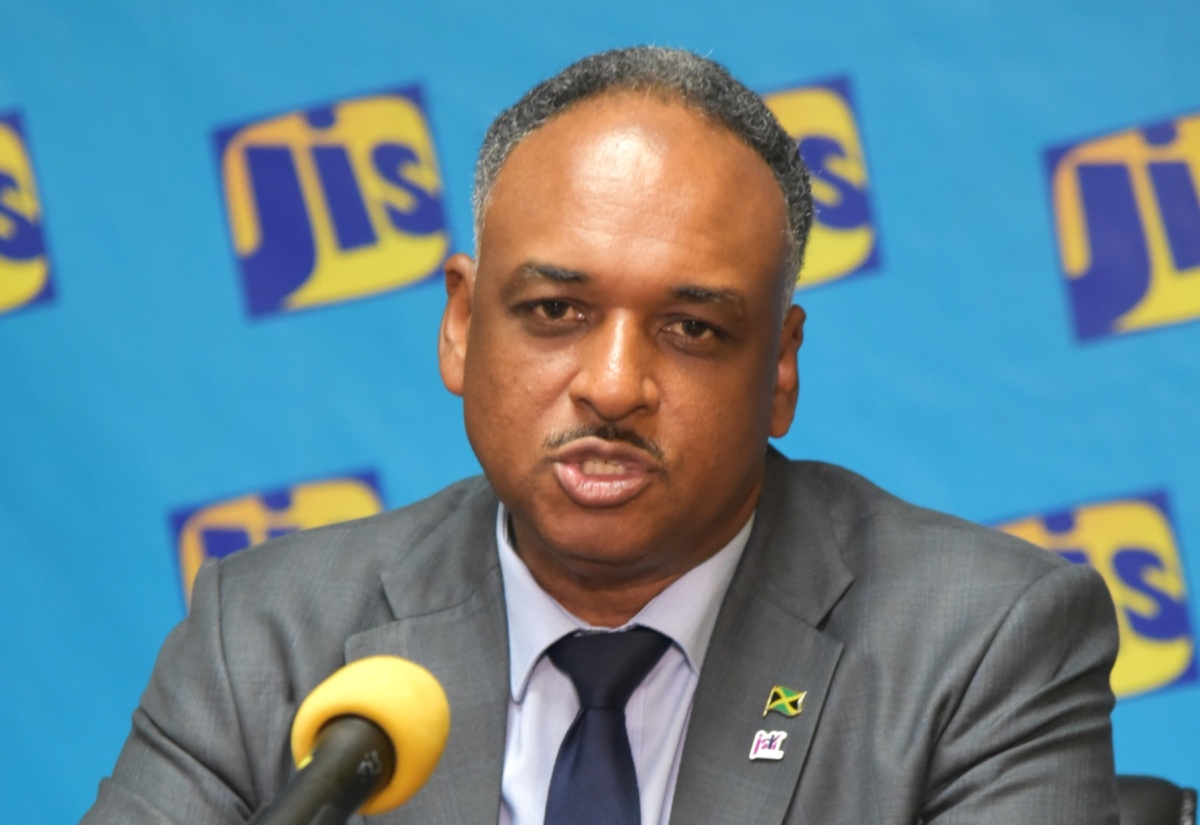
Photo: Mark Bell
Managing Director of the Jamaica Social Investment Fund (JSIF), Omar Sweeney, addresses a recent Jamaica Information (JIS) 'Think Tank'.The Full Story
The Jamaica Social Investment Fund (JSIF) is advancing efforts to provide residents in vulnerable communities with access to a safe and legal electricity supply through the ongoing National Energy Poverty Reduction Project (NEPRP).
The NEPRP builds on the work of JSIF’s legacy Community Electrification Project (CEP), which seeks to address the barriers faced by residents in obtaining regularised access to electricity.
JSIF Managing Director, Omar Sweeney, says a major barrier for residents identified under the NEPRP is the cost associated with connecting their homes to the formal electricity grid.
“A number of households within these vulnerable communities can’t afford the cost. We are looking at an average of between $150,000 and $180,000 to get a house wired, get it certified, and be in a position to come on board the grid,” he informs.
“The other barrier that we observe is… awareness. A number of these persons are unaware [of] how to become regularised [or] how to actually access the service. So what we have also done is break down that information barrier,” Mr. Sweeney adds.
Members of Parliament, Councillors, the Social Development Commission (SDC), and other stakeholders are being encouraged to contact JSIF whenever they identify a need for electrification within a community.
“A resident [can] call our offices… indicating that there is an issue. Once we receive that request, we have a data officer in-house [and] we collate that information,” Mr. Sweeny points out.
This allows JSIF to identify communities with the most critical electrification needs based on the information received, rather than responding to individual requests on a case-by-case basis.
Once a need is established, JSIF identifies a central location within the community and stages what Mr. Sweeney describes as a community fair in partnership with the Jamaica Public Service Company Limited (JPS), providing residents with an opportunity to register for electricity access.
“For example, in St. Thomas, we would have received a number of calls over time. We would have identified, now, that this is an area that has a serious need… and, based on the number of calls, we do what we call the community fair. We identify a central location within the community… we bring our partners, JPS, and we create an environment for residents to come out,” the Managing Director explains.
JSIF also coordinates with residents in the area and uses flyers, town criers and other available communication channels to publicise the event.
At the community fair, residents are required to bring their civil documents, identification and Taxpayer Registration Number (TRN).
JSIF and JPS representatives then assist them in completing a pre-contract for electricity service on the spot.
“Once that contract process has been executed with the resident, usually between four to six weeks afterwards, we have our implementation team go into the community,” Mr. Sweeney further outlines.
Community engagement continues throughout the implementation phase, with contractors being introduced to residents and employment opportunities being created for local electricians.
“In Portland, we recognise that community ownership is important, and community employment and engagement is very important in the process. As part of the implementation tool, while a contractor may bring five or 10 electricians from his team… a contractor usually, in most instances, takes on community electricians,” Mr. Sweeney notes.
Community electricians assist with wiring homes and benefit from knowledge transfer through their collaboration with established contractors.
“In addition to that, we also try to broaden the employment pool… especially among [women]; we normally bring them on board as community liaisons. When a contractor is working, that person is employed on the project by us to show the contractors where the beneficiaries are,” the Managing Director points out.
Once homes have been wired, the Government Electrical Inspector (GEI) conducts inspections of the houses and electrical circuitry to ensure the installations meet the standards required for connection to the JPS network.
“Typically, from us going into a community to introduce the programme, engage the stakeholders, getting the homes wired [and] getting on board, you [are looking at] approximately a six to eight-week period, from [initial] engagement to execution,” Mr. Sweeney notes.
The NEPRP has facilitated the wiring of 2,200 homes, to date, with approximately 1,500 additional households targeted for connection during the remainder of the 2026/27 fiscal year.
Residents and communities wishing to participate in the programme may contact JSIF directly or engage their Member of Parliament, the SDC, or other community partners for assistance.
“Once you reach out to those partners, they have a channel to us. Once they’re able to enumerate that need, we assure residents we usually respond immediately. We go out, assess the situation, and establish an opportunity,” Mr. Sweeney informs.
JSIF has spearheaded interventions in 48 of Jamaica’s 63 constituencies.
For more information on the NEPRP, visit JSIF’s website at jsif.org.