



Warning Signs Being Erected Near Rivers and Streams in Westmoreland
By: , December 16, 2025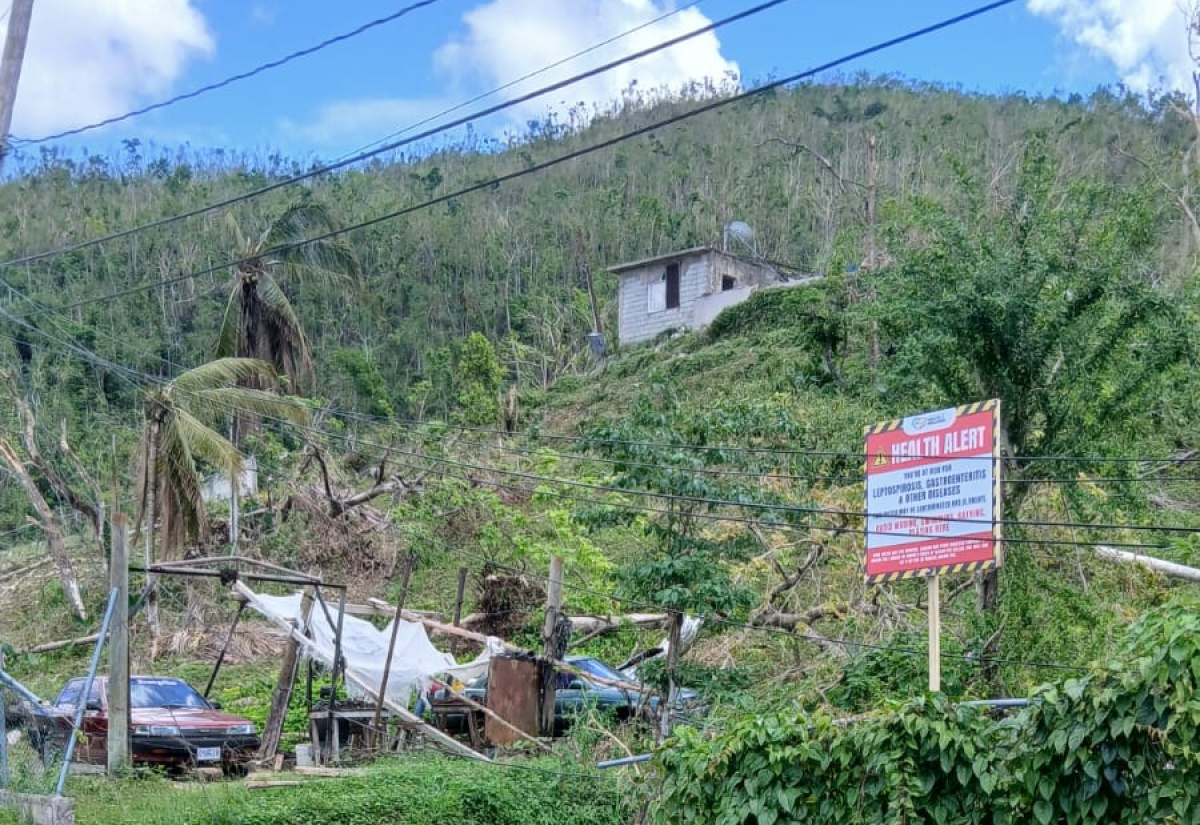
Photo: Contributed
A warning sign erected by the Westmoreland Public Health Department at a stream in the parish.The Full Story
Warning signs are being erected near rivers and streams across Westmoreland as part of an intensified public education drive by the Westmoreland Health Department to reduce the risk of leptospirosis and diarrhoeal diseases, particularly in the aftermath of Hurricane Melissa.
Health Promotion and Education Officer for Westmoreland, Gerald Miller, told JIS News that the signage targets popular water bodies where residents frequently gather, often unaware of the health risks associated with using untreated water.
“The decision has been taken for us to mount these signs with messages surrounding persons risking their health and well-being in using water from the streams and rivers that we deem to be unsafe,” Mr. Miller said.
He noted that the signs are being placed at locations where large numbers of people bathe or recreate in rivers, despite the potential presence of disease-causing organisms.
“We have decided to place these signs at some of the popular rendezvous that you would find a large number of people gathering, frolicking in the water, oblivious of the risk that is involved with regards to leptospirosis,” he said.
Mr. Miller said health teams have also been engaging residents in communities where rivers are being used for domestic purposes, due to ongoing water shortage.
“We are very much aware of the issue with shortage of water in many communities, which would have resulted in persons now turning to these unsafe sources to fetch water, some for bathing, for washing plates and some for washing their clothes,” he said.
While some residents indicated that they purchase bottled water for drinking, Mr. Miller cautioned that other forms of exposure still place individuals at risk.
“By bathing in this water and frolicking in this water, it is a risk factor for the transmission of leptospirosis, given the fact that the germ could be in the water and it could enter their skin,” he explained.
Mr. Miller also warned against the use of untreated river water for oral hygiene.
“As some of them indicated that they use it to brush teeth, the germ could get into their system via that route,” he said.
Mr. Miller appealed to residents to protect the warning signs and use the information provided to make informed decisions.
He further reminded residents who rely on trucked water to treat the water before use.
“For one litre of water we encourage them to use two drops of bleach… and allow it to stay for 30 minutes. If it is a gallon, it is eight drops of bleach and they would allow it to settle for at least 30 minutes,” he informed.
Mr. Miller underscored that adherence to these measures is critical to preventing avoidable illnesses and easing pressure on the health system.