

UNDP Supports Post-Hurricane Rebuilding Through Green Recovery Projects
By: , October 14, 2026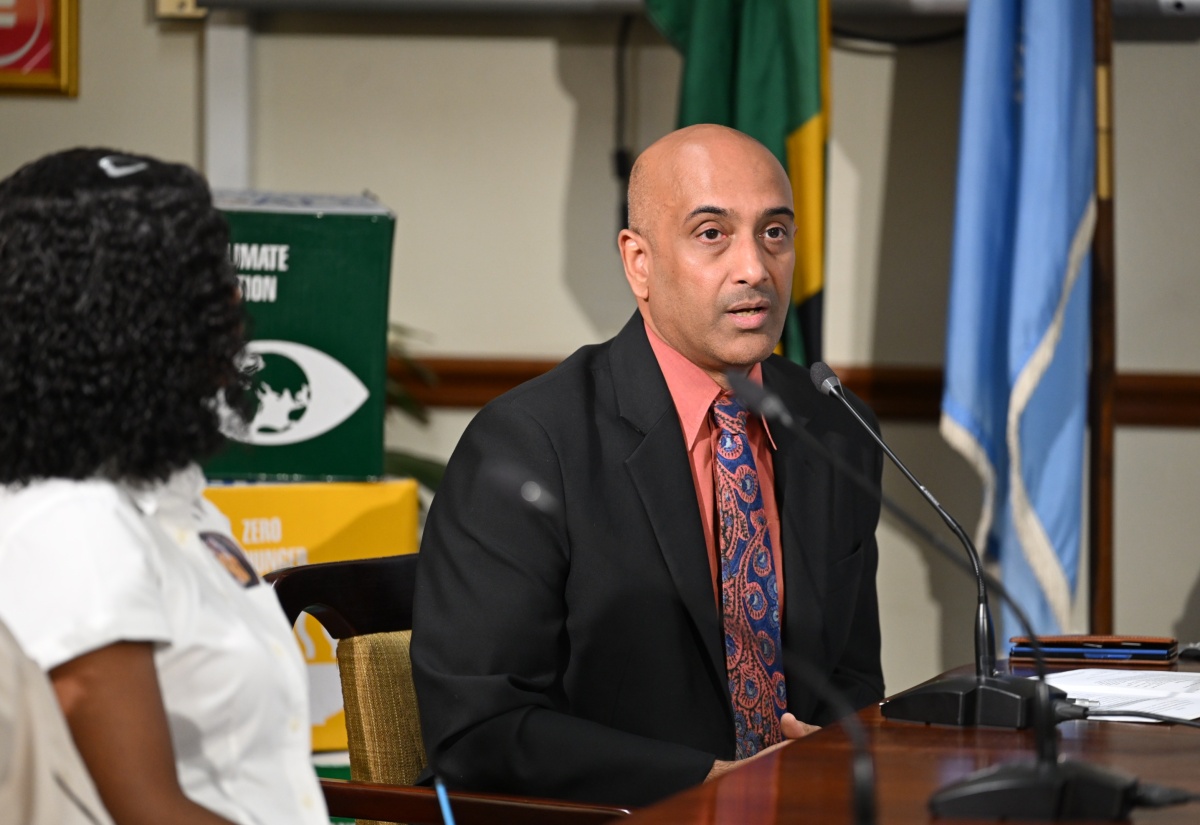
Photo: Adrian Walker
United Nations Development Programme (UNDP) Resident Representative at the Multi Country Office in Jamaica, Dr. Kishan Khoday, delivers remarks during the ‘Recovery to Resilience Round Table’ held on Tuesday (October 13) at the UNDP office in St. Andrew.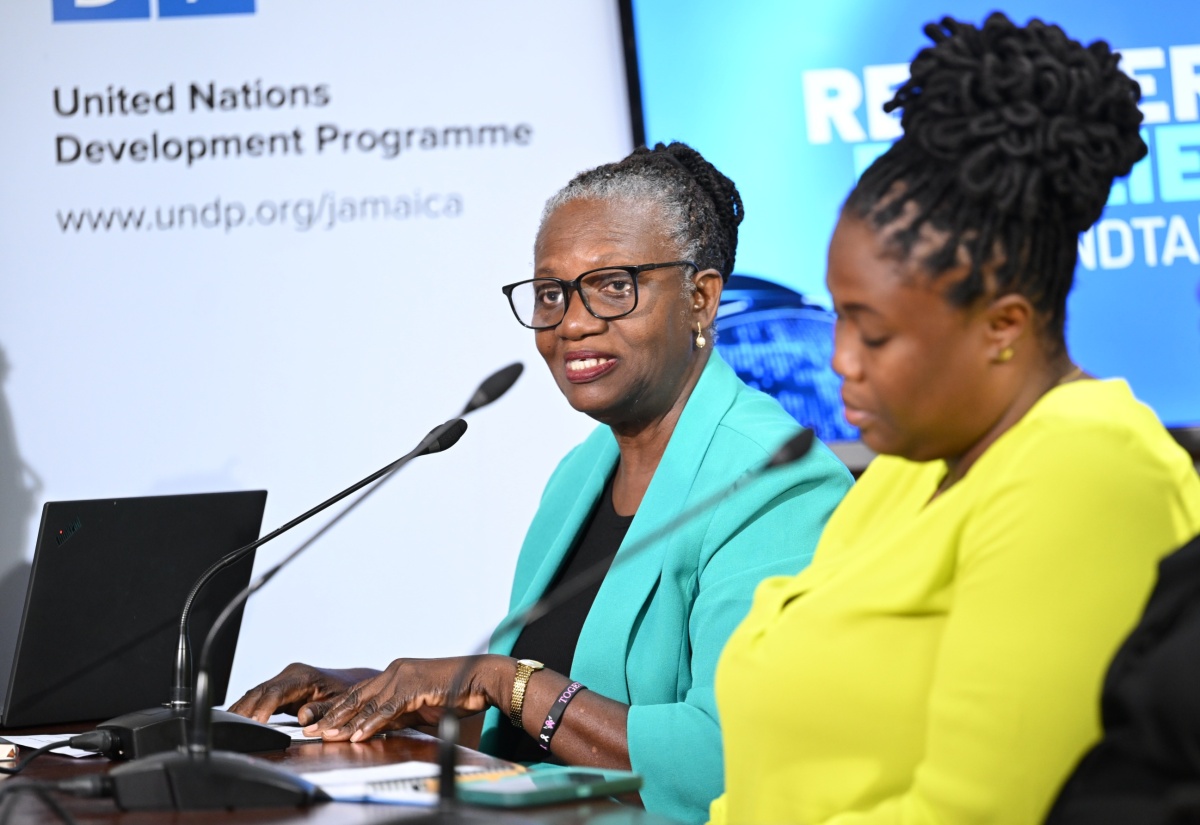
Photo: Adrian Walker
Deputy Director General for Sustainable Development and Social Planning at the Planning Institute of Jamaica (PIOJ), Claire Bernard (left), addresses the ‘Recovery to Resilience Round Table’ held on Tuesday (October 13) at the United Nations Development Programme (UNDP) office in St. Andrew. Listening is Moya Walker of the Jamaica Network of Rural Women Producers’ Happy Grove Cluster.The Full Story
Hurricane Melissa-impacted communities across the island will benefit from resilience building support as the United Nations Development Programme (UNDP) undertakes a new wave of medium-term projects focused on green recovery.
“Through initiatives supported by the Global Environment Facility and other global environment-themed funds, we will support national goals… restoring damaged ecosystems, forests, corals, scaling up access to decentralised solar solutions, addressing water insecurity and water systems that are still damaged from Melissa,” said UNDP Resident Representative at the Multi Country Office in Jamaica, Dr. Kishan Khoday.
He was speaking during the ‘Recovery to Resilience Round Table’ in commemoration of International Day for Disaster Risk Reduction, held on Tuesday (October 13) at the UNDP office in St. Andrew.
Under the theme ‘Resilience Starts At Home’, the event highlighted success stories from the front lines of Hurricane Melissa.
Providing details of the new UNDP initiatives, Dr. Khoday said they include a large-scale project in collaboration with the National Environment and Planning Agency (NEPA) on sustainable land use and forest management in western and central Jamaica.
“Also, a series of new projects on climate-resilient water systems with MWECC (Ministry of Water, Environment and Climate Change). These are initiatives that will bring that resilience to communities,” he indicated.
The UNDP Resident Representative noted that the projects will be undertaken with the support of partners such as Japan and India.
“This will bring forth also, the role of digital technology, climate-resilient infrastructure, scaled-up private-sector investments from countries around the world that are interested in boosting this green recovery element,” he pointed out.
Dr. Khoday further highlighted a new large-scale initiative on integrating climate resilience in the tourism sector, which will be launched in the coming months with public and private sector partners.
“New state-of-the-art laser-capable drones and digital forest management systems are coming up … together with the Forestry Department to inform forest recovery and protection plans,” he added.
Highlighting the UNDP’s hurricane recovery assistance over the past year, Dr. Khoday said that the focus has been on addressing immediate needs through the Jamaica Resilient Recovery Initiative (JARRI), with the support of partners such as the European Union, the Caribbean Development Facility, and Australia.
He said that JARRI, through an initiative led by residents in hard-hit communities, who are benefiting through a cash-forward programme, has cleared 2,000 tons of debris, providing relief to 20,000 citizens.
Under the initiative, solar energy hubs have been installed in fishing communities across affected parishes, ensuring that communities are empowered, and addressing needs like refrigeration to reduce fish spoilage to boost livelihoods and income.
Dr. Khoday informed that more than 125 small and medium enterprises have also benefited from a programme focused on resuscitating local commerce, livelihoods and access to goods and services.
Deputy Director General for Sustainable Development and Social Planning at the Planning Institute of Jamaica (PIOJ), Claire Bernard, in highlighting the devastating impact of Hurricane Melissa on lives and livelihoods, said the outcome could have been worse were it not for Jamaica’s history of building disaster risk reduction into every facet of life.
She said that the Hurricane Melissa Damage and Loss Assessment Report has pointed to the need to build forward better, with the Government setting up the National Reconstruction and Resilience Authority (NaRRA) to lead this drive.
“NaRRA, along with the resilience ecosystem of which it is a part, has to keep focus on improving governance systems, upgrading the risk information and early warning capacity of the country, facilitating institutional resilience… disaster risk financing and fiscal preparedness, and, of course, reinforcing the foundations of social and economic resilience at the national level,” she pointed out.
Ms. Bernard urged all stakeholders to embrace the need for resilience building, beginning in their homes and communities.