



Successful Reintegration of IRMs Vital Pillar of National Security – State Minister
By: , January 28, 2026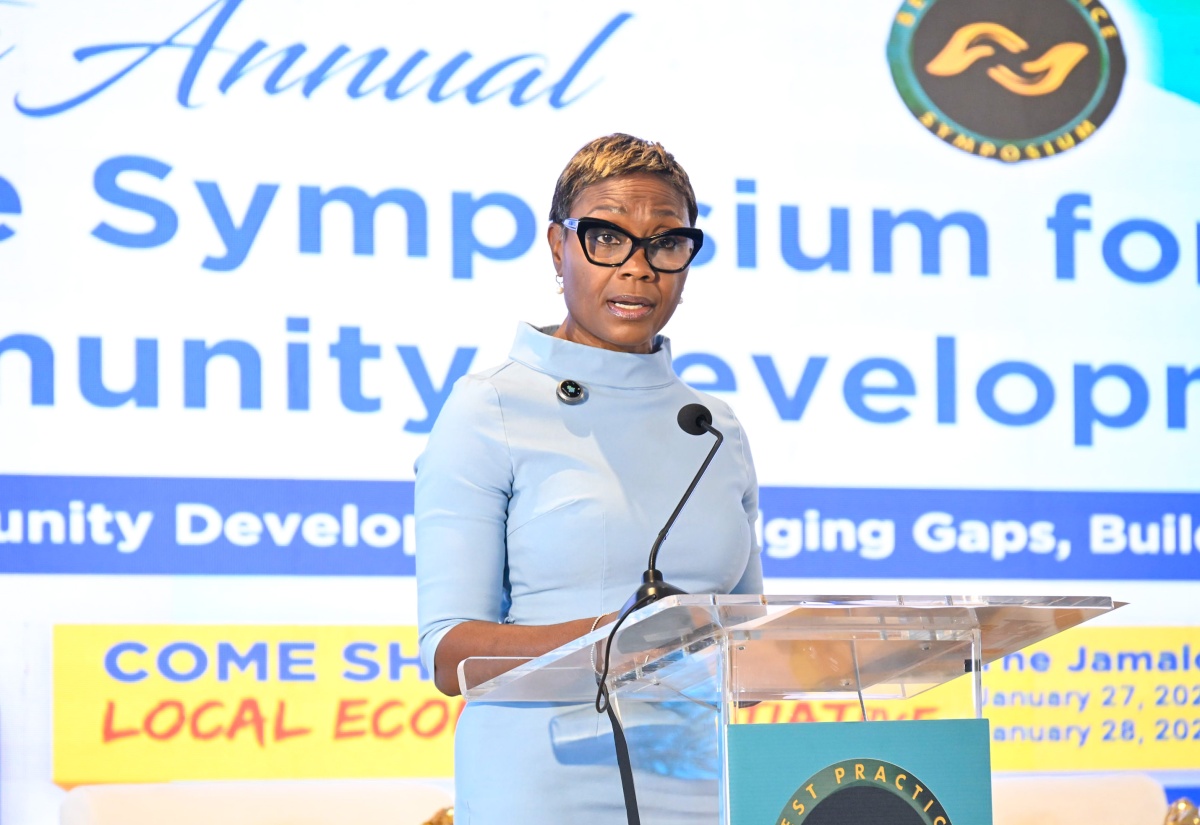
Photo: JIS File
Minister of State in the Ministry of National Security and Peace, Hon. Juliet Cuthbert Flynn, delivers remarks during the opening ceremony for 10th staging of the Planning Institute of Jamaica (PIOJ) National Symposium of Best Practices for Social and Community Development on Tuesday (January 27). The event is being held at The Jamaica Pegasus hotel in New Kingston.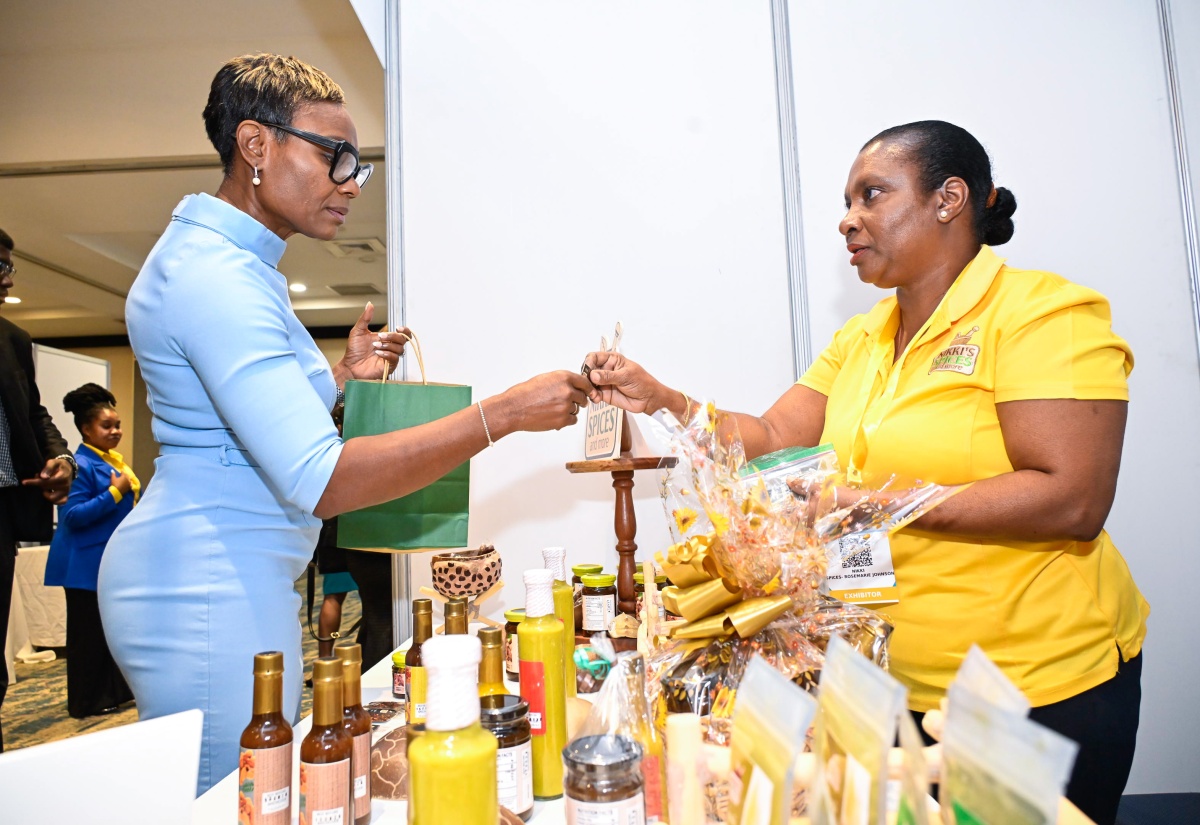
Photo: JIS File
Minister of State in the Ministry of National Security and Peace, Hon. Juliet Cuthbert Flynn (left), engages with Rosemarie Johnson of Nikki’s Spices and More, at the 10th staging of the Planning Institute of Jamaica (PIOJ) National Symposium of Best Practices for Social and Community Development on Tuesday (January 27). Ms. Johnson is one of several entrepreneurs displaying their products at the event, being held at The Jamaica Pegasus hotel in New Kingston.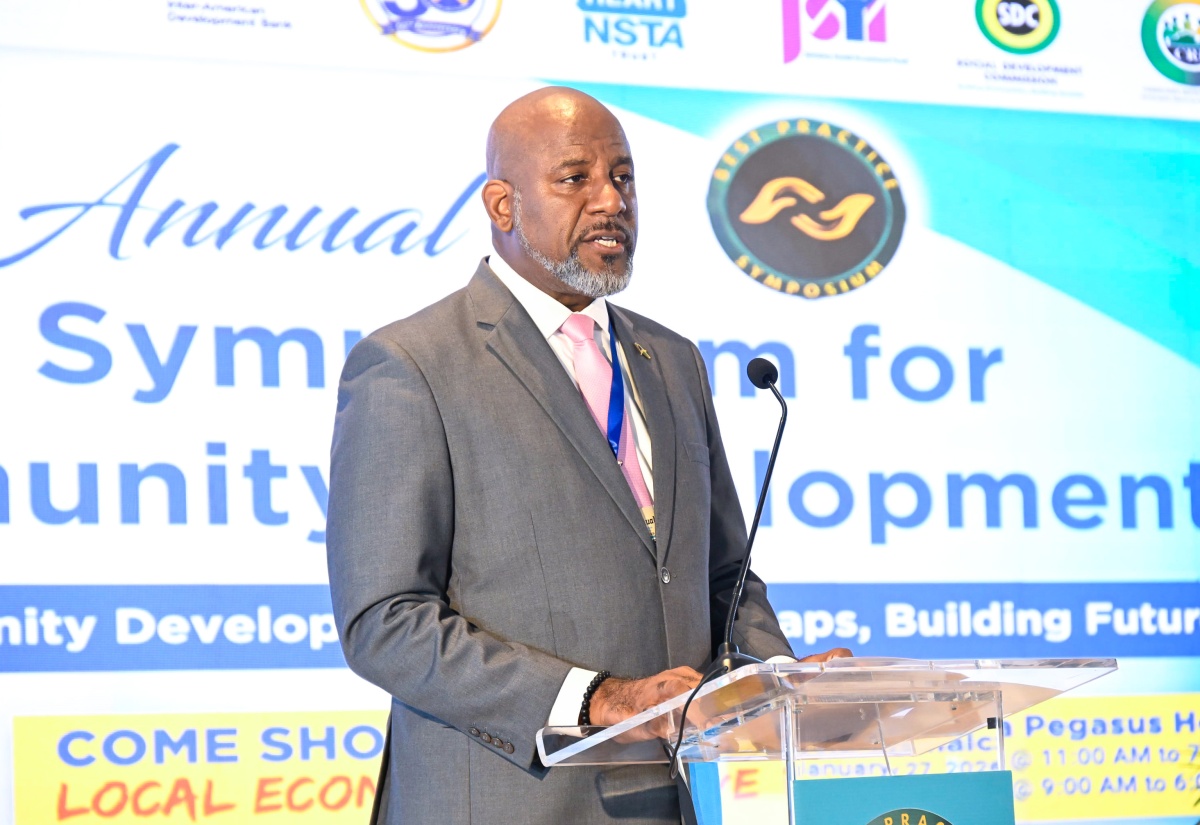
Photo: JIS File
Director General of the Planning Institute of Jamaica (PIOJ), Dr. Wayne Henry, welcomes attendees during the opening ceremony for the PIOJ’s10th staging of the National Symposium of Best Practices for Social and Community Development, on Tuesday (January 27). The event is being held at The Jamaica Pegasus hotel in New Kingston.The Full Story
Minister of State in the Ministry of National Security and Peace, Hon Juliet Cuthbert-Flynn, has underscored that successful reintegration of involuntarily returned migrants (IRMs) and persons formerly in conflict with the law is a vital pillar of national security and sustainable development.
She was speaking during the opening ceremony for the 10th staging of the Planning Institute of Jamaica (PIOJ) National Symposium of Best Practices for Social and Community Development, at The Jamaica Pegasus hotel in New Kingston.
The symposium, which is being held over two days under the theme ‘Reintegration for Sustainable Community Development: Bridging Gaps and Building Futures’, is focusing on best practices for the reintegration of IRMs and persons formerly in conflict with the law.
Highlighting the theme, Mrs. Cuthbert-Flynn affirmed the importance of reintegration from a governance perspective, emphasising that it is not a soft social issue but a national development imperative.
“When reintegration fails, communities fracture, but when reintegration succeeds, societies stabilise,” the State Minister said.
She pointed out that reintegration, whether of IRMs or people formerly in conflict with the law, was once treated as an afterthought; however, the Government has been advancing a different philosophy.
Mrs. Cuthbert-Flynn emphasised that the Ministry recognises that social development and national security are not competing goals; they are mutually reinforcing.
“Every person who is successfully reintegrated is one less person vulnerable to reoffending, marginalisation, or exploitation… and every community that embraces reintegration becomes stronger, becomes safer, and becomes more resilient,” she stated.
As it relates to IRMs, the State Minister noted that the Government has strengthened its systems for their reception, temporary accommodation, family reunification, and access to economic and social services.
“These were symbolic interventions. They were deliberate policy choices. A country that receives its returning nationals with only suspicion creates risk. A country that receives them in structure creates sustainability and opportunity,” Mrs. Cuthbert-Flynn affirmed.
She pointed to Cabinet’s 2025 approval of the Deportation Response Action as another example of Government’s commitment to supporting IRMs.
“This coordinated framework ensures that the returning nationals are not processed in isolation but are supported through reception protocols, security vetting where appropriate, community liaison mechanisms, and linkages to education, employment, and social support,” the State Minister outlined.
In reference to people formerly in conflict with the law, Mrs. Cuthbert-Flynn emphasised that through the Department of Correctional Services, rehabilitation begins at admission.
“Risk and needs assessment, personalised treatment plans, academic institutions, vocational training, psychosocial counselling, and structured aftercare are now embedded in our correctional model,” she stated.
The State Minister said the provision of these services ensures that individuals are not released into a social vacuum.
“We understand that rehabilitation without reintegration is unfinished work, and reintegration without community support is definitely a fragile process. This is why the Ministry has begun the implementation of the National Correctional Service Policy… that was tabled in the Parliament last year and was approved by the Cabinet in April 2025,” Mrs. Cuthbert-Flynn informed.
She outlined that the policy will focus on enhanced re-entry and aftercare support, enhanced probation services alongside new approaches to coordination, tracking, and institutional accountability.
“Every successful reintegration means fewer victims, fewer court cases, fewer cycles of incarceration, and stronger community trust,” the State Minister said.
Mrs. Cuthbert-Flynn added that successful reintegration is crime prevention in its most sustainable form but noted that government cannot do it alone.
As such, she issued a call to action to citizens, employers, and faith-based organisations, urging them to support IRMs and people formerly in conflict with the law.
“Reintegration is a social contract. It requires employers who are willing to offer second chances, communities that are willing to replace stigma with support, faith-based organisations and civil society organisations willing to walk alongside those rebuilding their lives, and citizens willing to recognise that inclusion is not charity but it’s an investment,” the State Minister stated.
In his remarks, PIOJ Director General, Dr. Wayne Henry, noted that IRMs and persons formerly in conflict with the law face overlapping challenges, including disruptive livelihoods, stigma, limited access to services, weakened social networks and communities not equipped to support their successful reintegration.
“When reintegration systems are weak or fragmented, the consequences ripple outward. They affect families, strain community cohesion, increase vulnerability, and in some cases, undermine public safety and the development outcomes,” he informed.
Dr. Henry pointed out that reintegration is, therefore, not only about the individual but also systems, institutions, and communities.
“It is closely linked to national priorities of crime and violence reduction, labour force participation, poverty alleviation, and social cohesion,” the PIOJ Director General affirmed.
He noted that the two-day symposium will examine evidence-based approaches to rehabilitation and reintegration and consider how policy and institutional frameworks can be improved to better support sustained outcomes.