

SRC Reviewing Strategic Direction
By: , September 16, 2026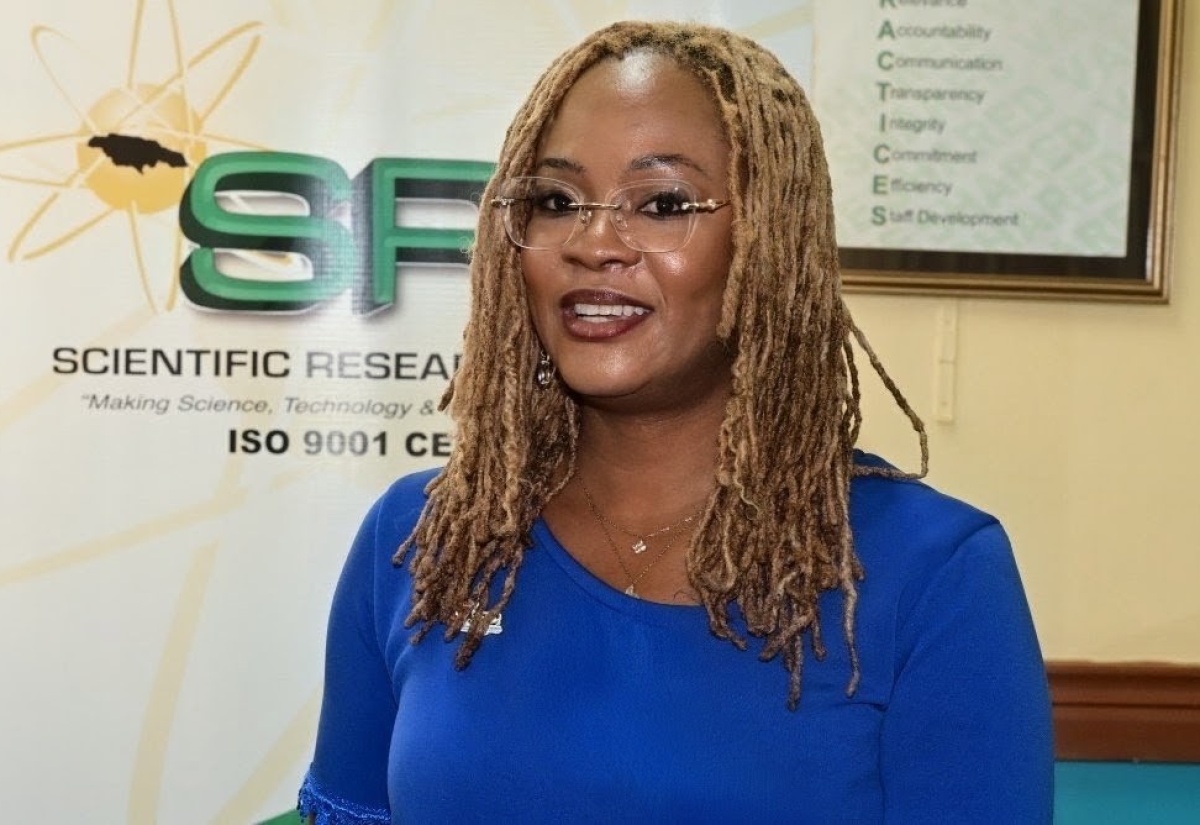
Photo: Michael Sloley
Executive Director of the Scientific Research Council (SRC), Dr. Charah Watson, addresses stakeholders ahead of a Ministerial tour of the SRC’s headquarters in St. Andrew, on Tuesday (September 15).
Photo: Michael Sloley
Minister without Portfolio with responsibility for Science, Technology and Special Projects, Dr. the Hon. Andrew Wheatley (right) and Executive Director of the Scientific Research Council (SRC), Dr. Charah Watson, engage in a discussion during a tour of the SRC’s headquarters, in St. Andrew, on Tuesday (September 15).The Full Story
Executive Director of the Scientific Research Council (SRC), Dr. Charah Watson, says the agency is reviewing its strategic direction.
“We are developing the strategic priority to lead us into the next three to five years. Our ambition is for the SRC to increasingly become the institution to which the Government, industry, and society turn when there’s a national challenge requiring a scientific or technological solution,” Dr. Watson said.
She was speaking ahead of a Ministerial tour of the SRC’s headquarters, in St. Andrew, on Tuesday (September 15).
The tour provided Minister without Portfolio with responsibility for Science, Technology and Special Projects, Dr. the Hon. Andrew Wheatley, with an update of the Council’s research, testing, production and incubation capabilities.
Dr. Watson noted that the SRC has served Jamaica for more than six decades, having been established under the SRC Act in 1960.
She said the agency is currently strengthening areas of research that can have broader national and industrial level impact, including biotechnology and plant improvement, environmental technologies, food security, and the application of emerging technologies.
The Executive Director emphasised that the SRC sees itself as the authority on science, on which the Government, the private sector, and other stakeholders in the innovation ecosystem can rely for credible, timely, and appropriate information.
She noted, further, that the agency is undertaking important initiatives, such as its school outreach programmes, teacher development activities and STEM ambassador programmes.
One such initiative includes the recently launched Nurturing Early Scientific Thinking (NEST) programme, which features the Curious Minds STEM activity kit and workbook for young learners.
“We are seeking to begin that process of building curiosity, experimentation, and problem-solving skills from the earliest stages of education,” Dr. Watson explained.
Meanwhile, the Executive Director noted that a review of the SRC Act is to be undertaken to ensure that it’s fit for purpose and remains relevant and important in Jamaica’s national development agenda.
“There are definitely components of it that are still relevant today. What we’re trying to do is to ensure that it is well aligned, not just for today, but for SRC 30, 40, 65 years from now,” Dr. Watson said.
She explained that the SRC, when it was formulated, had a responsibility to foster, coordinate and support scientific research while maintaining the application of science and technology to national development.
The Executive Director said while that mandate remains relevant today, the environment in which the agency operates has changed significantly.
“Science and technology are no longer peripheral to economic development. They are central to productivity, competitiveness, food and energy security, climate resilience, health, entrepreneurship and increasingly national sovereignty. The SRC therefore sees this role as one of translating science into solution and research into impact,” she detailed.