


RADA Takes Pop-Up Vet Clinic to Trelawny
By: , December 10, 2025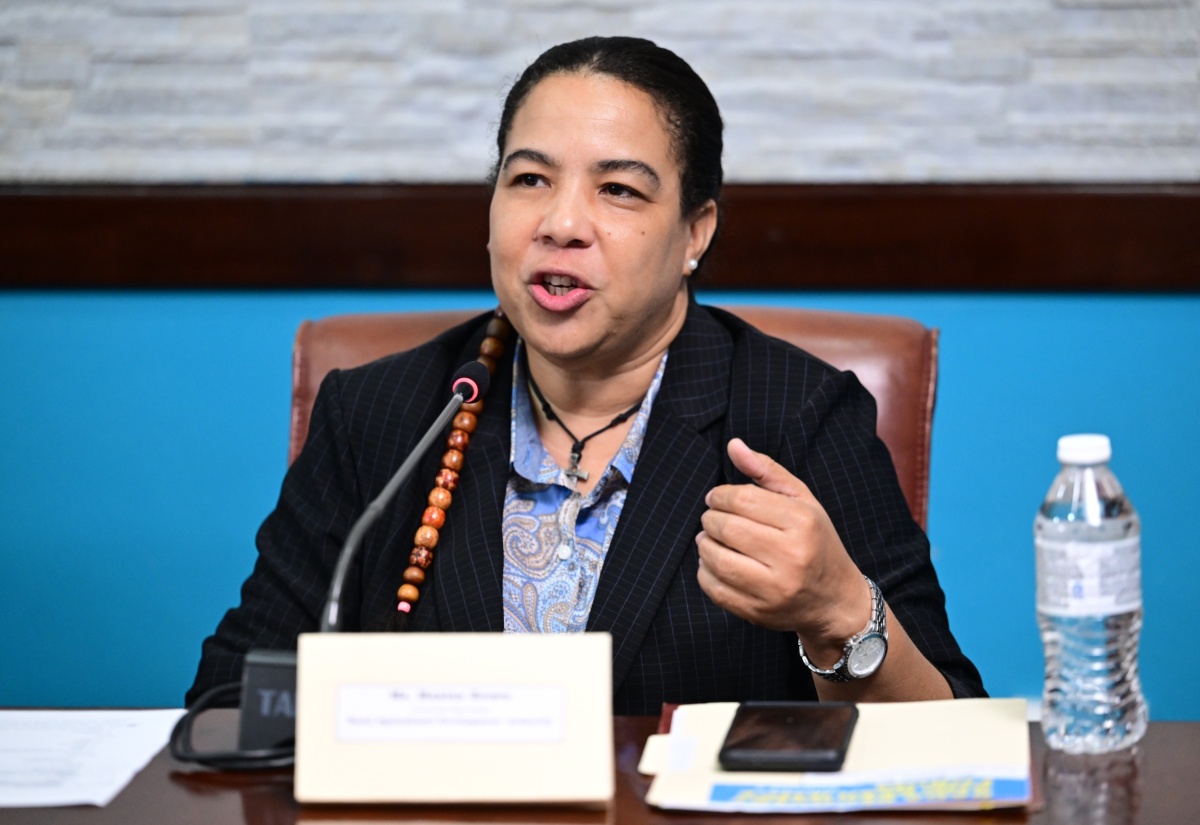
Photo: Adrian Walker
Livestock Specialist, Rural Agricultural Development Authority (RADA), Maxine Brown, speaking at the second RADA Recovery & Resilience Forum held on Monday (December 8) at the Ministry of Agriculture, Fisheries and Mining in Hope Gardens, St. Andrew.The Full Story
Livestock farmers and pet owners in Trelawny are being urged to take their animals to the next in the series of Rural Agricultural Development Authority (RADA) free pop-up veterinary clinics at the Hague Showground in Falmouth on December 10.
Teams from the Ministry of Agriculture, Fisheries and Mining’s Veterinary Services Division, Nutramix, and the Jamaica Society for the Prevention of Cruelty to Animals (JSPCA) will be on hand to provide free check-ups, treatments, and expert advice.
Livestock Specialist at RADA, Maxine Brown, said that part of the treatment is to provide stress relief for animals impacted by Hurricane Melissa.
“This is extremely critical – extremely important, because animals do suffer from stress as well as digestive issues that can occur because of the disruption in their diet,” she noted.
“All types of animals, any animal that you have, bring it. The vets will give you information or medication as needed,” she said.
Ms. Brown was speaking at the second RADA Recovery & Resilience Forum held on Monday (December 8) at the Ministry’s Hope Gardens offices in St. Andrew.
Ms. Brown noted that the series of pop-up livestock clinics, which are being held in parishes severely impacted by Hurricane Melissa, involve partnership with private-sector stakeholders such as Nutramix and Hi-Pro.
She said that events already held have been well attended.
“Let me tell you, we don’t only work with the livestock animals, but we treat companion animals as well,” she pointed out.
For persons who cannot take their animals to the pop-up clinics, Ms. Brown said they can still attend and speak with the vets on the ground.
“What they (vets) also do is travel out into neighbouring communities. So, if your farm is nearby, the vets will actually visit the farm to do wellness checks on your animals,” she pointed out.
Meanwhile, as farmers rebuild livestock houses after the hurricane, Ms. Brown said that focus must be placed on making the structures more resilient.
“We also recognise… in terms of infrastructure, that we need to build back stronger. So, before, we wouldn’t have had probably much concern about using hurricane straps and zinc nails. We speak a lot about elevating housing structures, but now that this has occurred, and we have seen the devastation that has taken place, we really need to take a serious look on the construction that we do for our livestock units,” she said.
Other areas for consideration are the disposal of the carcasses of deceased animals, many of which drowned, and cases of leptospirosis that may arise in animals.
“When you have this devastating loss, where you have thousands of broilers or thousands of cattle being killed during the hurricane, how do you go about properly disposing of the carcass? So, this is something that we are looking into and to see in the future, how we will be handling issues like these,” Ms. Brown said.
She noted that RADA is focused on the recovery of the livestock sector and is advanced in providing assistance to farmers.
She noted that chickens and feeds are now being distributed.
“We are also looking at providing infrastructure support and we have to do it in a structured way. We are making sure that when we are doing these interventions, we cannot, at this time, be giving chickens and feeds to persons who do not have the infrastructure in place or do not have the facilities,” she said.
She said that RADA will continue interventions in December and January for persons who have not yet received assistance.