


Pilot Launched to Pay Fees to Board Directors in Selected Schools
By: , October 27, 2026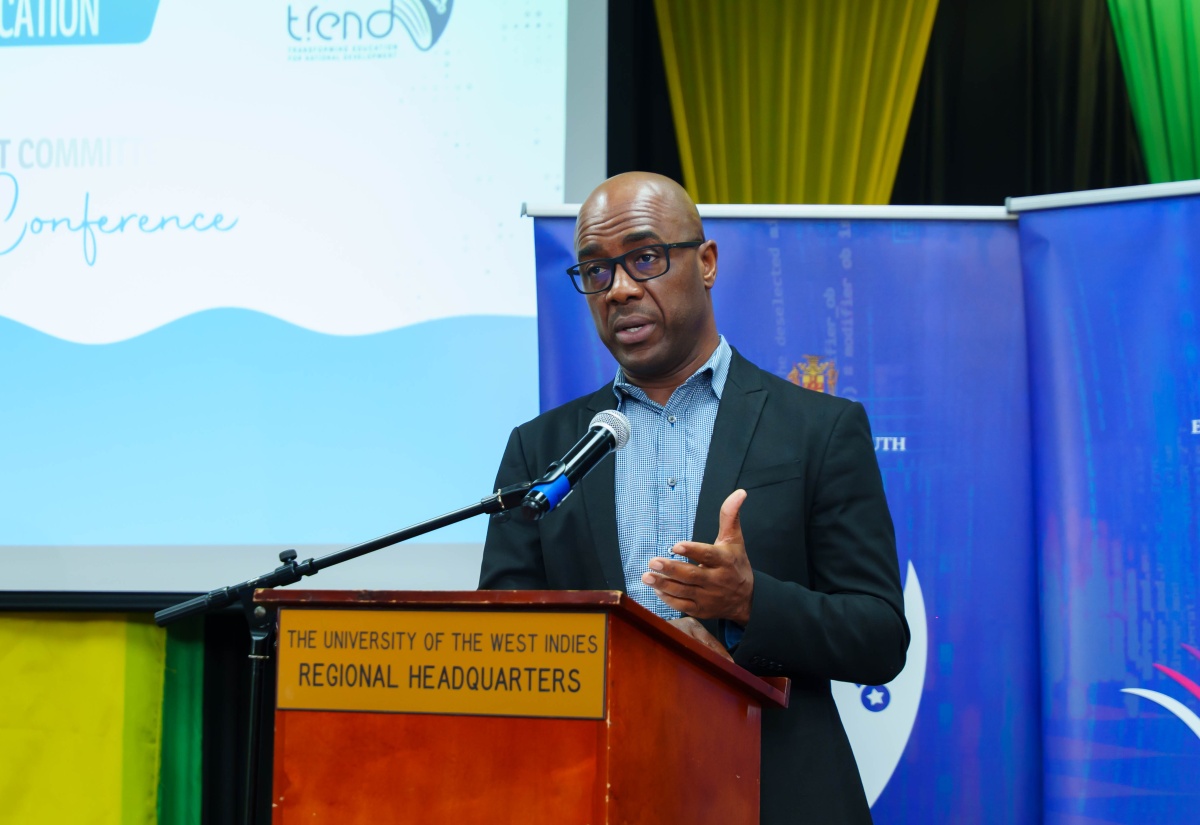
Photo: Contributed
Chairman, Education Transformation Oversight Committee, Dr. Adrian Stokes, speaks at the Committee’s quarterly media briefing at the University of the West Indies Regional Headquarters in Mona, St. Andrew, on Thursday (October 22).The Full Story
The Ministry of Education, Skills, Youth and Information and the National Council on Education have launched a pilot programme to pay fees to Board Directors in selected schools, as part of efforts to strengthen governance and improve accountability across the education system.
This announcement was made on Thursday (October 22) by Chairman of the Education Transformation Oversight Committee (ETOC), Dr. Adrian Stokes, during the committee’s quarterly media briefing at the University of the West Indies Regional Headquarters in Mona, St. Andrew.
“The pilot will focus on underperforming schools and those included in the National School Learning and Intervention Plan (NSLIP).
A clear performance management framework will support the pilot. It will track whether Boards meet regularly, whether accurate minutes are maintained and whether the quality of board deliberations can be assessed,” Dr. Stokes said.
“Ultimately, a board’s effectiveness must reflect the performance of the schools. This is something that we are going to pay very close attention to,” he said.
For the governance focus structure of ETOC, he said a part of it consists of improving the composition of school boards, and two initiatives are being pursued in relation to this.
The first is seeking to select board members with competencies aligned with each school’s deficiencies. The second is to introduce the payment of fees for independent board directors.
“We’re not just trying to have or recruit people for recruitment sake, but each school has particular needs and, therefore, we have to ensure that the skillsets that are required in the school are the ones that are being recruited,” Dr. Stokes said.
The second strategy will also focus on the composition of boards, with an emphasis on ensuring that members’ skills and expertise are matched to the specific needs of the institutions they oversee.
These measures are intended to strengthen school leadership and ensure boards are better equipped to support improved educational outcomes.
“Given the critical role of boards in Jamaica’s relatively decentralised school management system, dysfunction cannot be allowed to persist,” Dr. Stokes said.
He said other measures to strengthen board governance include disciplined schedules of board training and annual evaluations of directors, including chairpersons.
“These ideas are not new. Standards for periodic board training already exist. What must improve is the consistent application of these essential governance practices,” he said.
The pilot programme to remunerate school board members represents a further step in the Government’s efforts to improve school governance, as Jamaica continues its wider education transformation agenda.
Meanwhile, ETOC has reported a four per cent increase in progress under the Jamaica Education Transformation Programme, which is monitoring the implementation of 365 recommendations outlined in the 2021 Jamaica Education Transformation Commission Report.
The report was produced under the leadership of Professor Orlando Patterson and contains recommendations aimed at strengthening Jamaica’s education system and improving student performance.
According to Dr. Stokes, 18 targets were achieved during the most recent three-month reporting period, bringing the total number of completed targets to 166.