

NSWMA Urges Greater Public Awareness on E-Waste Dangers
By: , March 18, 2026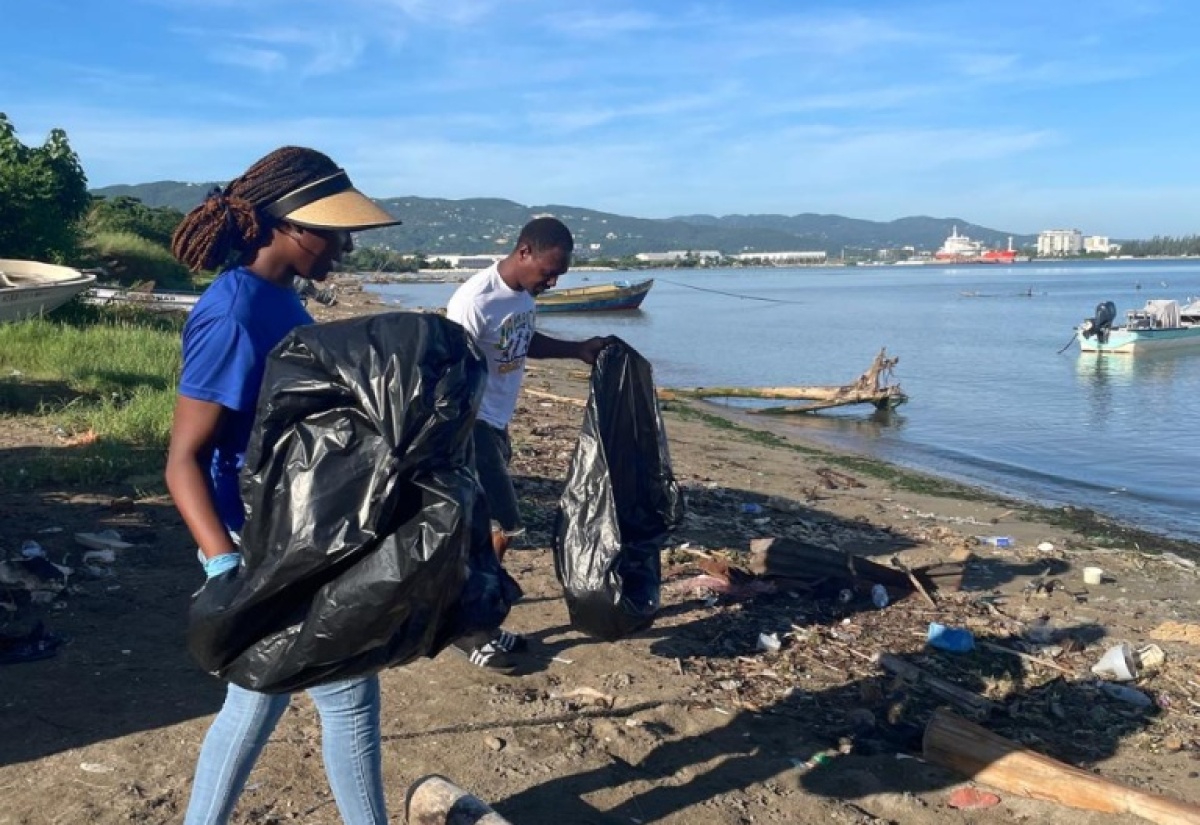
Photo: Contributed
National Solid Waste Management Authority (NSWMA) Community Relations Manager, Sharnon Williams (left), joins WPM Waste Management Limited team member, Andrew Hart, in clearing discarded waste from Fisherman’s Beach in St. James during International Coastal Clean‑up (ICC) Day activities.The Full Story
The National Solid Waste Management Authority (NSWMA) has emphasised the urgent need for greater public awareness about the dangers posed by toxins released from electronic waste (e-waste).
According to the World Health Organization (WHO), e waste refers to discarded devices such as mobile phones, computers, and household appliances.
It is rapidly emerging as one of the largest sources of solid waste worldwide, with an estimated 62 million tonnes generated annually.
Vulnerable groups, especially children and pregnant women, face heightened risks from hazardous pollutants such as lead, which are commonly released through e waste.
While acknowledging the public’s general awareness of the recyclability of plastic bottles, NSWMA Community Relations Manager, Sharnon Williams, noted, “We believe there has not been enough discussion surrounding e-waste.
“Many persons are not aware of how to properly dispose of these types of waste or the dangers associated with them,” she told JIS News.
Noting that there is often confusion between bulky and electronic waste, Ms. Williams explained that items such as cell phones and chargers, in addition to laptop and tablet computers, are classified as e waste, whereas bulky waste refers to larger household items like refrigerators, stoves, and washing machines.
In a bid to intensify public education campaigns across the island on e waste, the NSWMA will mark Global Recycling Day on March 18 with a special focus on raising awareness about the dangers and proper management of e waste.
The initiative seeks to encourage Jamaicans to adopt proper disposal and recycling practices, fostering a more sustainable future for the nation.
As the Day is being observed under the theme ‘Don’t Think Waste, Think Opportunity’, Ms. Williams emphasised the importance of recognising both the environmental and economic opportunities that recycling presents.
“E-waste is not just something to throw away. E-waste can be a resource that is reused and recycled into valuable products,” she said, adding that a core responsibility of the NSWMA is to reduce pollution and safeguard the environment through sustainable waste management practices in Jamaica.
In addition to media outreach, several activities will be undertaken to encourage long term behavioural change.
These include clean up exercises and an e waste collection drive, organised in partnership with the Pan American Development Foundation, at Majesty Gardens in Kingston, where residents are being encouraged to submit their e-waste.
At Exchange Primary School in St. Ann, an exposition and e waste collection drive will be staged, while in St. James, students at the Montego Bay Community College will participate in a panel discussion on e waste.
In Clarendon, at Mallet Hall, a collaborative effort between the NSWMA and the Citizens Association will host an e waste collection drive.
Meanwhile, Ms. Williams is encouraging residents and farmers to broaden their knowledge of other recycling practices, such as composting, which offers significant environmental benefits.