

NHF Commissions Solar System at Kingston Warehouse
By: , April 9, 2026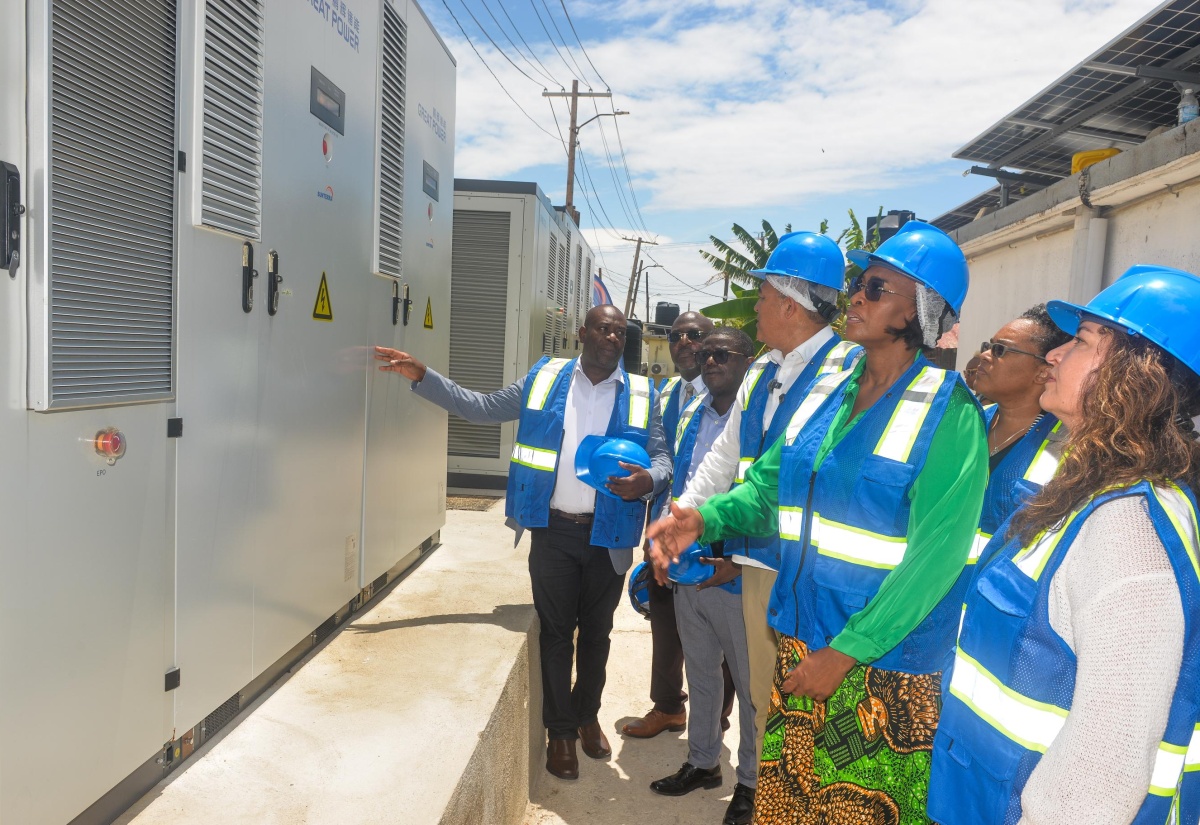
Photo: Dave Reid
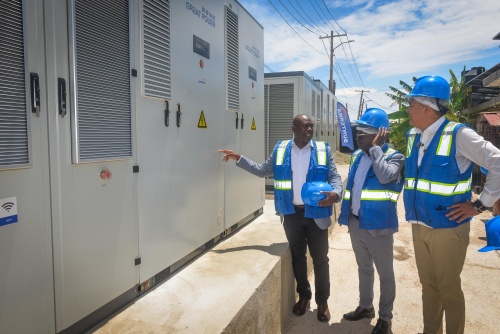
Minister of Health and Wellness, Dr. the Hon. Christopher Tufton (third right), is joined by National Health Fund (NHF) Board Chairman Shane Dalling (second left); NHF Chief Executive Officer, Everton Anderson (third left); Speaker of the House of Representatives, the Most Hon. Juliet Holness (second right); and Vice President of Programme Operations at Direct Relief, Genevieve Bitter (right), along with other stakeholders, as they listen to NHF Director of Institutional Benefits, Projects and Maintenance, Richard Allen (left), explain components of the solar system installed at the NHF's Pharmaceutical Warehouse on Marcus Garvey Drive in Kingston during the official commissioning on Wednesday (April 8).The Full Story
A solar energy system has been installed at the National Health Fund (NHF) pharmaceutical warehouse on Marcus Garvey Drive in Kingston.
The system, which was officially commissioned into service on Wednesday (April 8), marks a significant step towards boosting energy efficiency and reducing operational costs through renewable solutions.
Its acquisition was facilitated through collaboration with United States-based global nonprofit humanitarian organisation, Direct Relief.
Speaking during the commissioning ceremony, Minister of Health and Wellness, Dr. the Hon. Christopher Tufton, emphasised the importance of the initiative as part of the health sector’s broader transformation, particularly in ensuring uninterrupted service delivery.
“Therefore, it is almost expected that the NHF should now embrace the supporting infrastructure through technology, in this case, solarisation of this facility and others, as part of its growth and relevance,” he said.
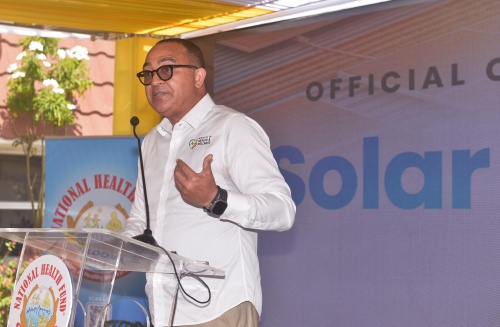
Dr. Tufton noted that integrating solar energy is not only about reducing costs but also ensuring continuity in the storage and distribution of essential medicines, particularly during power disruptions or emergencies.
“So certainly, the next phase of the development of health and our health response to the population, will be themed ‘smart’… that really is another name for resilience,” he added.
Dr. Tufton emphasised that facilities like the NHF warehouse must be capable of operating independently when required, thereby safeguarding critical supplies and ensuring their accessibility despite external challenges.
NHF Chief Executive Officer (CEO), Everton Anderson, described the commissioning as a significant milestone in the organisation’s journey towards sustainability and efficiency.
He explained that the warehouse, which handles billions of dollars’ worth of pharmaceuticals each year, needed a more reliable and cost-effective energy source.
“That is why it was very important that we go the route of solar energy. For 80 per cent of the year, we’re likely to be off the grid. Now that is a major…improvement,” the CEO noted.
Mr. Anderson indicated that early results from the system have already demonstrated lower electricity costs, while enhancing the facility’s disaster preparedness by providing multiple backup energy sources.
“With the frequency of hurricanes we’re having and other disasters, this is more than saving money. It’s about resilience… it’s about having backup,” he stated.
For her part, Vice President of Programme Operations at Direct Relief, Genevieve Bitter, emphasised the importance of reliable energy in effective healthcare delivery.
“Reliable energy is not a luxury in pharmaceutical storage; it is a necessity,” she stated.

Ms. Bitter added that the system will guarantee the protection of temperature-sensitive products, maintain uninterrupted supply chains, and ensure communities across the country continue to receive the life-saving treatments they depend on.
Meanwhile, NHF Board Chairman, Shane Dalling, highlighted that the project represents a strategic investment in sustainability and long-term operational resilience.
“This initiative future-proofs our operations in a world where energy costs are rising and uncertainty is constant,” he said.
Mr. Dalling noted that the initiative is in line with Jamaica’s renewable energy targets and will promote more efficient use of public resources.
“Investments like these will allow for more predictable expenditure and ensure more of our resources are directed to our core mandate,” he added.