


More Jamaicans Encouraged to Adopt Structured Retirement Planning
By: , June 8, 2026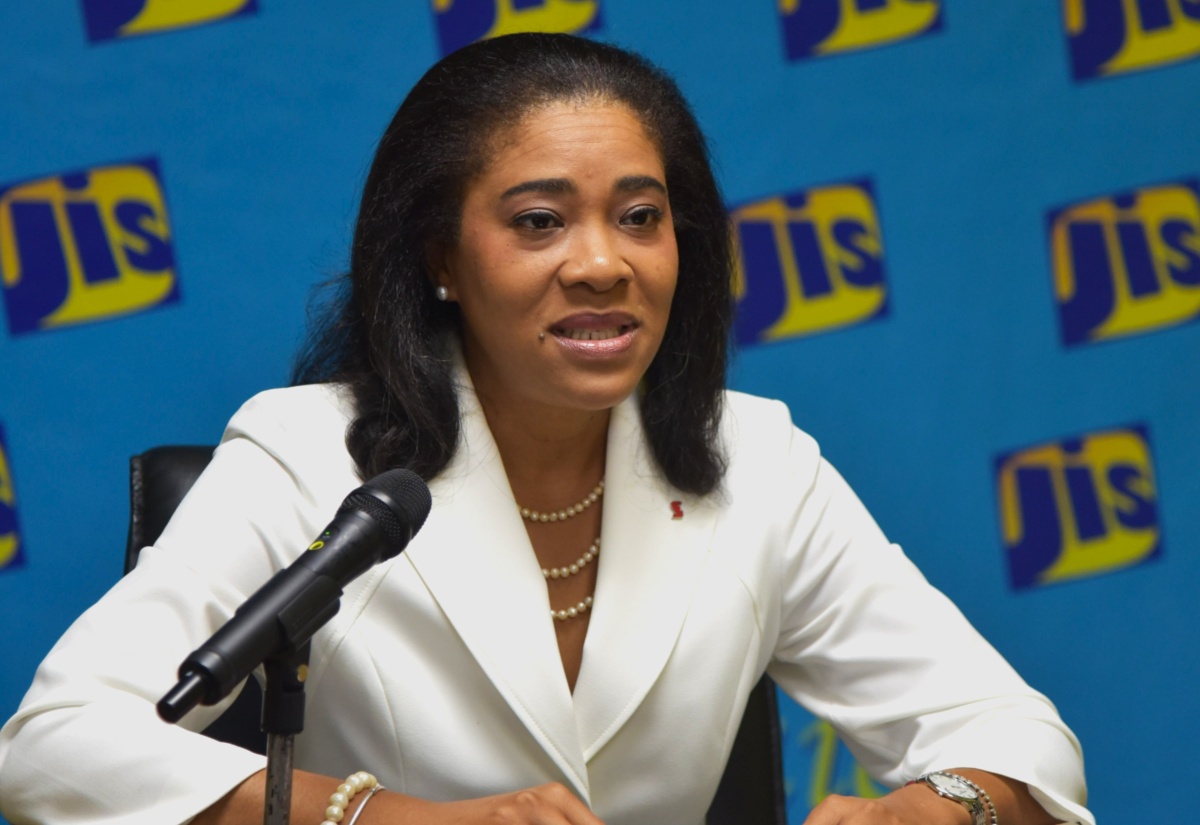
Photo: Mark Bell
Director, Sales Service and Channel Delivery, Scotia Jamaica Life Insurance Company, Kerry Ann Chong, addresses a recent JIS Think Tank in Kingston.The Full Story
More Jamaicans, including self-employed individuals and workers in the informal economy, are being encouraged to adopt structured retirement planning, amid concerns that pension coverage remains low across the country.
Speaking at a recent JIS Think Tank, Director, Sales Service and Channel Delivery, Scotia Jamaica Life Insurance Company Limited, Kerry Ann Chong, said estimates suggest that only about 11 to 12 per cent of private-sector workers are enrolled in private pension arrangements, while less than 20 per cent of the labour force contributes to any pension system.
She said this underscores the need for greater retirement inclusion through approved retirement schemes, such as Scotia Bridge, that are designed to help individuals build long-term financial security.
“Retirement planning cannot be limited only to formally employed workers if we are serious about expanding coverage,” said Mrs. Chong, adding that employees, self-employed individuals and persons in the informal economy should all have access to structured retirement savings options.
Mrs. Chong noted that many Jamaicans rely heavily on the National Insurance Scheme (NIS) and personal savings as they approach retirement. However, she pointed out that the NIS was intended to provide a basic level of retirement income rather than fully replace a person’s pre-retirement earnings.
“When we look at this alongside longer life expectancy, where many people may spend 20 years or more in retirement, it becomes clear that planning ahead is increasingly important for long-term financial stability,” she said.
Using Scotia Bridge as an example, Mrs. Chong explained that structured retirement schemes encourage disciplined saving by promoting consistent contributions over time, while providing flexibility for contributors whose incomes may fluctuate, particularly those who are self-employed or working in the informal economy.
“Long-term outcomes are driven less by large, one-time decisions and more by consistency over time,” she said.
She added that allowing contributors to adjust their payments as circumstances change, can help them remain committed to their long-term retirement goals.
Mrs. Chong maintained that improving retirement outcomes in Jamaica will require greater awareness, broader participation and practical financial tools that make
structured, long-term saving accessible to more people.