
Minimum Wage Moves to $17,000, Up from $16,000
By: , June 25, 2026
Photo: JIS File
Minister of Labour and Social Security, Hon. Pearnel Charles Jr., speaks in the House of Representatives on June 23.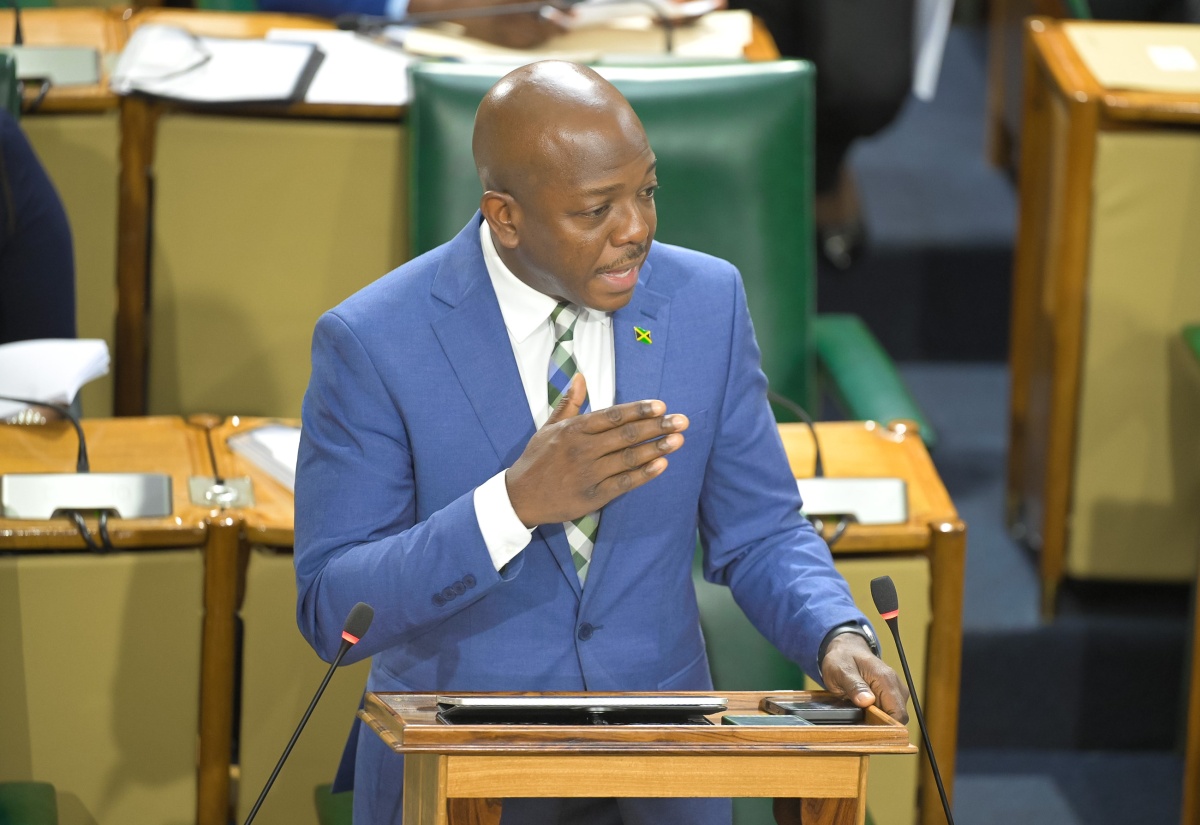
Photo: JIS File
Minister of Labour and Social Security, Hon. Pearnel Charles Jr., addresses the House of Representatives on June 23.The Full Story
The House of Representatives approved the Minimum Wage (Industrial Security Guards) (Amendment) Order, 2026 and the National Minimum Wage (Amendment) Order, 2026, on Tuesday (June 23), thereby increasing the minimum wage from $16,000 to $17,000 per 40-hour work week, effective July 1, 2026.
In his remarks, Minister of Labour and Social Security, Hon. Pearnel Charles Jr., said since its enactment in 1938, the Minimum Wage Act has remained a cornerstone of worker protection in the country, helping to ensure that the lowest paid workers receive a minimum standard of income to support their basic needs and dignity.
“More than a piece of legislation, it reflects our collective belief that workers must be protected from exploitation and afforded the opportunity to build better lives for themselves and their families,” he stated.
As outlined in Section 3 of the Minimum Wage Act, the Minister is empowered to fix minimum wage rates by this Order. This includes the power to set specific rates for occupations where current wages are unreasonably low, as well as the power to establish a general national minimum wage if deemed desirable.
Mr. Charles Jr. said this is a responsibility that must be exercised carefully and thoughtfully, noting that it requires balancing the legitimate needs of workers for fair and adequate compensation, with the need to maintain a stable economic environment in which businesses can continue to grow, to invest and to create employment opportunities.
The Minister said the Government acknowledges the reality facing minimum wage earners and that “as a Government we do continue to increase the floor we have in order to better provide opportunity for those workers to be able to meet their daily expenses”.
He said over the last 10 years, the Government has demonstrated, in action, a commitment to consistently increase the minimum wage, improving it from $6,200 in 2016 to $17,000 in 2026.
The Minister pointed out that the Government has not treated minimum wage adjustment as an isolated act, and that it is part of the broader commitment to improve living standards, to strengthen economic security and to ensure that national progress is shared more fairly across society.
Under the new rates, the standard hourly wage will increase from $400 to $425 per hour, overtime pay from $600 to $637.50 per hour and double-time pay from $800 to $850 per hour.
Industrial Security Guards will also benefit from the increase, with the minimum wage for the sector rising from $16,000 to $17,000 per 40-hour work week, alongside corresponding adjustments to hourly and overtime rates. Existing allowances and benefits for security guards will remain in place.
“This increase in minimum wage represents a reaffirmation of this Government’s commitment to Jamaican workers. It acknowledges the invaluable contributions of those who care for our children, support our households, protect our properties, and help to drive economic activity across our country,” Mr. Charles Jr. said.
“The minimum wage is a floor, not a ceiling, and as we have done before, I again call on all employers, especially those who can afford to do more, to invest in your workforce. Go beyond the minimum where circumstances permit you to do so,” he added.
Meanwhile, the Minister noted that a well-supported workforce is not only good for workers and their families, but that it is also good for productivity, business growth, and national development.
Mr. Charles Jr. pointed out that there is “still much work to be done ahead, but today we have taken another meaningful step forward”.
“Today’s measure reflects the Government’s determination to improve the lives of working Jamaicans and to ensure that economic progress is shared more broadly across our society,” he said.
He added that once the Order takes effect, every employer is legally mandated to pay wages at a rate no less than the prescribed national minimum.
“We are confident that our corporate partners and small business owners alike share our commitment to treating Jamaican workers with dignity. However, let me be clear: this administration treats statutory compliance with the utmost seriousness,” Mr. Charles Jr. said.
He noted that the law provides for strict liability and enforcement actions before parish courts for any failure to meet these standards, and that the Ministry’s Inspectorate will continue and will actively ensure that the rights of vulnerable workers are rigorously protected.