


Legislation Coming to Formalise Restorative Justice
By: , February 5, 2015The Key Point:
The Facts
- Justice Minister, Senator the Hon. Mark Golding, noted that the legislation will guarantee confidentiality to participants in the Restorative Justice, especially the offender.
- Senator Golding also said that the legislation will enshrine a referral system in the formal criminal justice process that will begin with the police and continue through to the courts.
The Full Story
The Ministry of Justice is pursuing legislation that will facilitate the formal recognition of Restorative Justice in the criminal justice system.
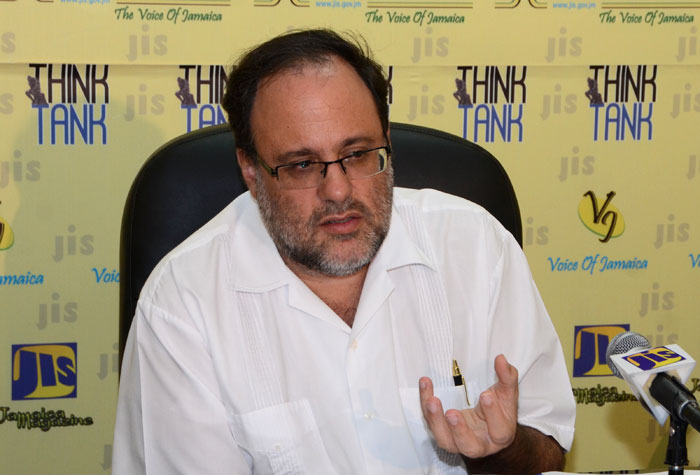
Speaking on February 3 at a JIS ‘Think Tank’, Justice Minister, Senator the Hon. Mark Golding, noted that the legislation will guarantee confidentiality to participants in the Restorative Justice, especially the offender.
“In a restorative justice session, an offender, for example, may openly take responsibility for his actions without fear that the information shared will be used against him. In the legislation, the information shared in a conference (session) is not admissible in court proceedings, if the matter breaks down and (the case is not resolved in the Restorative Justice session),” the Minister explained, adding that this is an important element to facilitate open dialogue and authentic communication in the conference.
Senator Golding also said that the legislation will enshrine a referral system in the formal criminal justice process that will begin with the police and continue through to the courts. This, the Minister said, will allow each party to engage the restorative programme.
“The Restorative Justice can be engaged from the very early stage of an incident through to a post trial situation where someone has been convicted and sentenced. [If the person is a] potential parolee, an engagement can be made with him or her … to assist with their reintegration into society when they are released,” he noted.
The Minister told JIS News that the focus for Restorative Justice is very broad in terms of how it interacts with the criminal justice system.
“The offences that can be referred to the Restorative Justice centres will initially be limited to an array of minor offences and these may be expanded over time. Judges and Resident Magistrates will be empowered to refer to the Restorative Justice programme any case that they consider may be appropriately dealt with in that manner, given the circumstances,” Senator Golding said.
He pointed out that there is discretion that will allow Judges or Magistrates to refer a case that is not on the prescribed list for Restorative Justice referral, in the event that it is perceived that the case can be better resolved that way.
In Jamaica, Restorative Justice is still in the pilot phase and cases from communities that are already being referred to the Restorative Justice Centres include failure to repay loans or fulfill other financial commitment within the community, failure to pay rent, disputes over money, property damage, boundary disputes, minor wounding, assaults and confrontations, defamation of character and threats, among others.
“So, we are already active. We are going to Cabinet shortly for approval to issue the drafting instructions for legislation to be prepared,” Senator Golding said.
He said this will involve additional training of Magistrates and Judges at the appropriate time, in order to implement the programme on a national level.