


Key Stakeholders Review Maritime Sector’s Response to Hurricane Melissa at Workshop
By: , April 15, 2026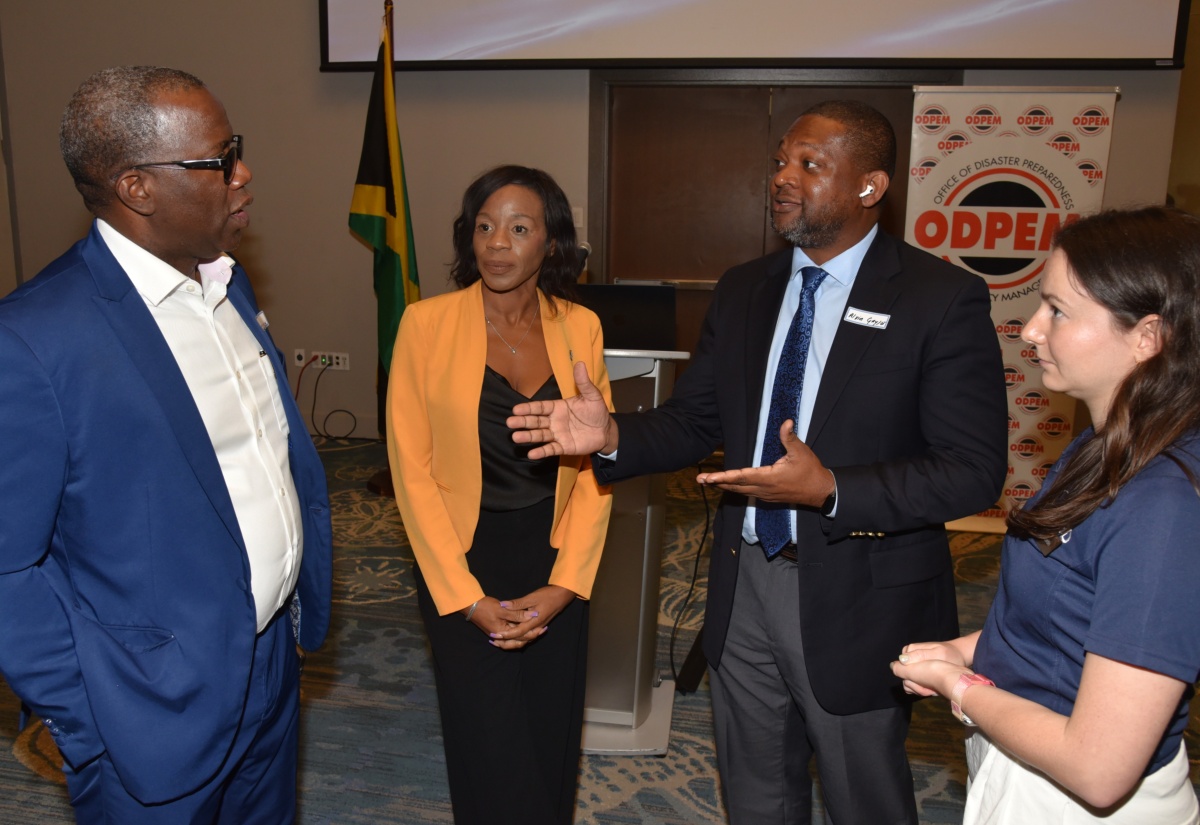
Photo: JIS File
Director-General of the Office of Disaster Preparedness and Emergency Management (ODPEM), Commander Alvin Gayle (second right), makes a point to stakeholders during the ‘Hurricane Melissa: Maritime Lessons Learned’ Workshop, held at the AC Marriott Hotel in Kingston on Tuesday (April 14). Listening keenly (from left) are Chairman of the Port Management Association of the Caribbean (PMAC), Darwin Telemaque; Managing Director at Jamaica Bauxite Mining (JBM) Limited, Donna Marie Howe and Maritime Engagements Manager at Global Support and Development (GSD), Eva Martin.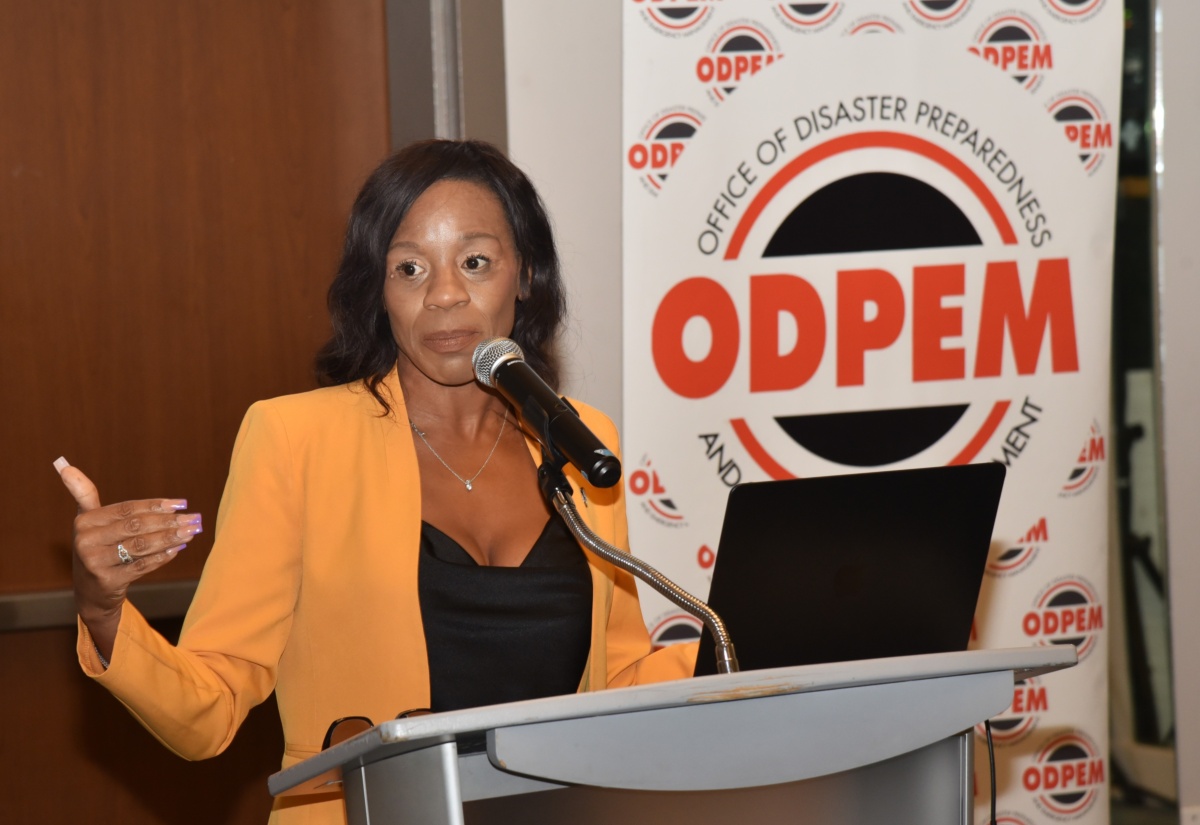
Photo: JIS File
Managing Director at Jamaica Bauxite Mining (JBM) Limited, Donna Marie Howe, delivers remarks during the ‘Hurricane Melissa: Maritime Lessons Learned’ Workshop, held at the AC Marriott Hotel in Kingston on Tuesday (April 14).The Full Story
Key stakeholders from Jamaica and the region are meeting on Tuesday (April 14), to review the maritime sector’s response to Hurricane Melissa, with the aim of strengthening the island’s response mechanism and improving coordination among key agencies ahead of the next hurricane season.
“We need to identify what are the practical solutions as we move closely into the next hurricane season,” Director-General of the Office of Disaster Preparedness and Emergency Management (ODPEM), Commander Alvin Gayle said.
Commander Gayle was delivering remarks during the ‘Hurricane Melissa: Maritime Lessons Learned Workshop’, which is being held at the AC Marriott Hotel in Kingston.
The workshop was organised by US-based humanitarian non-profit organisation Global Support and Development (GSD), in collaboration with ODPEM, and the Port Management Association of the Caribbean (PMAC).
It will allow the maritime and disaster management communities to collaboratively review their processes of coordination and document how the sector mobilised and contributed to the disaster response following the passage of Hurricane Melissa on October 28, 2025.
Commander Gayle said the workshop is both timely and necessary as it will strengthen the national disaster response framework.
“The increasing frequency and intensity of these storms, driven by climatic variability, require that we move beyond siloed approaches,” the ODPEM Director General maintained.
He emphasised that a new approach is needed, grounded in deeper integration, interoperability, and a shared commitment to resilience across all sectors.
The ODPEM Director General noted that the impact of Hurricane Melissa on Jamaica was not just severe but also “instructive”.
“The Category-Five system not only tested our national disaster preparedness and response mechanism but also effectiveness and coordination… particularly within the maritime domain,” Commander Gayle outlined.
He emphasised that the maritime sector is a critical lifeline for any island, underpinning logistics, trade, continuity, humanitarian access, and national relief and recovery efforts.
The Director-General explained that today’s session provides a structured opportunity for stakeholders to critically examine how coordination unfolded between organisations, port authorities, maritime operators, and the National Response Agency.
He emphasised that the exercise is a forward-looking one, as it will identify the key lessons learned, strengthen integration actions with national regional systems and advance more resilient ideas for a coordinated response framework going forward.
“Today’s engagement should reflect the core principles embedded in the Disaster Risk Management Act of 2015 and its amendments, which are prescriptively continuous improvement through evidence-based review, collaboration, and institutional learning,” Commander Gayle affirmed.
He pointed out that the insights generated by the workshop will not only inform a comprehensive report for the stakeholders but will also contribute to actionable recommendations to enhance both national and regional disaster response systems.
In her remarks, Managing Director at Jamaica Bauxite Mining (JBM) Limited, Donna Marie Howe, emphasised the importance of using Hurricane Melissa as a learning curve for future disasters.
“We have to make our critical port infrastructure resilient… build on cybersecurity, build on soft skills, hard skills… and the only way we can do that is if we collectively come together, share ideas, and see when we’re in these times of need, how we can help in the recovery… when we’re in these times of need, how we can better prepare to be more resilient,” she detailed.
Mrs. Howe added that by working collectively, stakeholders can make the response to disasters quicker, sharper and more impactful.
Lessons learnt and recommendations developed from today’s workshop will be collated and presented in a report that will be delivered to participants and the PMAC Risk and Resilience Committee for further consideration and action planning to strengthen the region’s national response systems.