

Justice Minister Urges Retirement and Estate Planning
By: , May 1, 2026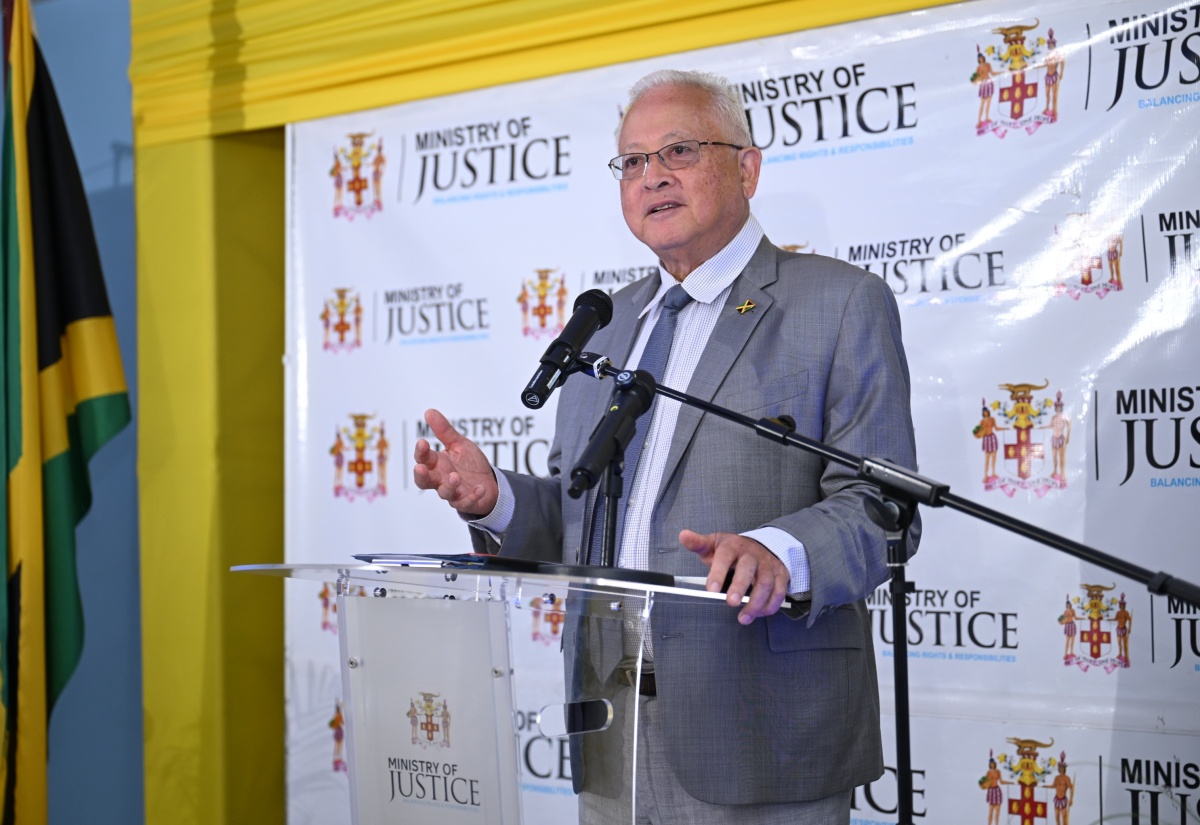
Photo: Adrian Walker
Minister of Justice and Constitutional Affairs, Hon. Delroy Chuck, addresses Wednesday's (April 29) launch of the Alternative Dispute Resolution (ADR) Policy Development and Estate Planning Public Education Campaign at the Ministry’s office in Kingston.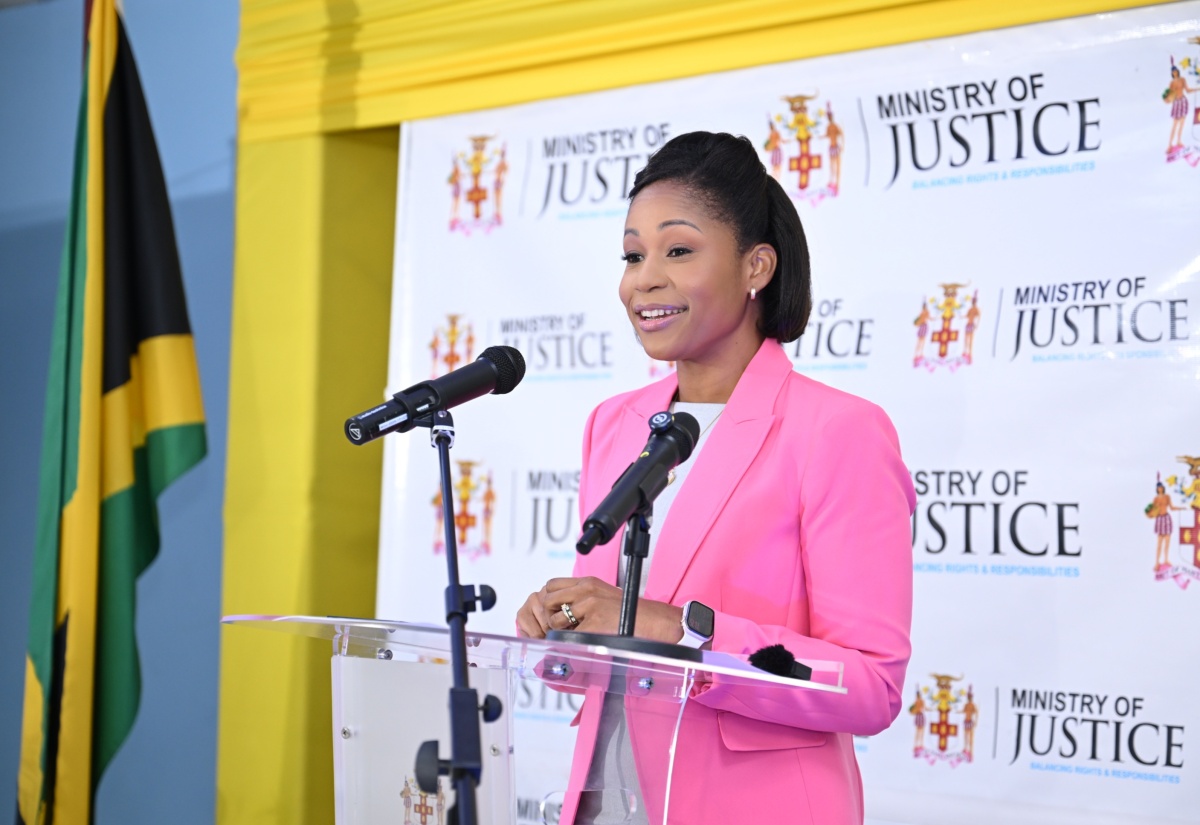
Photo: Adrian Walker
Administrator-General, Stacie-Ann Carty, delivers remarks during Wednesday's (April 29) launch of the Alternative Dispute Resolution (ADR) Policy Development and Estate Planning Public Education Campaign at the Ministry of Justice and Constitutional Affairs in Kingston.The Full Story
Minister of Justice and Constitutional Affairs, Hon. Delroy Chuck, is urging Jamaicans to plan carefully for their futures and safeguard their legacies through effective retirement and estate planning.
He emphasised that working-class Jamaicans, in particular, should begin planning for retirement as soon as they enter the job market.
“There are far too many Jamaicans who only start thinking of retirement when they reach 50, and sometimes close to retirement age. In truth, all Jamaicans should start thinking about retirement from they start earning a living,” Mr. Chuck stated.
He was speaking during the launch of the Alternative Dispute Resolution (ADR) Policy Development and Estate Planning Public Education Campaign, held at the Ministry’s office in Kingston on Wednesday (April 29).
Mr. Chuck emphasised that everyone who earns a wage should consistently set aside a minimum amount of money towards their retirement.
“Even if you’re a minimum wage earner, you should try and put at least a minimum of $1,000, in a bank account or in savings,” he encouraged.

Mr. Chuck advised that, ideally, individuals should aim to establish a second stream of income by the time they reach 40 years old.
“During your working life, you work for money, but there comes a point, especially close to retirement, where your money must work for you. Put it in bonds or stocks or in another property and let that work for you,” the Minister stated.
Meanwhile, he underscored the importance of estate planning as a means of preventing conflicts among family members.
“Too often, families are left in uncertainty, conflict, or financial hardship, simply because proper estate planning was not undertaken,” Mr. Chuck stated.
He stressed that Jamaicans must understand their rights, make informed decisions, and take proactive steps to secure their legacy.
The Justice Minister further emphasised that many disputes and even acts of violence across the island can be traced to conflicts over property left behind by deceased persons.
He highlighted a recent homicide case in St. James as an example, noting that proper estate planning can prevent such disputes and acts of violence.
“When you make a will, you solve a lot of problems. People know what they are to get, the testator has made a decision, and the court and the executors must comply with the intention of the testator,” Mr. Chuck added.
In her remarks, Administrator-General, Stacie-Ann Carty, explained that for a will to be legally effective, it must meet three criteria: it must be in writing; it must be signed by the testator (the person making the will) in the presence of two or more witnesses; and those witnesses must sign in the presence of the testator and each other.
She noted that in cases where a deceased person does not leave a will, the distribution of their property is governed by Jamaica’s Intestates’ Estates and Property Charges Act.