
Hurricane Affected Health Facilities Get Reproductive Health and Specialised Midwifery Kits
By: , August 12, 2026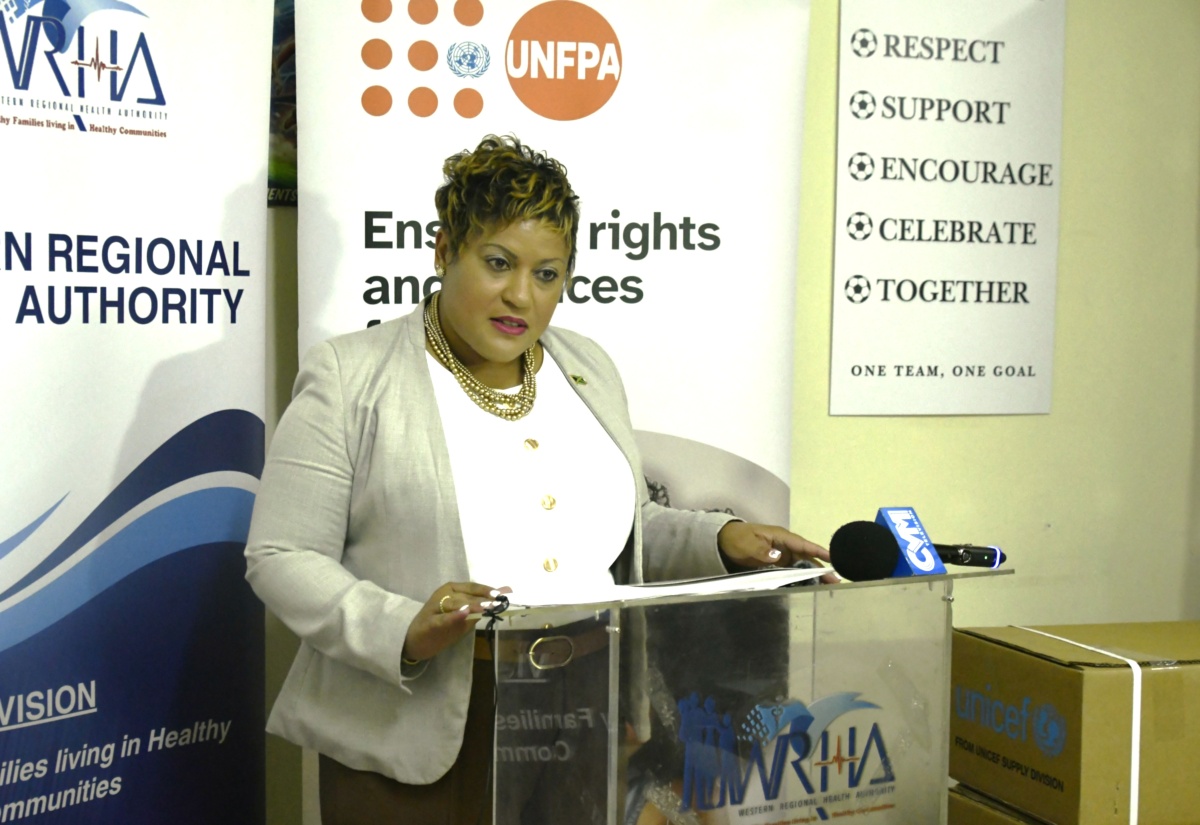
Photo: Serena Grant
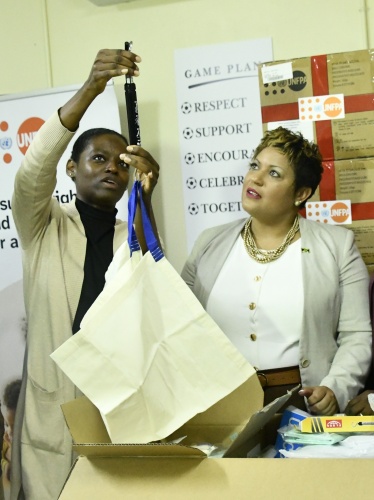
Minister of State in the Ministry of Health and Wellness, Hon. Krystal Lee, addresses the handover ceremony for reproductive health and specialised midwifery kits at the Western Regional Health Authority (WRHA) Warehouse in Freeport, St. James, on Tuesday (August 11). The kits were donated by the United Nations Population Fund (UNFPA).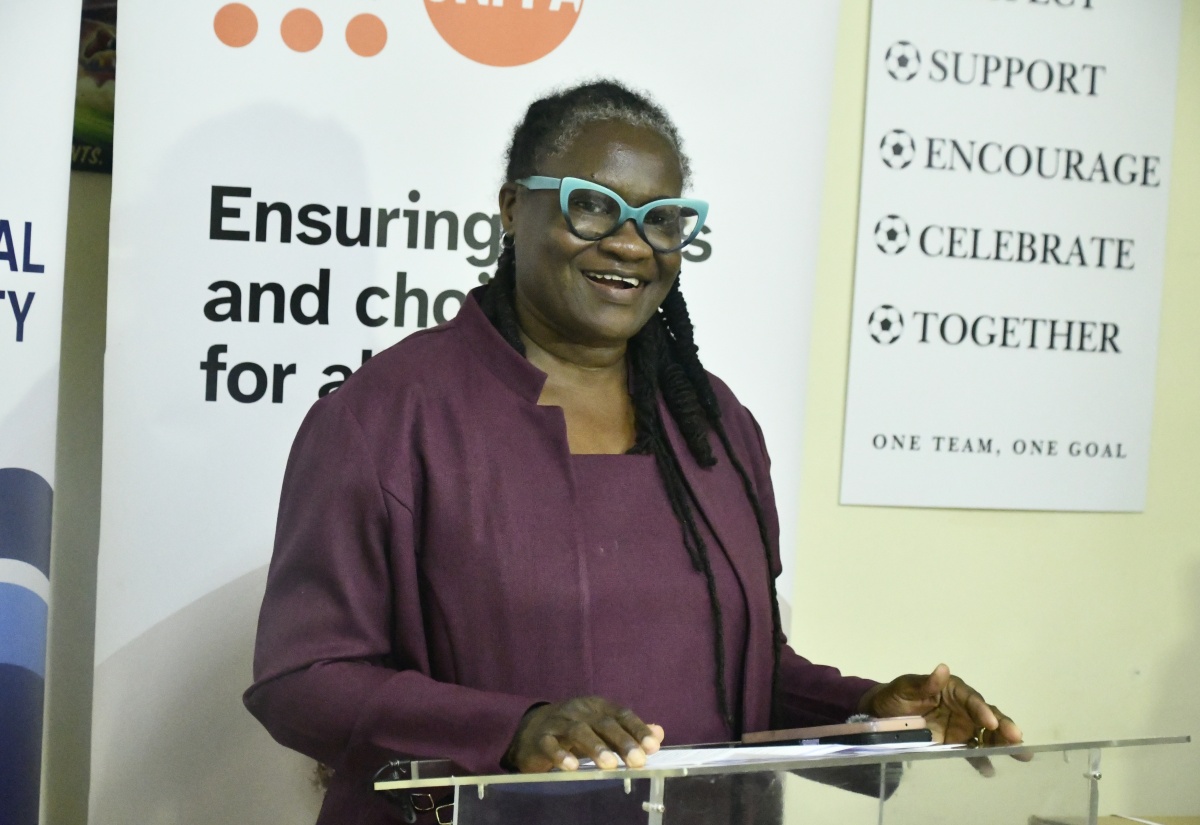
Photo: Serena Grant
Coordinator of the Regional Priority Non-Communicable Diseases Programme and Family Health at the Western Regional Health Authority (WRHA), Dr. Marcia Johnson-Campbell, gives remarks during the handover ceremony for reproductive health and specialised midwifery kits at the WRHA's Warehouse in Freeport, St. James on Tuesday (August 11).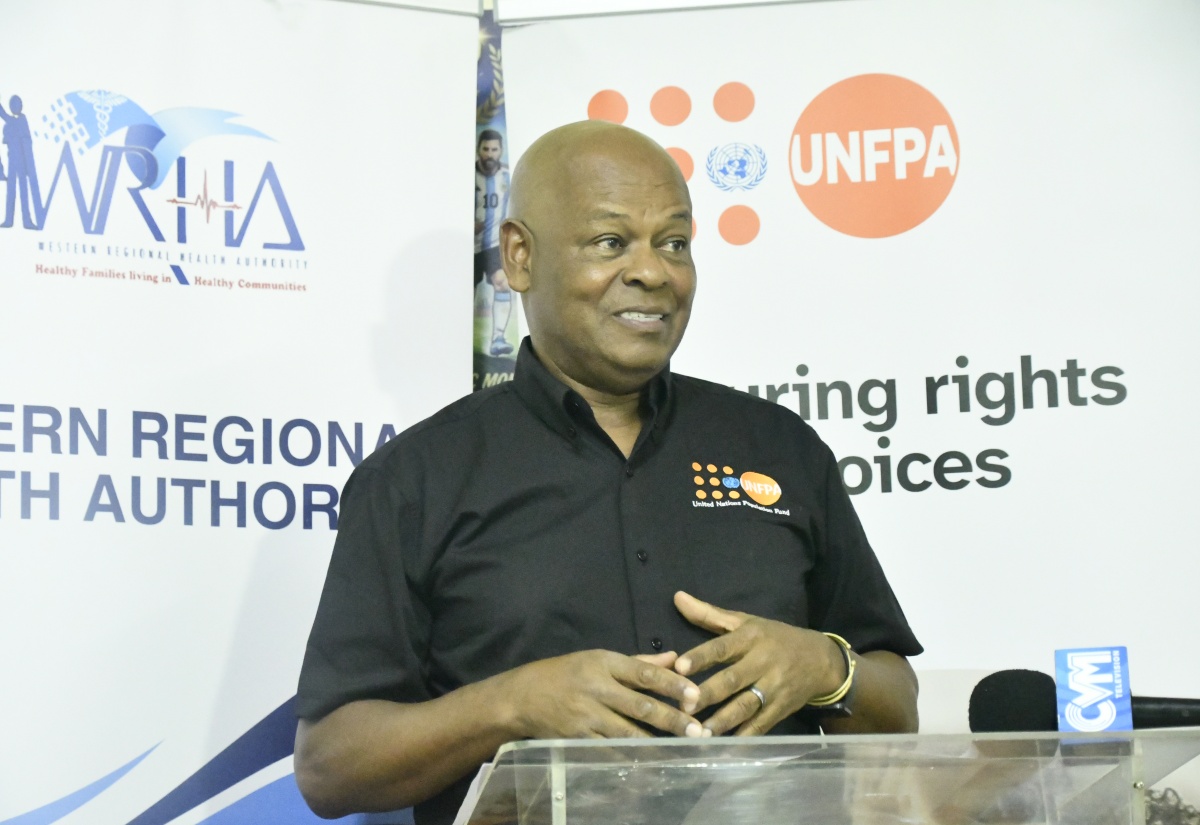
Photo: Serena Grant
Director and Representative of the United Nations Population Fund (UNFPA) Sub-Regional Office for the Caribbean, Harold Robinson, addresses the handover ceremony for reproductive health and specialised midwifery kits from UNFPA on Tuesday (August 11), at the Western Regional Health Authority (WRHA) Warehouse in Freeport, St. James.The Full Story
Health facilities in six parishes severely affected by Hurricane Melissa have received reproductive health and specialised midwifery kits, aimed at strengthening the delivery of essential maternal and newborn care.
The kits, donated by the United Nations Population Fund (UNFPA), will support health facilities in St. Elizabeth, Westmoreland, Trelawny, Hanover, Manchester and St. James.
They were officially handed over during a ceremony at the Western Regional Health Authority (WRHA) Warehouse in Freeport, Montego Bay, on Tuesday (August 11).
Minister of State in the Ministry of Health and Wellness, Hon. Krystal Lee, said the supplies will strengthen the capacity of health facilities in the hardest-hit parishes to provide life-saving services to mothers and newborns as the country continues its recovery from the hurricane.
“The reproductive health kits being provided today will strengthen the capacity of health facilities across the most severely affected parishes to deliver life-saving care to mothers and newborns during a time of high vulnerability,” she outlined.
“These supplies will help ensure the continuity of safe childbirth services even in emergency settings and support the delivery of essential maternal and newborn care, including emergency obstetric and surgical interventions at hospitals and health centres in all parishes that were heavily hit, including St. Elizabeth, Westmoreland, Trelawny, Hanover, Manchester and St. James,” she added.
Ms. Lee said the specialised midwifery kits will further improve the readiness of frontline healthcare providers to deliver quality maternal healthcare where it is most needed.
She reaffirmed the Government’s commitment to strengthening maternal and reproductive healthcare and building a health system capable of responding effectively during emergencies.
“As climate-related events become increasingly frequent and severe, we must continue to strengthen emergency preparedness, safeguard essential health services and expand access to quality maternal and reproductive health care, particularly for vulnerable populations,” she said.
She expressed appreciation to the UNFPA for its continued partnership with Jamaica, particularly as the country rebuilds its health services following Hurricane Melissa.
“Partnerships such as this are vital to safeguarding the health and well-being of women, newborns and families, particularly during periods of recovery and rebuilding as what we’re going through now,” she said.
Director and Representative of the UNFPA Sub-Regional Office for the Caribbean, Harold Robinson, said ensuring continuity of sexual and reproductive health services is particularly important following disasters.
“Sexual and reproductive health needs do not stop in an emergency,” Mr. Robinson emphasised.
He noted that disruptions to care can place mothers and newborns at risk, while displacement can increase the vulnerability of women and girls to gender-based violence.
Mr. Robinson said UNFPA’s response following Hurricane Melissa has included support to the Government through its minimum initial service package for sexual and reproductive health.
“This framework is important, because it’s the cornerstone of our emergency response that has the Ministry of Health ensure that even in the complex time of a crisis, essential care is maintained and restored where it needs to be restored,” he said.
He added that UNFPA also provided dignity kits containing basic hygiene items, flashlights and safety information for displaced women and girls; established tents to serve as dedicated safe spaces for women and girls; and provided solar-powered refrigerators to help keep essential medications cold during power outages.
Mr. Robinson said the latest handover represents another stage in the transition from emergency response to longer-term recovery and preparedness.
“This handover really represents more than a provision of equipment. It really signifies our contribution to the Ministry of Health’s preparedness strategy. It represents the strengthening of our partnership,” he said.
He noted that the intervention was undertaken in collaboration with the Pan American Health Organization (PAHO) and the United Nations Children’s Fund (UNICEF).
Meanwhile, Coordinator of the Regional Priority Non-Communicable Diseases Programme and Family Health at the WRHA, Dr. Marcia Johnson-Campbell, said the donation will help health professionals to continue providing essential services while facilities and communities recover.
“Pregnant women need safe delivery, mothers need essential reproductive health services and babies need skilled care,” she said.
Dr. Johnson-Campbell noted that the handover represents the continued partnership between the UNFPA and the government of Jamaica, particularly in the aftermath of Hurricane Melissa.
“This partnership demonstrates what can be achieved when agencies work together with a shared purpose to protect lives, preserve dignity and ensure, in particular, that no woman or newborn is left behind,” she outlined, adding that the kits represent more than the provision of supplies.
“It represents preparedness, solidarity, commitment to ensuring continuity of essential health care,” Dr. Johnson-Campbell said.