

House Speaker Urges Digital Transformation of Parliaments
By: , September 2, 2026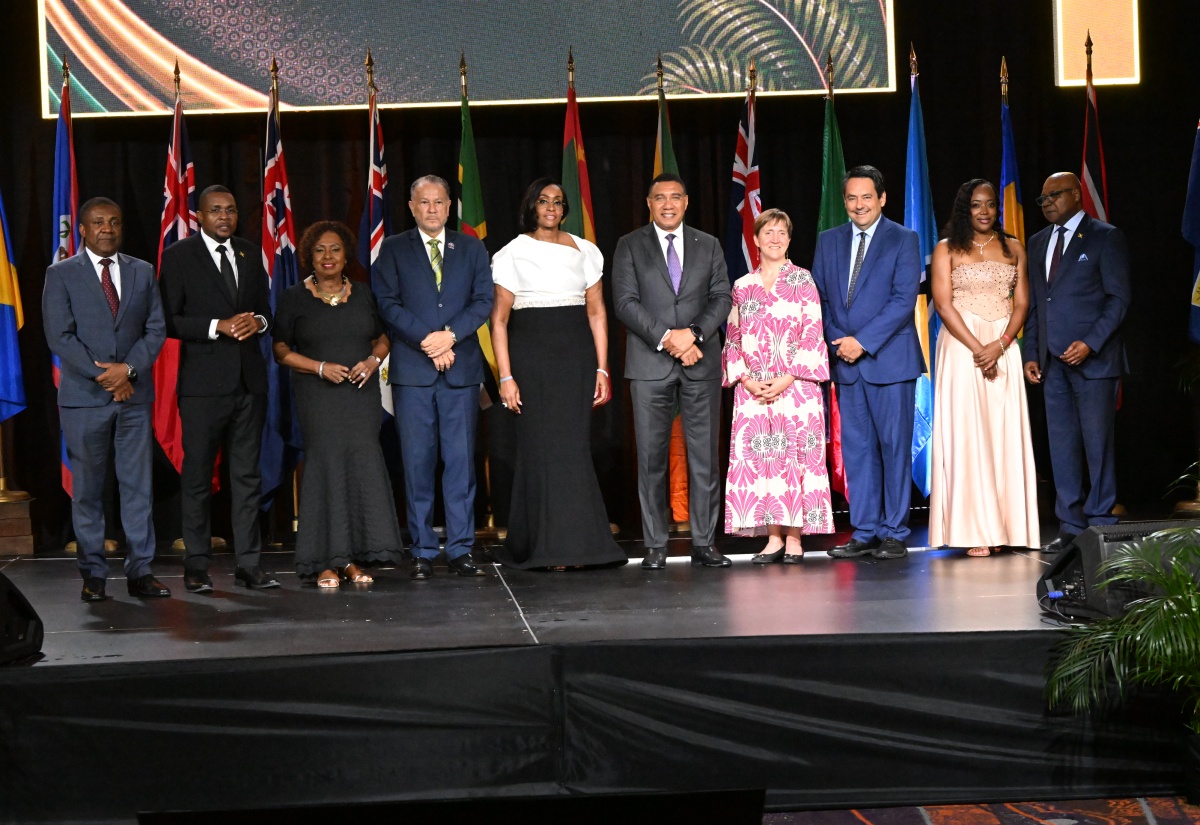
Photo: Okoye Henry
Prime Minister, Dr. the Most Hon. Andrew Holness (fifth right), and Speaker of the House of Representatives and Chair of the Commonwealth Parliamentary Association (CPA) Caribbean, Americas and Atlantic (CAA) Region, the Most Hon. Juliet Holness (fifth left), share a photo opportunity with government officials, parliamentarians and other regional stakeholders during the opening ceremony of the 48th CPA-CAA Regional Conference at the Moon Palace Jamaica Hotel in St. Ann on Monday (August 31).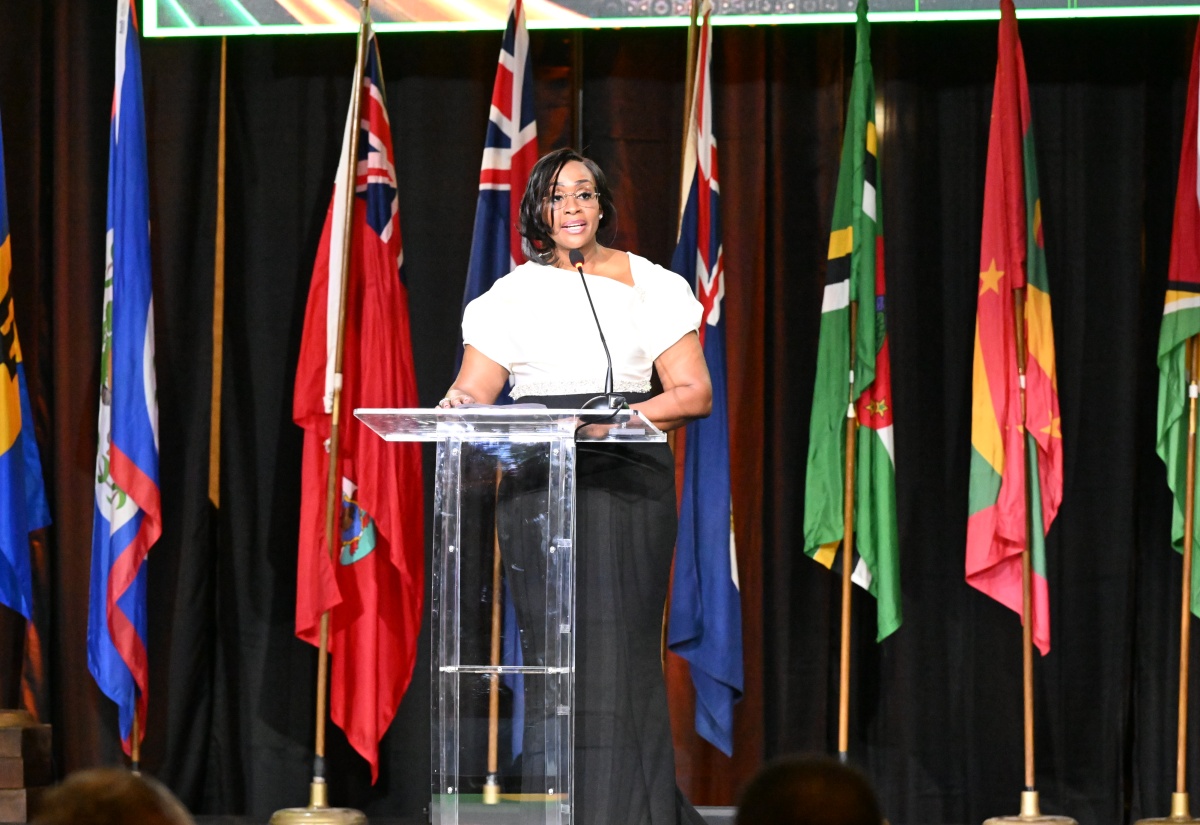
Photo: Okoye Henry
Speaker of Jamaica’s House of Representatives and Chair of the Caribbean, the Americas and the Atlantic (CAA) Region of the Commonwealth Parliamentary Association (CPA), the Most Hon. Juliet Holness, delivers remarks during the opening ceremony for the 48th CPA-CAA Regional Conference at the Moon Palace Jamaica Hotel in St. Ann on Monday (August 31).The Full Story
Speaker of the House of Representatives, the Most Hon. Juliet Holness, has urged regional governments to strategically leverage digital transformation to strengthen parliamentary operations, enhance transparency, and foster greater public engagement across Commonwealth legislatures.
She was speaking during the opening ceremony for the 48th Regional Conference of the Commonwealth Parliamentary Association (CPA) Caribbean, Americas and Atlantic (CAA) Region, held at the Moon Palace Jamaica Hotel in St. Ann on Monday (August 31).
In her welcome address to conference attendees, Mrs. Holness, who Chairs the CPA-CAA Region, affirmed that the conference theme, ‘Strengthening Parliaments in the Digital Age’, is particularly timely, as the region is undergoing profound technological transformation.
“Digital transformation is influencing the processes by which parliamentary business is undertaken. It is changing how information is created, managed, and disseminated. It changes us, and, therefore, challenges us to reconsider established approaches to parliamentary procedures, administration, public engagement, and service delivery,” she outlined.
Mrs. Holness stated that governments must be strategic in their use of technology, ensuring that digital solutions address existing challenges, rather than create additional burdens.
“Digital transformation can enable us to improve the efficiency and effectiveness of parliamentary operations, broaden access to parliamentary information, strengthen transparency and accountability, and enhance the responsiveness of our institutions,” the House Speaker noted.
She further emphasised that governments must use technology intelligently and strategically to strengthen their parliaments institutionally, while deepening engagement and fostering stronger connections between parliaments and the people they serve.
Mrs. Holness noted that modernising governance requires a paradigm shift that views technology not merely as physical infrastructure, but as a comprehensive ecosystem encompassing artificial intelligence (AI), cybersecurity and digital civic participation.
“This digital transformation can revolutionise parliamentary procedures by digitising representative democracy. It demands robust systems, architectures that detect, manage, and mitigate misinformation and disinformation,” she stated.
The House Speaker said this digital framework would provide the foundation for seamless regional integration, enabling interconnected cross-border digital systems to drive unified regional development.
Against this background, she emphasised the importance of the regional conference as a platform for parliamentary dialogue, cooperation, and the exchange of ideas and best practices among Commonwealth legislatures.
“It is our sincere hope that over the course of the coming week, we will have the opportunity to engage meaningfully with the issues before us, develop practical solutions to the challenges identified, and explore new paradigms that will enable us to strengthen our parliaments, both individually and collectively,” Mrs. Holness said.
She noted that, on the first day of the conference, the 16th Regional Conference of Commonwealth Women Parliamentarians was convened, providing an opportunity for participants to reflect on the experiences of women in parliamentary life and discuss their advancement and leadership within their respective democratic institutions.
“In the context of digitisation, we examined strategies and identified important areas for continued collaboration among women legislators and democratic institutions all across the region,” Mrs. Holness informed.
She noted that, over the remaining days, the conference will also convene meetings of presiding officers and clerks, who will engage in robust discussions on parliamentary leadership, administration, and the effective functioning of legislatures across the region.
“We will also host the virtual sitting of the 19th Regional Youth Parliament. This creates opportunities for our young people to engage in parliamentary practice and, thereby, foster democratic inclusion and policy feedback,” Mrs. Holness added.