


Gov’t Leveraging National Debt to Drive Growth – PM
By: , March 25, 2026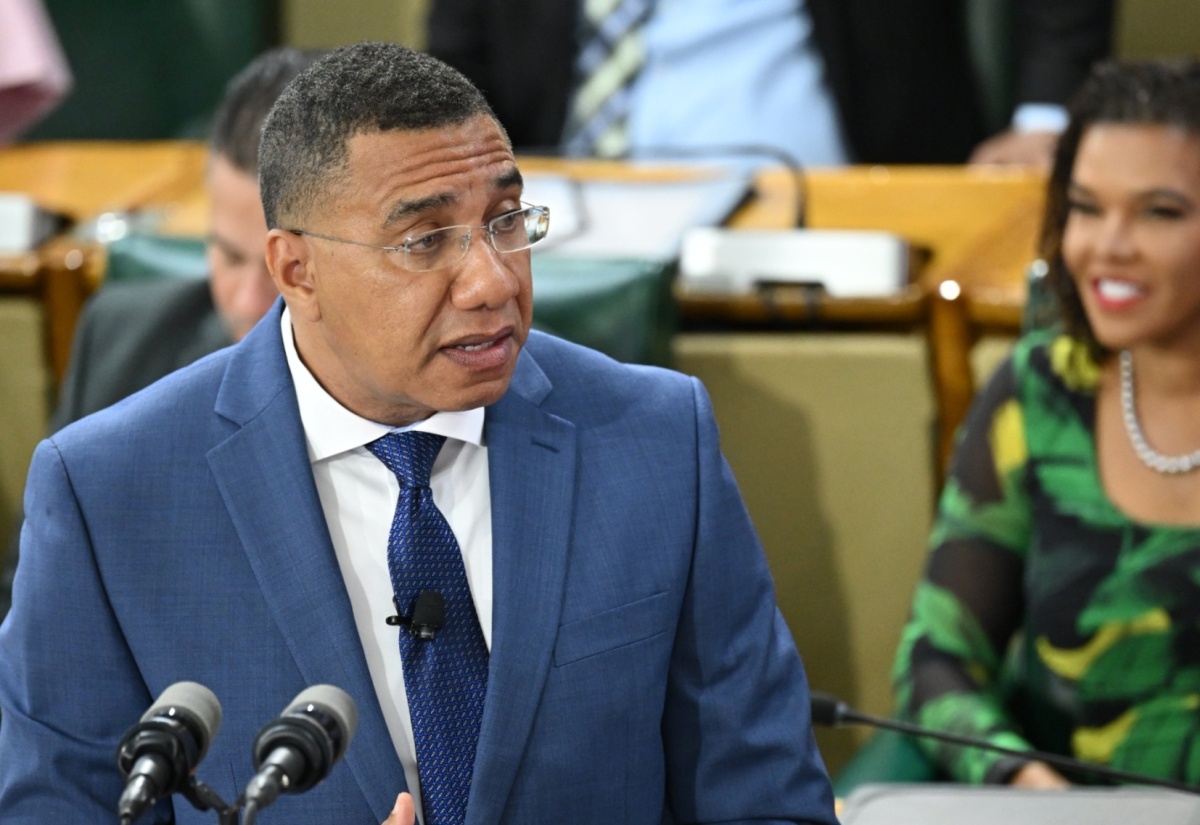
Photo: Adrian Walker
Prime Minister, Dr. the Most Hon. Andrew Holness, makes his contribution to the 2026/2027 Budget Debate in the House of Representatives on (March 19).The Full Story
Prime Minister, Dr. the Most Hon. Andrew Holness, says that the Government is committed to leveraging national debt for strategic projects that drive economic growth and ensure future repayment.
While noting that the current Budget involves significant additional borrowing, he said that there is a fundamental difference between borrowing that builds and borrowing that burdens.
“The Government will ensure that every dollar of additional debt is deployed as capital investment in infrastructure that increases our productivity, in systems that strengthens our resilience, in projects that grow the economy and generate the future earnings from which the debt can be repaid,” he said.
The Prime Minister was making his contribution to the 2026/27 Budget Debate in the House of Representatives on March 19.
The Government is projecting a fiscal deficit this year due to spending for hurricane recovery and rebuilding. This is despite the introduction of new revenue measures.
“This year, the Government is planning to spend significantly more than it is collecting, so technically, we are putting more money into the economy and when a government runs a deficit, it provides a net stimulus to the economy. It is injecting more into the circular flow of economic activity than it is withdrawing. This is why we have suspended the fiscal rules,” the Prime Minister said.
Turning to public-sector compensation, the Prime Minister noted that over the past three fiscal years the Administration, through consistent inflation targeting, has ensured price stability in the market, and as such, inflation can no longer be the sole driving force for wage demands.
“Further increases must now be linked to productivity,” he said.
The Prime Minister said that the recent implementation of a comprehensive restructuring of public-sector wages and salaries was necessary and long overdue, to bridge the gap between public and private-sector compensation, pointing out that the public service was struggling to attract and retain the talent needed to serve citizens effectively.
He noted that the restructuring was designed “not only to reduce the gap but to simplify the pay system and bring greater transparency to how public servants are compensated; the results have been significant. The vast majority of workers have received meaningful increases in their take-home pay; however, we must be clear about what this has meant for our public finances”.
He said that as a result of the compensation reform, the wage bill has risen by approximately 3.7 percentage points of gross domestic product (GDP), and stands at around 13.8 per cent of GDP in 2025/2026 coming from a target of nine per cent.
Prior to this reform, public-sector wages accounted for 36 cents of every dollar of tax revenue collected. Today, that figure stands at 49 cents.
“That is a profound shift in the structure of public expenditure, and it demands that we must be careful in how we press for further increases,” the Prime Minister stated, adding that “this present juncture in our history requires a different approach to wage negotiations”.
He pointed out that “increases that are disconnected from productivity gains and GDP growth will not result in higher living standards and wages. They will result in inflation, which erodes the very purchasing power those increases are meant to protect”.
“If we are to preserve the macroeconomic stability that we have worked so hard collectively to build, and having demonstrated as a Government that labour will get its fair share as conditions allow, unions and the Government must work together in reaching reasonable settlements,” the Prime Minister said.