


World Central Kitchen Provides Hot Meals for Hurricane Victims
By: , December 1, 2025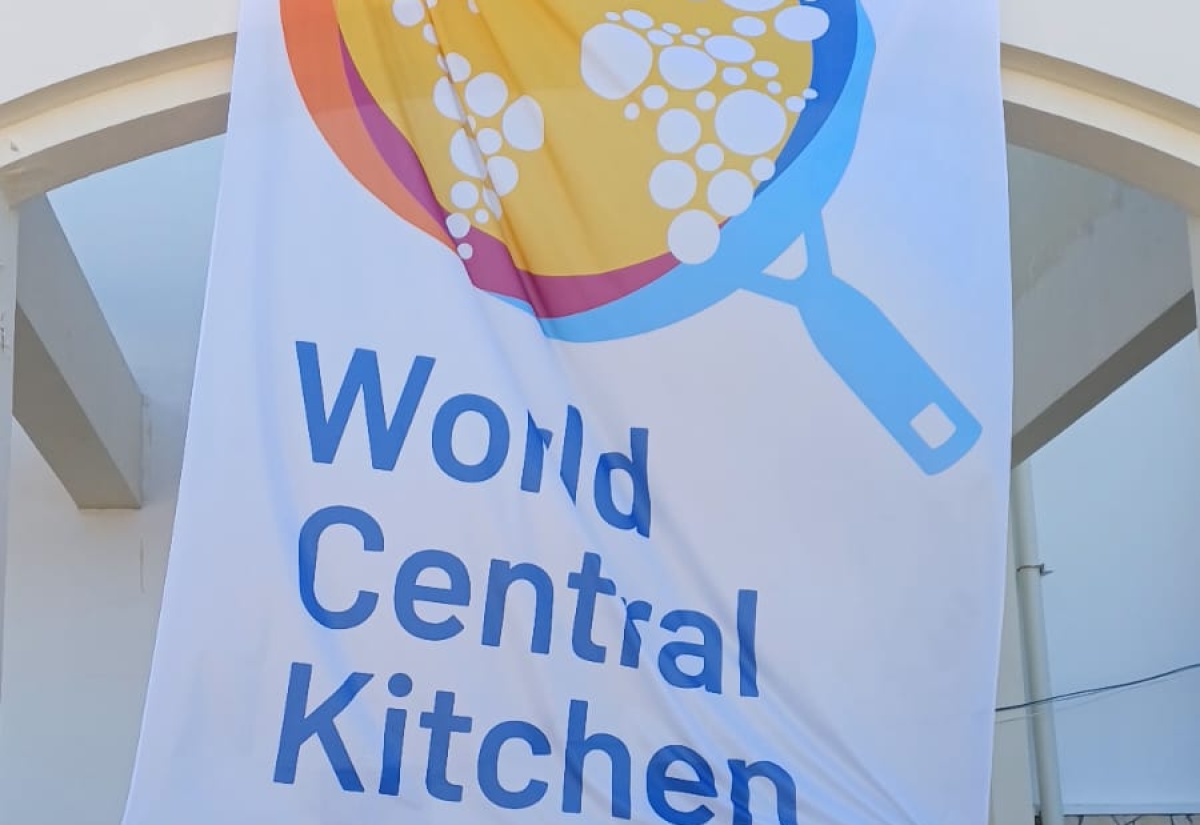
Photo: Garwin Davis
World Central Kitchen’s operations is currently headquartered at the Montego Bay Convention Centre, Rose Hall, St. James. It also has 180 distribuition sites and has so far provided over one million meals to victims of Hurricane Melissa.The Full Story
When Hurricane Melissa tore through sections of Jamaica on October 28 as a category-five storm, it left a painful reminder that in disaster zones, hunger can be a stubborn companion to destruction.
In response, an international nonprofit organisation known for turning crisis into meals – World Central Kitchen (WCK) – has mobilised with astonishing speed, transforming makeshift kitchens into lifelines for communities across the island.
Today, Jamaica is a living testament to WCK’s distinctive model – rapid deployment, local partnerships, and a cuisine rooted in culture.
The organisation reports it has already provided more than one million meals, equivalent to about 40,000 hot meals a day, along with sandwiches, fruits and water, to affected residents.
WCK operates through more than 180 distribution sites scattered from Montego Bay to St. Elizabeth, leveraging a corps of local drivers and Jamaican spices, to cook and deliver meals that taste like home.
Response Director and Activation Manager for Jamaica, John Torpey, speaks about the local set-up.
“Currently, we have a team working in the Montego Bay Convention Centre [Rose Hall, St. James]. We are preparing about 40,000 hot meals per day. We’re also doing sandwiches so people can take food with them home. We’re serving fruits and water. Several days ago, we reached one million meals in Jamaica,” he told JIS News in an interview.
“This is due to all these wonderful people here… from 4:30 in the morning to put the pots on, the drivers taking food out everywhere that’s hard hit,” he added.
Importantly, Mr. Torpey underscored a foundational principle guiding WCK Jamaica’s relief work – cultural relevance. He said that WCK is also focusing on providing culturally appropriate meals by using local ingredients and spices, having local chefs prepare the meals and replicating food that is familiar to the local community.
“It’s not just a hot meal; it’s letting them know that somebody cares about them, and it’s giving that culturally appropriate food. It’s giving them what they’re used to. It’s giving them what their mothers used to make, what their grandmothers used to make,” Mr. Torpey added.
Distribution site coordinator and one of WCK’s Jamaica-based associates, Toby King, noted that many drivers are tourism professionals who know their communities intimately.
“From our centre here at our Western Health Kitchen in Montego Bay, we’re sending out meals to communities from Trelawny to Westmoreland, and even as far as St. Elizabeth. It’s Jamaican people serving Jamaican people,” he said.
Mr. Torpey commended Minister of Tourism, Hon. Edmund Bartlett, and Prime Minister, Dr. the Most Hon. Andrew Holness, for their leadership and hospitality.
Dr. Holness, in the meantime, has publicly commended WCK for its “extraordinary support after Hurricane Melissa”, noting that the organisation’s relief has sustained reliable access to food and water and has strengthened the local economy by employing Jamaican workers in the relief effort.
The Prime Minister expressed deep gratitude for WCK’s compassion, efficiency, and commitment, as the country works toward recovery, and for the meaningful difference their partnership is making.
Mayor of Montego Bay, Councillor Richard Vernon, weighed in with his own perspective on the recovery effort.
“Montego Bay is rebuilding, and what we’re seeing from WCK is more than meals; it’s a sign of partnership and hope,” Mr. Vernon said.
“The collaboration with WCK is helping to restore a sense of normalcy for families who lost so much. We’re grateful for their presence and the jobs they’ve created for local workers,” he added.
Resident of Norwood, St. James, Joseph Lloyd, told JIS News that what World Central Kitchen offers is not just food; it’s dignity. “This is more than relief – it’s a message that Jamaica stands together,” he said.
The story of WCK itself underscores a philosophy that has guided the organisation since its founding. In 2010, Chef José Andrés launched WCK after witnessing the Haitian earthquake, choosing to “cook with local chefs and local ingredients to feed people in culturally relevant ways”.
The approach expanded in 2017 to rapid disaster relief, following Hurricane Harvey in Houston, when WCK began mobilising quickly to bring fresh meals to affected communities. Since then, the model has centred on using local networks, culinary talent and speed to bridge hunger in crises.
Today’s Jamaica mission demonstrates the model’s adaptability. As Melissa’s aftermath continues to unfold, WCK’s kitchens offer not only nourishment but a template for disaster response that respects local culture and economy.
By employing local drivers, using local spices, and partnering with Jamaican authorities, WCK has created a relief effort that feels less like aid and more like communal recovery.