


Research Driving Recovery, Renewal in Coconut Sector
By: , March 31, 2026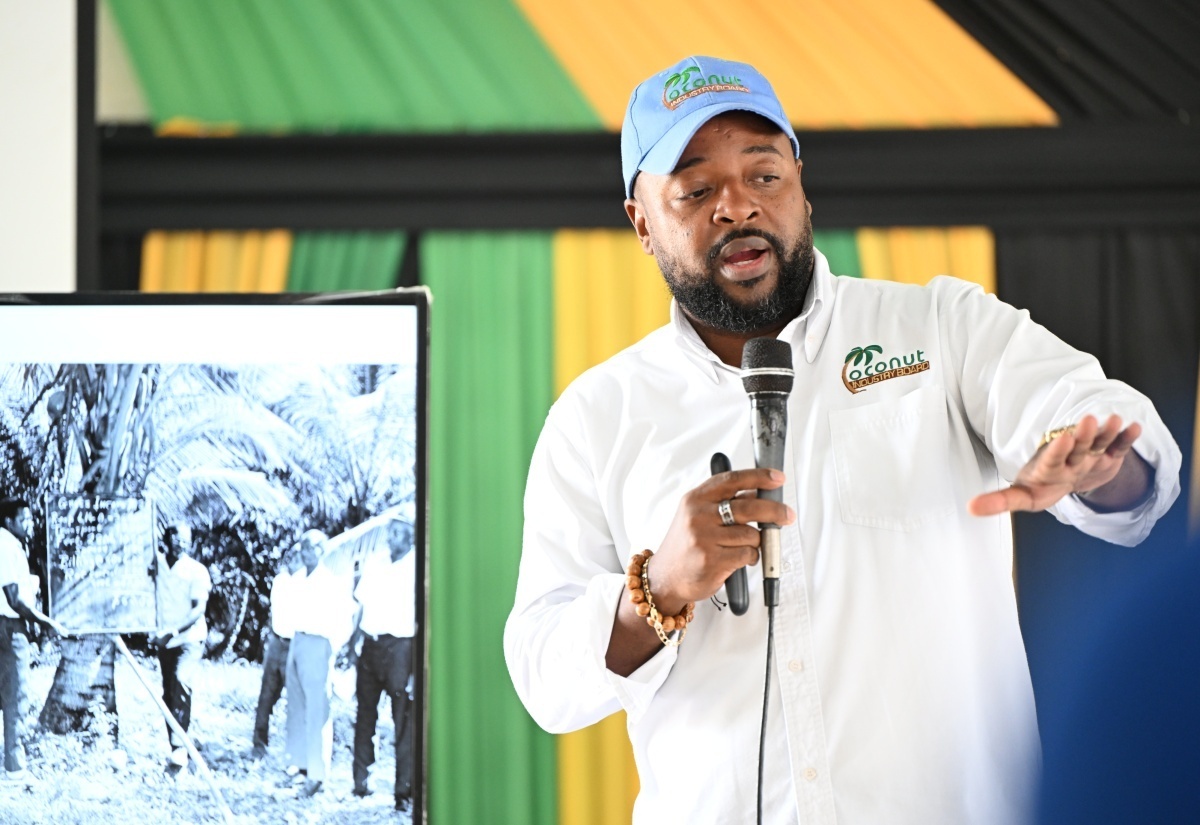
Photo: Nyoka Linton
Chief Executive Officer of the Coconut Industry Board (CIB), Shaun Cameron.The Full Story
As Jamaica’s coconut industry works to recover from the effects of Hurricane Melissa and other longstanding challenges, the Coconut Industry Board (CIB) is placing renewed emphasis on research and innovation as a key pillar of the sector’s recovery and long-term sustainability.
Chief Executive Officer of the Board, Shaun Cameron, says scientific research remains central to efforts to rebuild the industry, strengthen disease resistance, improve planting material and secure the future of coconut farming in Jamaica.
“No industry can survive without proper research,” Mr. Cameron tells JIS News, while outlining the Board’s strategic direction for 2026.
He notes that research has played a vital role in helping to restore the coconut sector after years of setbacks, including the devastating effects of lethal yellowing disease, which significantly reduced coconut production across the island.
The CEO shares that one of the Board’s major priorities is ensuring that the sector is equipped to withstand both old and emerging threats.
Among the concerns now being closely monitored is bud rot.
“We have been experiencing bud rot as of late too, so we’re focusing our research on that to maintain the industry,” he explains.
Over the years, the Board has worked to source and assess different coconut varieties from around the world to determine those best suited for Jamaica’s climatic conditions and agricultural environment.
This has allowed the Board to build and maintain the largest coconut germplasm collection in this hemisphere, providing a critical scientific base for breeding, testing and long-term crop improvement, Mr. Cameron says.
The germplasm collection, he points out, has been essential in supporting the development of new hybrids and improving the resilience of planting material available to farmers.
Research in the coconut sector, however, is not quick work.
Mr. Cameron notes that it can take 10 to 14 years to fully evaluate and develop a hybrid that is suitable for Jamaica’s climate and topography, underscoring the long-term nature of scientific investment in agriculture.
Still, the Board is pressing ahead with efforts to modernise its research capabilities and strengthen the tools available to support farmers and industry growth.
Among the initiatives being pursued is the development of local tissue culture capacity, which Mr. Cameron says, is a potentially transformative advancement for the sector.
Tissue culture involves the use of plant embryos to produce multiple seedlings, creating opportunities for more efficient propagation and improved access to planting material.
“So, instead of having one seed nut being a seedling, becoming a tree, we’re able to use the embryo, split the embryo and replicate many seedlings from that embryo,” he explains.
Mr. Cameron tells JIS News that only a few countries have that capability, noting that Jamaica is now seeking to build that expertise locally.
To support this effort, the Board is investing in scientific training and international partnerships, including collaboration with institutions in Sri Lanka, to help establish the capacity in Jamaica.
Mr. Cameron says that these efforts are not only intended to support current recovery but to strengthen the long-term sustainability and productivity of the industry.
The focus on research comes at a critical time for the sector, particularly following the severe impact of Hurricane Melissa, which damaged farms, disrupted production and further highlighted the need for resilience-building measures.
For the CIB, however, the way forward lies not only in recovery but in using science and innovation to help future-proof one of Jamaica’s long-standing agricultural industries.