

Fight Against Breast Cancer on in Earnest in the West
By: , October 21, 2025
Photo: Stock
Breast Cancer Awareness Month — Thematic Image Highlighting Support and Awareness.The Full Story
Breast cancer remains one of the leading causes of death among women in Jamaica, a stark reality that underscores the urgency of robust screening, early detection, and accessible treatment.
In the western region, where Westmoreland has emerged as the leading parish for breast cancer patients, the Western Regional Health Authority (WRHA) is at the forefront of this fight, coordinating prevention campaigns, improving awareness, and advocating for better diagnostic resources to save lives.
Across Jamaica, health officials and communities are acutely aware that early detection is a proven lifeline.
The Ministry of Health and Wellness has repeatedly underscored that breast cancer is a disease where time matters.
In frequent remarks framed by a sense of urgency, Minister of Health and Wellness, Dr. the Hon Christopher Tufton, stressed that the Ministry takes the situation in Westmoreland, and by extension the entire island, very seriously.
He has reminded Jamaicans that breast cancer remains a clear and present danger, urging women to seize opportunities for early screening, so that the disease can be detected when it is most treatable.
The Minister has emphasised that it is a proven fact that early detection saves lives, a message echoed by clinicians and researchers across the country.
In Westmoreland, health officials, both public and private, say that the numbers demand decisive action to raise awareness and improve access to diagnostics and care.
General Surgeon at the Savanna-la-Mar Public General Hospital, Dr. Lincoln Cox, has been vocal about the region’s situation.
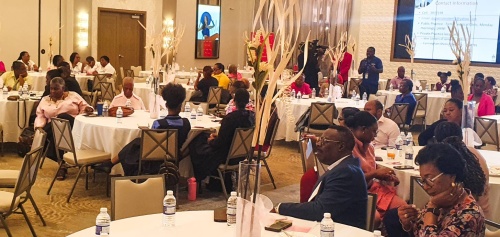
Speaking at the Faith Gifford Breast Cancer Symposium, held at Sandals Whitehouse, Westmoreland, on October 16, Dr. Cox described a reality where Westmoreland’s high incidence is part of a broader pattern affecting Jamaica’s western region.
“We have one of the highest incidences of breast cancer in the island,” Dr Cox noted, pointing to emerging data about germline mutations and racial disparities that inform how the disease presents in Jamaica’s Black population in the western region.
He shared sobering observations about the stage at which many patients present for care.
At the Savanna-la-Mar Hospital, the team performs modified radical mastectomies on young patients, including teenagers, but a sizable portion of patients arrive too late for curative surgery.
Those who present late often face chemotherapy as their only option, and many do not survive due to the advanced stage of the disease at presentation.
“The problem is not that we lack surgical capability. We can operate. The challenge lies in preparatory investigations and staging. We need mammography, ultrasound, CT or MR imaging of the breast, and even more advanced equipment for accurate staging. The hospital can perform surgeries but the preliminary investigations are often beyond our reach,” Dr. Cox explained.
The absence of timely radiological investigations forces patients to travel to Montego Bay, a journey that can be financially and physically burdensome.
“Those radiological investigations are hard sometimes in Montego Bay, St. James,” Dr. Cox said, highlighting that such barriers contribute to Jamaica’s high mortality rate.
The Misty Blue Foundation, a cornerstone of Westmoreland’s breast cancer awareness and support network since 2015, has built a reputation for mobilising communities through screenings for breast, cervical, prostate, and colorectal cancers, alongside routine checks for blood pressure and diabetes.
A crucial partner in this effort is the Sandals Foundation, whose support has underwritten annual mammogram campaigns and other health-awareness initiatives.
Founder, Dorothy Satchwell, spoke with passion about the transformation in her parish. “We started mammogram drives three years ago, and each year Sandals has really supported us by sponsoring mammograms,” she said.
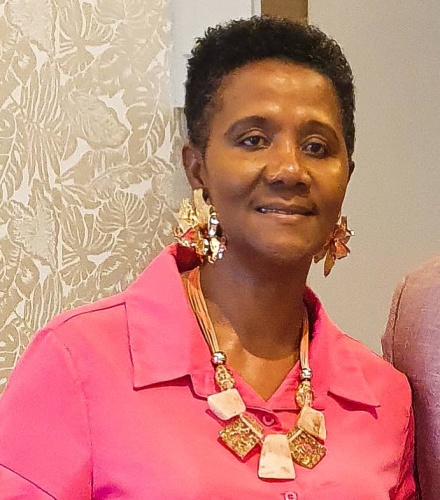
But the Foundation has aimed higher this year, seeking to broaden health education beyond screening.
“We wanted to move beyond just doing the mammograms and do more health awareness. We have been taking our programme into schools, visiting eight secondary schools and four primary schools, conducting breast health presentations and exposing students to mammograms and breast self-examination,” Ms. Satchwell explained.
Misty Blue plans to work more closely with State Minister for Health and Wellness, Krystal Lee, to develop targeted programmes that address local needs, including early detection campaigns and accessible screening.
Education and empowerment held a central place at the symposium. Students from local schools attended sessions that emphasised that cancer care extends beyond treatment to prevention, early detection, and supportive services.
The symposium was endorsed by the Ministry of Health and Wellness, signalling alignment between national policy and local action.
Breast Cancer Awareness Month is being observed in October.