


CASE Students Test Entrepreneurial Mettle at Research Day Expo
By: , April 8, 2026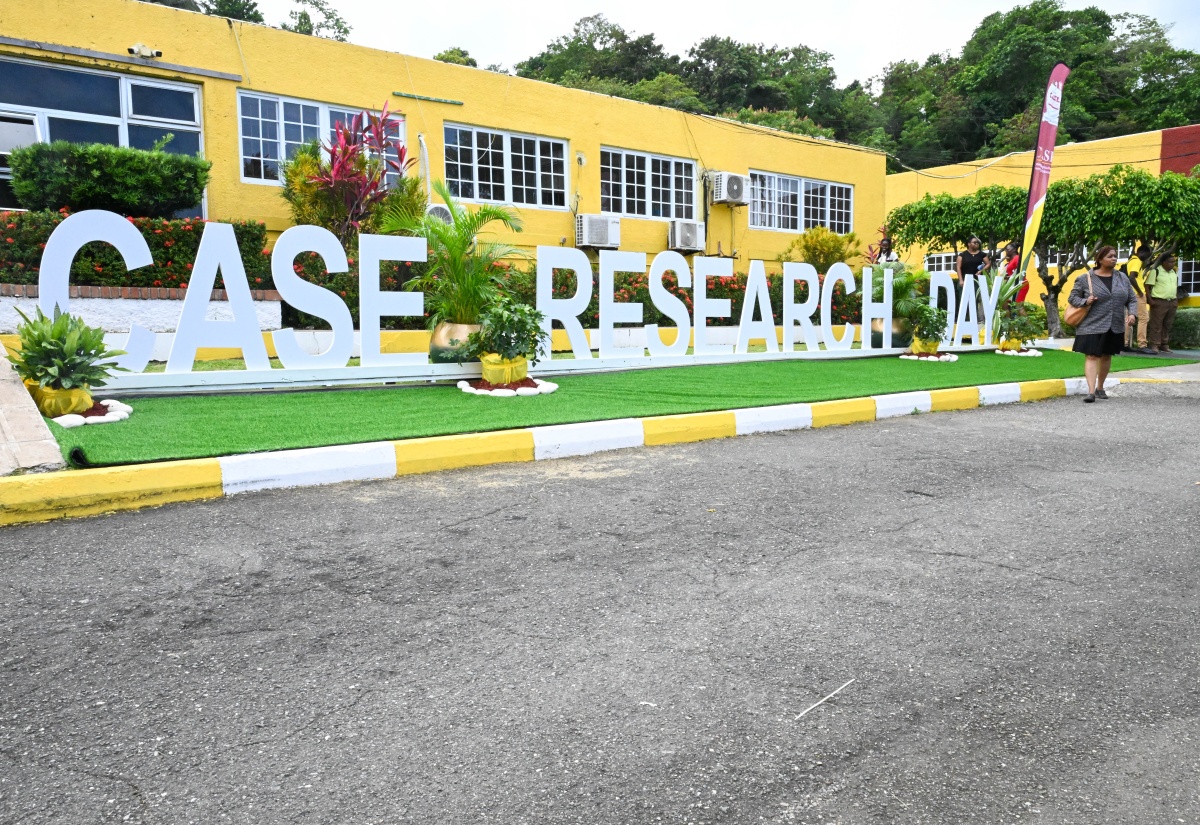
Photo: Janell Henderson
Research Day 2026 at the College of Agriculture, Science and Education (CASE) in Portland was marked by a sign proudly showcasing the event's name.The Full Story
The familiar hum of academic debate during the College of Agriculture, Science and Education (CASE) Research Day Expo in March gave way to the sizzle of grills and the whir of blenders, as students set aside textbooks for burners to test their entrepreneurial mettle.
For students enrolled in the Portland-based institution’s Small Business Management Programme, the Expo was transformed into a living laboratory.
Tasked with conceptualising, launching, and operating a viable enterprise, they unveiled a bustling booth under the name ‘Sweet & Savoury Bites’, offering a menu of chicken wraps, regular fries, smoothies, hot dogs, cheese dogs and other snack items.
More than just selling food, the exercise was a deep dive into the pressures and rewards of real-time entrepreneurship, aligning with the Expo’s theme, ‘Advancing Resilient and Sovereign Food Systems through Research, Innovation and Disaster Risk Reduction’.
Across the Expo, other student-led businesses added to the vibrant marketplace atmosphere. ‘Crunch & Sip’ served up quick bites such as regular fries, loaded fries, franks-and-fries, nuggets-and-fries, hot dogs and cheese dogs.
‘Di Sweet Spot’ attracted patrons with freshly baked treats and natural juices. ‘Tropical Twist’ offered slushies and fruit bowls with specials featuring two or three flavours and topping options like gummy bears and gummy worms. Meanwhile, ‘Vital Sips’ focused on smoothies, juices and fruit bowls.
Yet it was Sweet & Savory Bites that emerged as one of the Expo’s standouts, thanks to its diverse menu and a steady stream of customers.
The atmosphere at the booth was a lively mix of controlled chaos and youthful energy.
Between juggling orders and managing inventory, the students reflected on their shift from theory to practice.
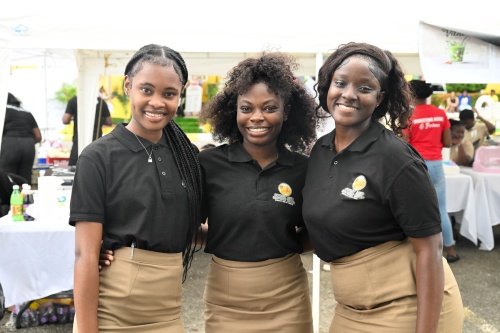
Team member, Alicia Myers, acknowledged that the experience was “stressful”, adding, “It takes a lot of work.”
Colleague, Shanika Robinson, who echoed the sentiment, noted that the engagement “was good”, adding “we learnt a lot”.
Janane Terrelonge said she found the experience manageable, describing it as “a success”.
One of the team’s most significant hurdles was logistics. Unlike a simulated business plan, they had to navigate real-world constraints, including coordinating supply chain timing and managing perishable inventory.
Ms. Terrelonge highlighted the challenge of managing demand during peak periods, noting their most stressful moment came when “finishing all the orders” to ensure customers received their meals on time.
However, she said the team was able to overcome this challenge through coordination and structure.
“We worked together and we wrote the names [of customers] on the boxes,” Ms. Terrelonge shared, adding that orders were processed based on a numerical sequence.
The team’s menu was carefully curated, not assembled at random.
“The students on campus… have limited access to certain foods. So we came up with this menu, because it’s easier and convenient for them and it’s affordable,” Ms. Robinson explained.
She added that the business operates on a set schedule rather than daily, catering to both lecturers during the day and students at night.
The students also incorporated elements of agricultural principles taught at the College, particularly in the preparation of smoothies where local fruits were sourced to keep costs manageable while ensuring freshness.
Yet the realities of running a business forced them to reassess some of their offerings.
“I wouldn’t do the fruit smoothie and cookies, but I’d still keep the wraps and fries,” Ms. Myers explained, noting that fruits “cost too much money” and carried the risk of spoilage.
Her assessment was supported by Ms. Terrelonge, who cited “limited resources” as a challenge, while Ms. Robinson noted that customer demand leaned heavily towards certain items.
“The demand for the wraps and the hot dogs is higher than the smoothies and the cookies,” Ms. Robinson said.
In grading their overall performance, Ms. Myers gave the team a “70 per cent” rating, pointing to teamwork, communication, and time management as areas needing improvement.
She emphasised that the key difference between classroom learning and the Expo experience was having to figure things out independently, in real time.
As the Expo wound down and the last order was served, the students agreed that the exercise had delivered a meaningful return, not only in revenue but in experience.
For them, Research Day was more than a showcase of academic work – it was a lesson underscoring that agriculture and education are intrinsically linked to commerce.