



Farmers Benefiting from Donation of Input Supplies by WUSC
By: , December 3, 2025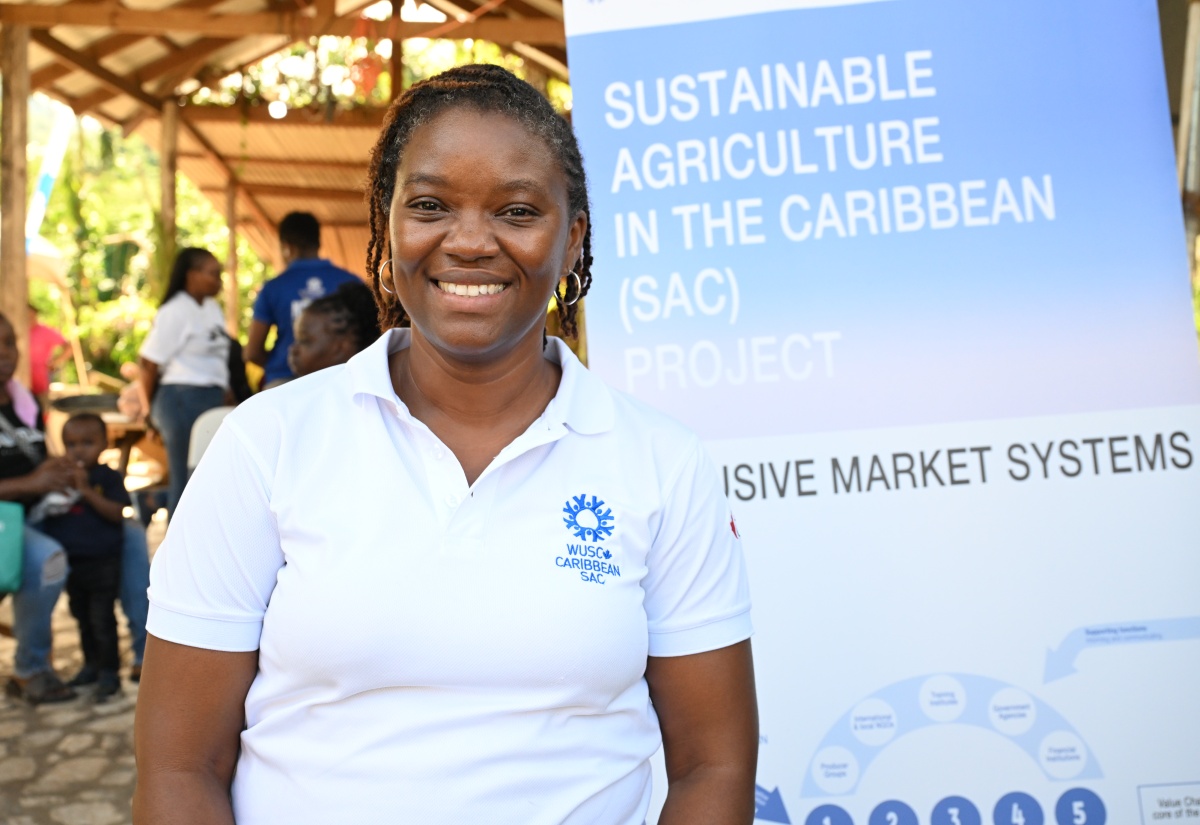
Photo: Janell Henderson
Jamaica Country Coordinator, World University Service of Canada (WUSC), Nelsa English-Johnson.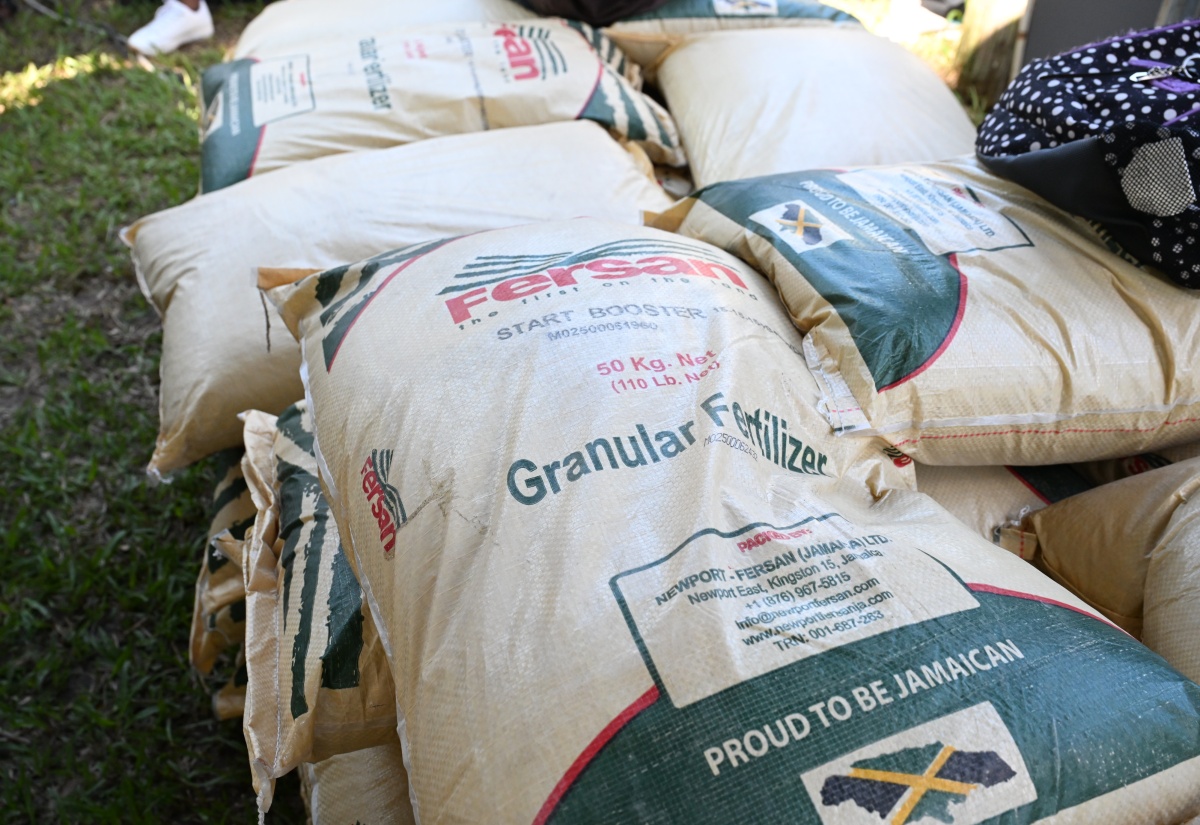
Photo: Janell Henderson
Newport-Fersan start booster fertilisers were distributed to farmers in Portland on November 28 to support plantain and banana production in the parish.The Full Story
To support their recovery from Hurricane Melissa on October 28, local farmers are benefiting from the donation of crucial input supplies by the World University Service of Canada (WUSC) Sustainable Agriculture in the Caribbean (SAC) Project.
The organisation secured funding of Can$150,000 from donor Global Affairs Canada, allowing for the provision of crop, livestock and poultry recovery kits to farmers most impacted by the hurricane.
Farmers in Portland benefited from the initiative on Friday (November 28), during an event put on by the Rural Agricultural Development Authority (RADA) in the Buff Bay area.
Jamaica Country Coordinator, WUSC, Nelsa English-Johnson, explained to JIS News that, “Portland is synonymous with the production of plantain and bananas, and in partnership with Newport-Fersan, we are providing 50 bags of start booster fertiliser to support these farmers to get back to production”.
“In the wake of Hurricane Melissa, our project… has been working across the island, facilitating different initiatives for women and youth in agriculture. As the Ministry of Agriculture has said, it’s all hands on deck,” she added.
She further noted that the Portland stop marks the beginning of a wider recovery campaign.
“This is just one stop in a series of initiatives that we will be undertaking. Next week Wednesday (December 3), we should be heading to St. Thomas to support farmers in the Cedar Valley area, as it relates to the provision of crop recovery kits. We’re also in discussion with the St. Mary RADA to also provide them with recovery kits,” Mrs. English-Johnson said.
An aspect of the recovery plan is designed to restore livelihoods quickly. In Cedar Valley, for example, Mrs. English-Johnson said the focus will be cash crops that will get the farmers back on their feet in a six-week interval.
“And then something that is three months and onwards to ensure that they can get back to creating their livelihoods as quickly as possible,” she said.
Acknowledging that Western parishes are facing deeper setbacks, the Coordinator stressed that it will be up to the East to ensure Jamaica’s food security.
“Our central and western parts of the island would have undergone a significant shock. It is going to take a bit of time before St. Elizabeth and parts of St. Ann, Trelawny, Westmoreland and St. James get back to their maximum productivity. What our farmers in Portland have said is we know we’re going to have to feed Jamaica,” Mrs. English-Johnson shared.
She argued that it is important for the project to focus on eastern parishes, “to be able to ensure that we don’t have food shortages in the near future”.