


FAO Official Wants Greater Effort in Technology and Research to Drive Sustainable Growth in Agriculture
By: , October 2, 2026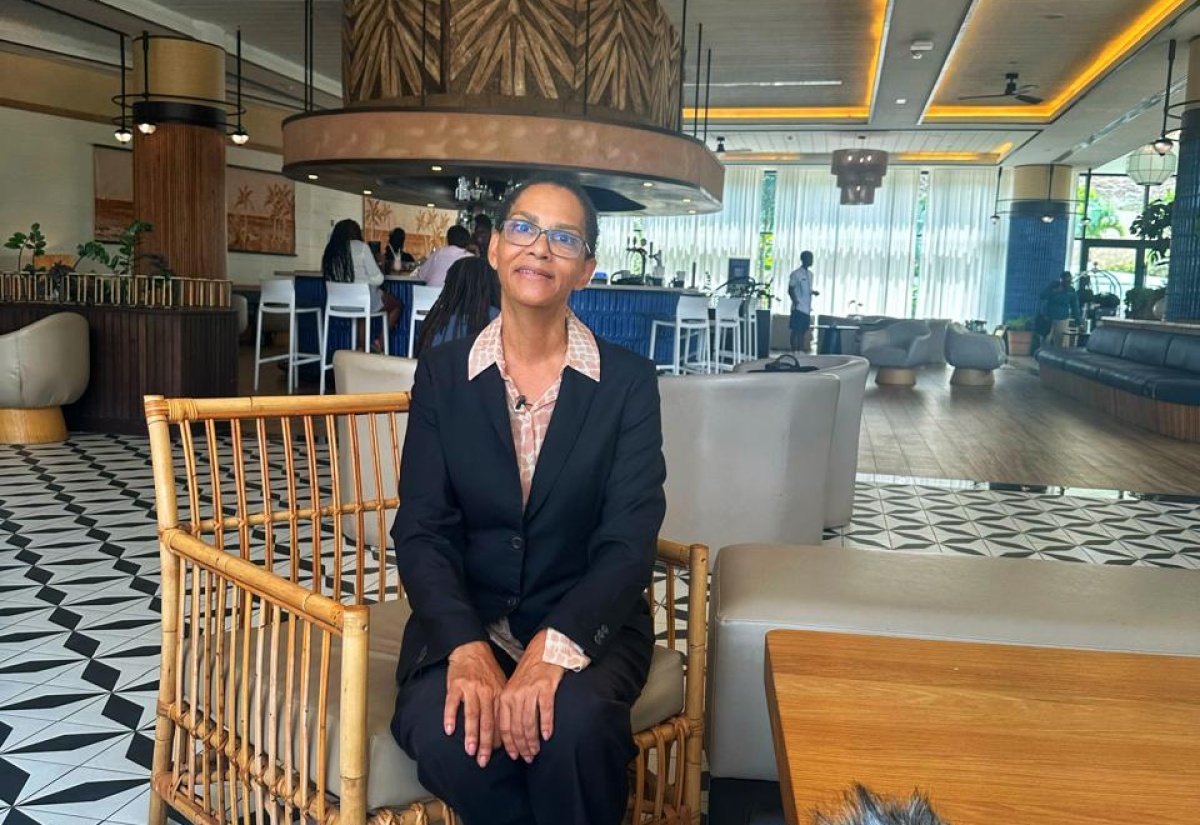
Photo: Twila Wheelan
Sub-regional Coordinator for the Caribbean from the Food and Agriculture Organization of the United Nations (FAO), Dr. Renata Clarke.The Full Story
Sub-regional Coordinator for the Caribbean from the Food and Agriculture Organization (FAO) of the United Nations, Dr. Renata Clarke, has reiterated the call for greater efforts in science, technology and research to drive sustainable growth in agriculture.
Dr. Clarke, who was speaking in an interview with JIS News during the 20th staging of the Caribbean Week of Agriculture (CWA), said she believes the region will transform the sector and there will be an increase in the industry’s contribution to gross domestic product (GDP) across the region.
“The sector’s transformation is much bigger than the value chains. It is much bigger [than] just growing the food… working in the laboratories or doing the climate projections and providing farmers with advice in anticipation. It is the technologies that will sustain innovation,” she said.
CWA 2026 is being held at the Ocean Coral Spring Resort in Trelawny under the theme ‘The New FACE of Caribbean Food Systems’.
Dr. Clarke explained that a strong research ecosystem is crucial to sustaining advancements and preventing future roadblocks.
“When we started some of our work on precision agriculture, I had read in the newspaper that the University of the West Indies was working on soil sensors. We went to find out, is it at a stage at which we can incorporate your work in a project, sensors designed, maintained in the Caribbean being used in projects in the Caribbean? The timing wasn’t right. It was too early for their research. But if I jump forward a few years, we’ve gone ahead with the sensor work,” she said.
“There have been a couple of cases where we’re buying sensors and maybe a year after, the company producing the sensors goes out of business. Suddenly a country has a system that can’t be updated. This transformation goes beyond what’s immediately obvious, and certainly in the next 30 years, with institutions like the University of the West Indies, I’m expecting that we will see this expansion of science and technology making us, or really optimising our potential in this space. I’m optimistic,” she said.
Meanwhile, Dr. Clarke said the sense of urgency within the region has increased to optimise efforts at self-reliance.
She explained that though the discussions about agricultural sector diversification did not start with COVID-19, things changed after the pandemic.
“There was never the sense of urgency. That came after COVID when we really realised we cannot count on 60, 70, 80, per cent of our food magically arriving by plane or by boat. So, the urgency has increased. It was difficult at the beginning, because it was almost as though people thought with a flip of a switch you go from nothing to everything,” she said.
Dr. Clarke expressed that effective and efficient agriculture is a result of planning, implementing systems, capacities and having institutions in place.
“There was a moment of disequilibrium, but that moment was certainly overcome by the urgency to act. I see all kinds of innovations that countries have been open to, including circular economy initiatives… many of the technical solutions have been found and found to work.
And the question is okay, but how do we scale up? How do we then go to that next level of finding the right financing by the right mechanisms? And how do we work together to make sure it happens sooner rather than later?” she said.
Conversations and technical sessions at CWA 2026 are intended to produce actionable outcomes as the region works to achieve food security in keeping with the CARICOM “25 by 2025 plus 5” target.
The initiative aims to reduce the region’s extra-regional food import bill by 25 per cent by 2030.