


Education Ministry Says No Child Must Be Denied Access to Public Schools
By: , January 30, 2026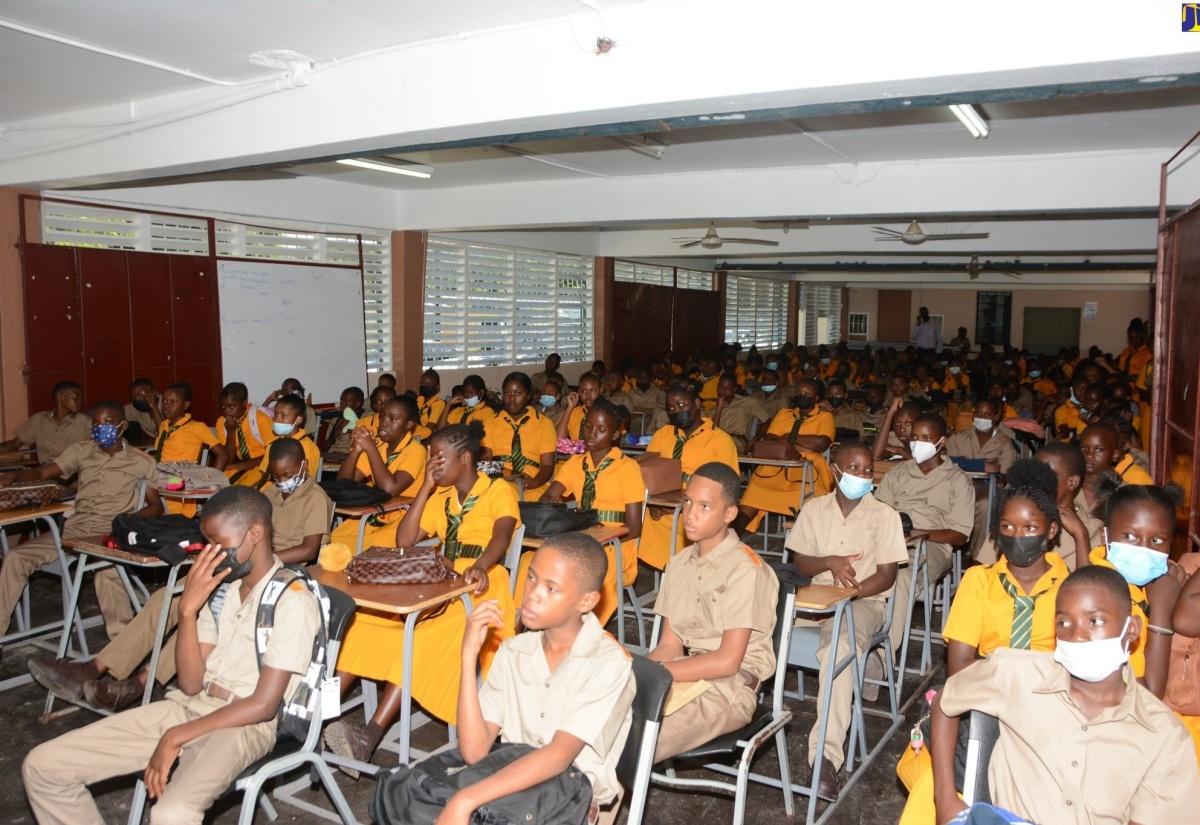
Photo: JIS File
Some students of the Petersfield High School in Westmoreland.The Full Story
A bulletin has been issued by the Ministry of Education, Skills, Youth and Information (MoESYI) reminding school leaders and stakeholders that every child has a right to education and must not be denied access to public schools.
The Ministry has reiterated that exclusion of children from school constitutes a violation of the International Convention on the Rights of the Child, specifically Articles 28 and 29, as well as the Child Care and Protection Act of Jamaica, thereby infringing upon a fundamental right to education.
According to the bulletin, school leaders, as agents of the State, are entrusted with the responsibility of ensuring that no child is excluded from teaching and learning, particularly while awaiting diagnostic assessment services.
The Ministry has noted with concern reports that some children are being kept from educational activities under the pretext of pending psycho-educational assessments.
Administrators are being cautioned that such practices expose children to social, emotional and environmental risks, while also widening learning gaps and contributing to behavioural challenges.
The Ministry’s mandate is to prioritise enrolment and attendance, and as such, all students must be in school.
Parents who visit schools with available capacity must be assisted, and principals who feel challenged in providing the necessary support are urged to contact their education officer or Regional Director for guidance.
The Ministry insists that no parent should leave a public school feeling uncared for, unserved or hopeless.
It was stated that once the Ministry is made aware of an out-of-school situation, it will be classified as an emergency case, triggering immediate measures to facilitate swift placement.
These measures include engaging schools to enable placement and providing sensitisation and support to principals and staff to effectively accommodate the student.
The Ministry also provides support for assessments, school placement and the assistance of a Special Education Needs Assistant (SENA), also referred to as a Shadow or Caregiver, without requiring an assessment report.
Parents and schools are reminded that commencing the assessment process is critical to developing a strategic educational plan tailored to the child’s needs. The Ministry reiterates its guiding principle that every child can learn, and every child must learn, despite their differences.
In its continued efforts to strengthen support systems, the Ministry is developing a comprehensive proposal to establish a cohort of clinical assessors to manage assessment cases, with all costs covered by the Ministry.
Already, diagnostic assessment services have been expanded with the introduction of a new centre in Region two, supplementing the existing centres in Regions one, four and five.
Additional Assessment Teams and Diagnostic Centres have also been established at Sam Sharpe Teachers’ College, Church Teachers’ College and The Mico Care Centre, thereby increasing the number of assessments and interventions being carried out.
School administrators are being encouraged to utilise the resources and support available through Special Education Officers and Regional Special Needs Coordinators.
Instructional leaders are also urged to explore partnerships with disability organisations and teacher training institutions specialising in special education to enhance educator training and intervention programmes.
Teachers are also being trained to administer screening tools, enabling the timely identification of student weaknesses and interventions through the Proficiency Pathways model under the Education System Transformation Project.
The Ministry remains committed to actively monitoring these situations and implementing strategies to ensure that every child has access to quality education in a safe and supportive environment.