


Drought-Affected Schools in St. Catherine to Get Water Tanks
By: , July 22, 2014The Key Point:
The Facts
- Under the project, which was officially launched on July 15, 1,000-gallon plastic water tanks will be supplied to the institutions to enable them to collect and store rain water.
- The beneficiary schools are: Springvale, Giblatore, Guanoba Vale, Berwick and Mount Herman primary; and the Hill Top, Top Mountain, Content, Springvale, Giblatore and Princess Field basic schools.
The Full Story
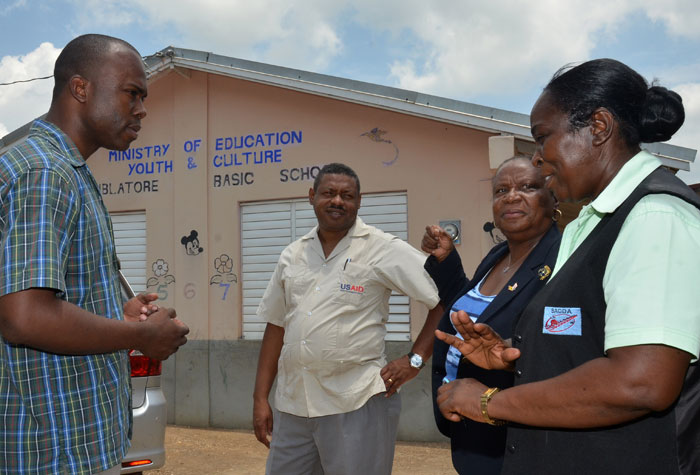
Ten schools and four community centres located in drought-affected areas of St. Catherine are to benefit from a rainwater harvesting project being undertaken through some $3 million in funding from the United States Agency for International Development (USAID).
Under the project, which was officially launched on July 15, 1,000-gallon plastic water tanks will be supplied to the institutions to enable them to collect and store rain water. It is being implemented by the St. Catherine Development Agency (SACDA).
The beneficiary schools are: Springvale, Giblatore, Guanoba Vale, Berwick and Mount Herman primary; and the Hill Top, Top Mountain, Content, Springvale, Giblatore and Princess Field basic schools.
The Content, Springvale, Giblatore and Princess Field community centres will also be supplied with water tanks.
Principal of the Spring Vale Primary School, Warrick Brown, in expressing gratitude, said that the tanks will better enable the schools to provide clean water for students. “This is a big public health step, and a big social step,” he stated at the project launch held at the Giblatore Church of God of Prophecy.
“We are happy for this, and the community is extremely grateful as well,” said Principal of the Berwick Primary School, Sonia Byrd. “Children will come to school, because there is water; teaching and learning will take place, and it will be good for the students and the teachers,” she added.
Senior Teachers at the Mount Herman Primary School, Cynthia Wolfe Anderson, stated that the tank is a welcome addition to the school’s existing water storage system. “Another tank is very beneficial, and we say thanks to the donors, USAID; we are just really grateful.”
Executive Director for SACDA, Nellie Richards, explained that the project is an expansion of disaster mitigation work already underway in some of the communities, in the areas of crop and livestock protection training, as well as improving the response capabilities of community persons to emergencies.
Noting that many of the communities have been severely affected by drought, she said that “this project will definitely impact lives and greatly improve the water supply at the various schools and community centres.”
She informed that while one tank will be allocated to each community centre, the number of tanks for each school will depend on their needs and population served.
Mrs. Richards said that the USAID is fully committed to ensuring that the project is implemented smoothly, noting that the agency “is very confident that we will receive the usual support and cooperation from the respective communities”.
Disaster risk management specialist with the USAID, Eduardo Gutierrez, urged the residents to take care of the tanks and ensure that they are properly maintained.
“This project will help people, and the real value of our project is how the communities work together to make things happen. If communities don’t have the capacity of organizing and maintaining the system, there will be no tanks, no water, and we will have the same problem over again,” Mr. Gutierrez pointed out.
President of the Giblatore Community Disaster Response Team, Leighton Lee, said the project is timely, as water is “needed in the communities, and the solution has come. We thank USAID for coming in, we are seeing an extended period of drought,” and harvesting of water can now take place in a managed way,” Mr. Lee said.
The funding from the USAID will also provide for the construction of areas to secure the tanks. The items are already being supplied and all the institutions should receive the items by the end of December.