


Collective Vigilance Required to Combat Human Trafficking – Permanent Secretary
By: , July 28, 2026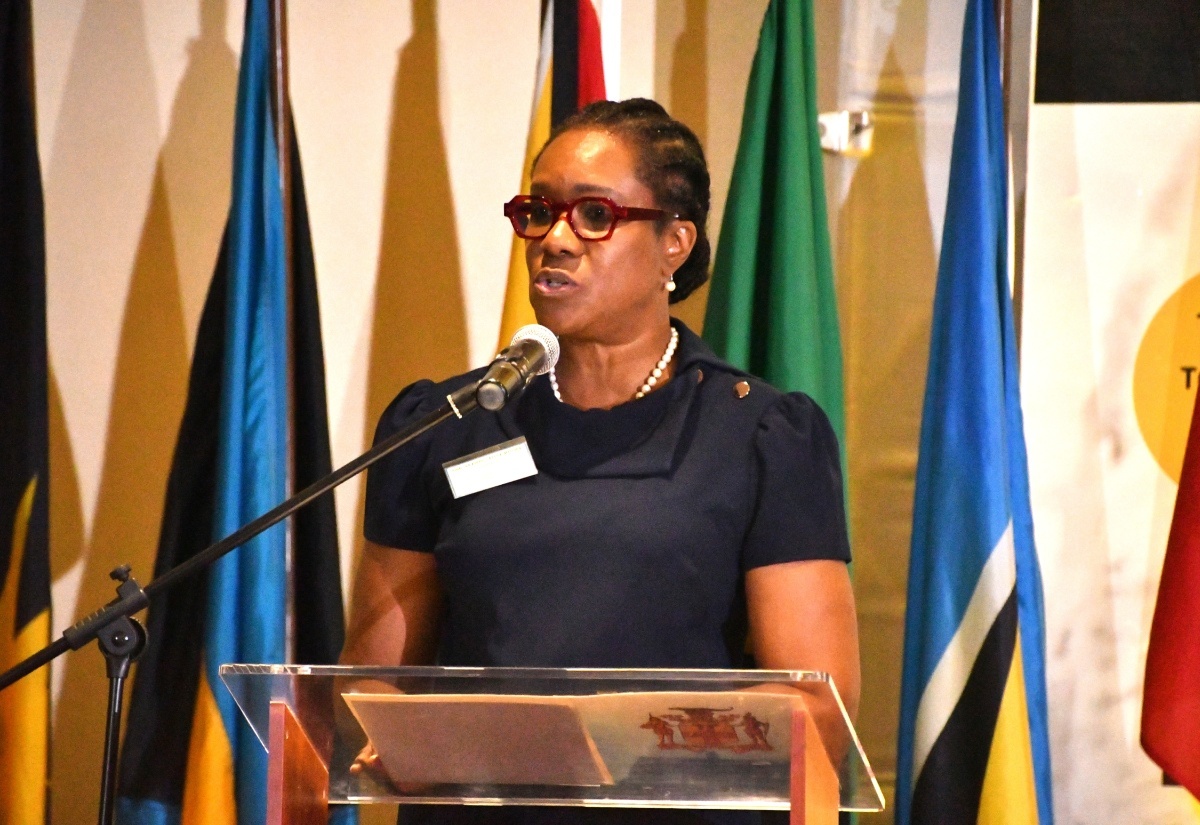
Photo: JIS File
Chairperson of Jamaica's National Task Force Against Trafficking in Persons (NATFATIP) and Permanent Secretary in the Ministry of National Security and Peace, Ambassador Alison Stone Roofe.The Full Story
Jamaicans are being urged to move beyond awareness and take decisive action to combat human trafficking, as protecting vulnerable people requires the collective vigilance of every citizen.
Chairperson of Jamaica’s National Task Force Against Trafficking in Persons (NATFATIP) and Permanent Secretary in the Ministry of National Security and Peace, Ambassador Alison Stone Roofe, made the call while addressing the national observance of Trafficking in Persons (TIP) Week 2026, during a church service at the Saxthorpe Methodist Church in Kingston on July 26.
TIP Week 2026, which runs from July 24 to July 30, aligns with the United Nations’ World Day Against Trafficking in Persons on July 30.
Ambassador Stone Roofe said Jamaica has observed the final week of July as Trafficking in Persons Week since 2016, following a proclamation by Governor-General, His Excellency the Most Hon. Sir Patrick Allen.
She noted that the observance provides an opportunity for national reflection, public education and renewed commitment to the fight against human trafficking.
Pointing to this year’s United Nations (UN) theme, ‘Trapped Behind the Scam: Exposing and Disrupting Human Trafficking’, she said it highlights the growing threat of trafficking linked to online scam operations, where victims are lured overseas with fraudulent job offers before being forced into cyber-enabled criminal activities, including romance scams and cryptocurrency fraud.
The Permanent Secretary underscored the global scale of the crime, noting that the International Labour Organization (ILO) estimates forced labour and trafficking generate approximately US$236 billion in illegal profits annually, while independent anti-financial crime coalitions place the figure at as much as US$498 billion.
She added that the United Nations estimates about 50 million people are trafficked each year, describing the crime as both costly and cruel.
Despite these alarming figures, Ambassador Stone Roofe said Jamaica continues to strengthen its response through deliberate policy measures and coordinated action led by NATFATIP, which was established in 2005 to enhance the country’s legislative, institutional and operational capacity to combat trafficking.
She highlighted several legislative reforms that have strengthened Jamaica’s anti-trafficking framework, including amendments to the Trafficking in Persons Act in 2013 and 2018, allowing for judge-only trials to reduce delays and intimidation, and further amendments in 2021 removing fines as a sentencing option to ensure convicted traffickers receive custodial sentences, reflecting the seriousness of their crimes.
Ambassador Stone Roofe also noted that the Major Organised Crime and Anti-Corruption Agency (MOCA) Act of 2018 identifies trafficking in persons as a serious offence within the Agency’s investigative and prosecutorial mandate, contributing to several successful convictions.
While acknowledging these legal and institutional advances, Ambassador Stone Roofe stressed that legislation alone cannot eradicate trafficking.
She said trained social workers are providing trauma-informed care to survivors, while members of the Jamaica Constabulary Force continue to receive advanced training to keep pace with the evolving tactics of traffickers.
She added that members of the judiciary are also being equipped with the legal knowledge and guidance needed to effectively prosecute offenders under the Trafficking in Persons Act and related legislation.
She appealed to churches and communities to support survivors with compassion and dignity rather than stigma and to remain vigilant in identifying and reporting suspected cases.
Delivering the sermon, Minister with the Methodist Church, Halton Hill, described human trafficking as a modern form of slavery driven by greed, selfishness and trauma.
Drawing on biblical examples, including the sale of Joseph into slavery by his brothers and the captivity of the young Israelite girl who served Naaman’s wife, he argued that trafficking has existed since ancient times and continues to flourish where there is family dysfunction, war, political instability and economic uncertainty.
Reverend Hill urged Christians and the wider society to confront the issue with moral courage, warning that while trafficking methods have evolved, the exploitation of human beings for profit remains an enduring evil that demands a united response.