

CASE Showcases Agricultural Innovation to OECS Education Leaders
By: , July 28, 2026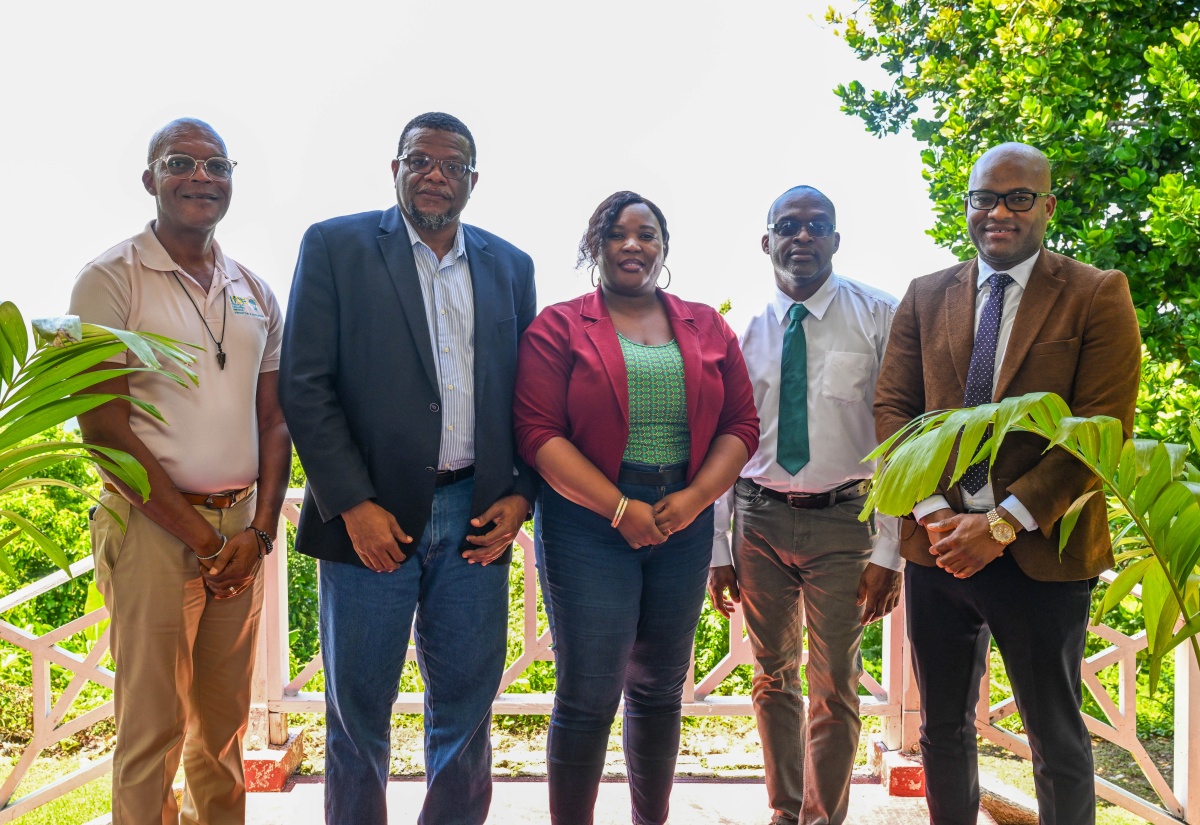
Photo: Janell Henderson
President of The College of Agriculture, Science and Education (CASE), Dr. Derek Deslandes (second left), stands with Grenada's Permanent Secretary in the Ministry of Education with responsibility for Human Resource and Education Development, Elvis Morain (left), during a recent visit by a delegation from the Organisation of Eastern Caribbean States (OECS) Skills and Innovation Project (SKIP) Study Tour. CASE hosted the delegation to showcase the institution's leadership in agricultural education, research, and innovation. Also pictured from (third left) are Permanent Secretary in Grenada's Ministry of Education, with responsibility for the Youth Transformational Skills Programme, Nailah James; Vice President, Academic – Summation at CASE, Fazel Huie; and Vice President, Administration – Institutional Overview at CASE, Marlon Palmer.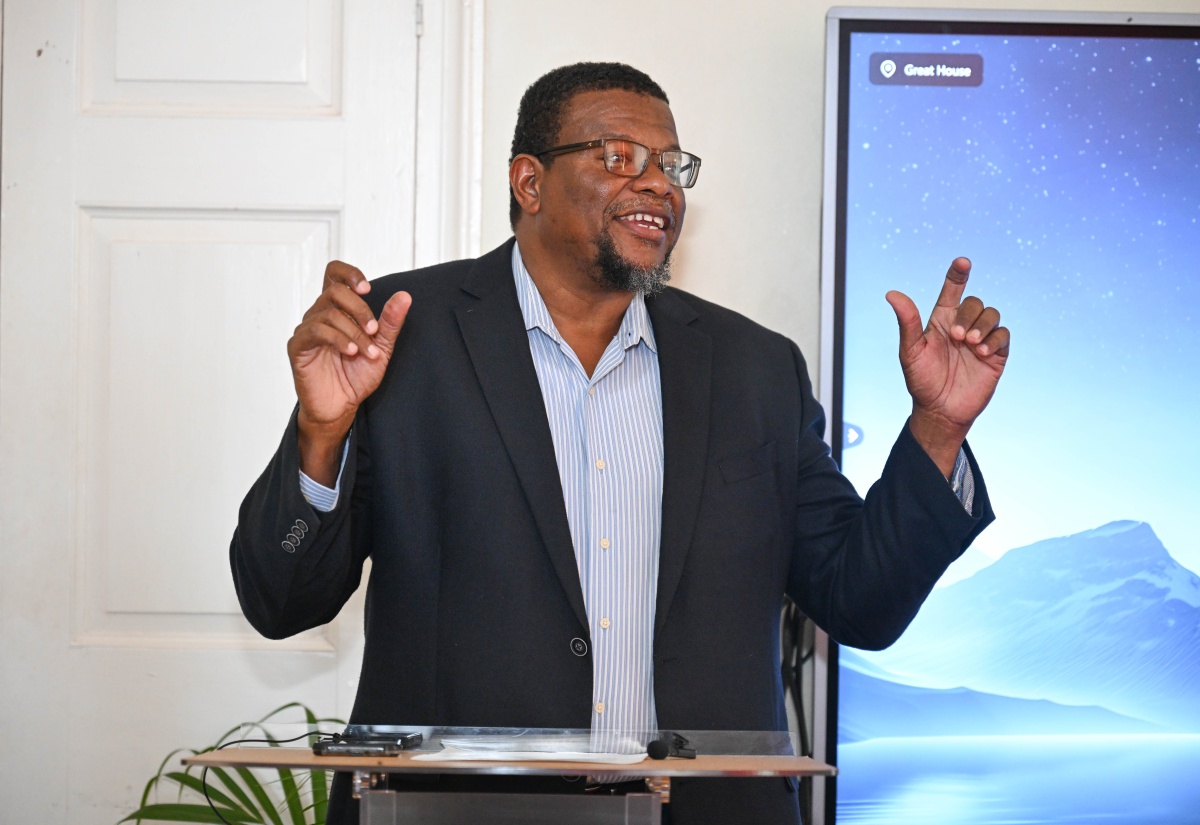
Photo: Janell Henderson
President of The College of Agriculture, Science and Education (CASE), Dr. Derek Deslandes, addresses a delegation from the Organisation of Eastern Caribbean States (OECS) Skills and Innovation Project (SKIP) Study Tour during a recent visit to the institution. CASE hosted the delegation to showcase its leadership in agricultural education, research and innovation.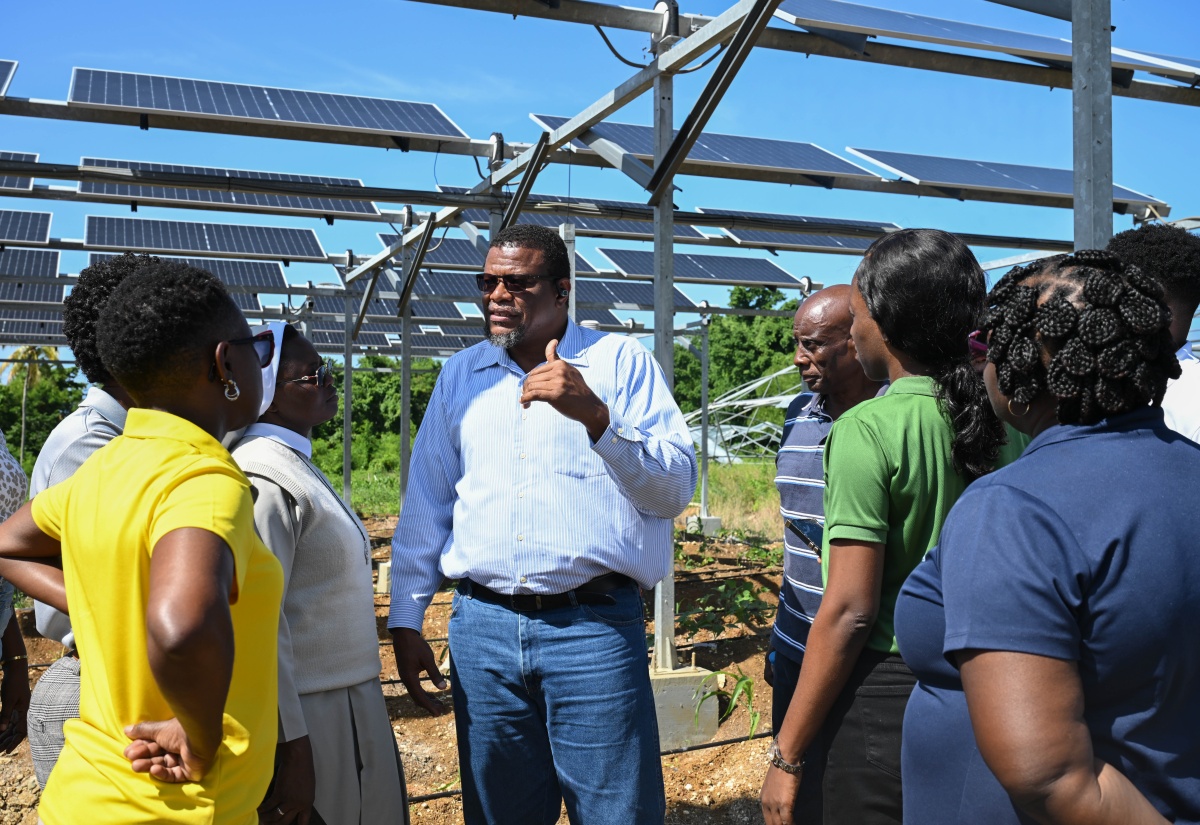
Photo: Janell Henderson
President of The College of Agriculture, Science and Education (CASE), Dr. Derek Deslandes (centre), engages members of a delegation from the Organisation of Eastern Caribbean States (OECS) Skills and Innovation Project (SKIP) Study Tour, during a visit to the institution recently. CASE was selected as a key stop on the regional tour in recognition of its leadership in climate-smart agriculture, agribusiness, workforce development and agricultural research.The Full Story
The College of Agriculture, Science and Education (CASE) recently welcomed a delegation from the Organisation of Eastern Caribbean States (OECS) Skills and Innovation Project (SKIP) Study Tour, highlighting the institution’s leadership in agricultural education, research and innovation.
CASE was selected as a key stop on the regional tour in recognition of its work in climate-smart agriculture, agribusiness, workforce development and agricultural research.
The OECS Skills and Innovation Project is a regional initiative aimed at strengthening curriculum development in key growth sectors, including sustainable agro-industries, the blue economy, clean and renewable energy, and the creative industries.
Permanent Secretary in Grenada’s Ministry of Education, with responsibility for the Youth Transformational Skills Programme, Nailah James, said the visit comes at a pivotal time as Grenada establishes centres of excellence for skills training.
“I think this visit is so timely for us simply because at this time we are establishing centres of excellence for skills training and, coincidentally, our first centre for launch is the Agriculture Centre of Excellence,” she said.
“Right now, the team is actually trying to figure out what that final implementation would look like and how the Centre would operate,” she added.
Ms. James noted that CASE’s research and innovation activities provide valuable insights that can help shape Grenada’s approach.
She also commended Jamaica’s long-standing leadership in Technical and Vocational Education and Training (TVET).
“Once we start discussing things like TVET, Jamaica is always one of the leaders within our region, our Caribbean space,” Ms. James said.
She pointed out that expanding access to TVET remains one of Grenada’s national education priorities.
“It is one of our national policy priorities for the education sector to ensure that we make TVET accessible and affordable. Visiting institutions like CASE allows us to really figure out what would happen in a practical sense and how it should happen and how it would benefit our students,” she added.
Meanwhile, Permanent Secretary with responsibility for Human Resource and Education Development, Elvis Morain, said the visit was intended to expose the delegation to Jamaica’s educational and agricultural best practices.
Mr. Morain explained that, as an agricultural country, Grenada is seeking to address a decline in skilled agricultural practitioners.
“We noticed over the years that our skilled practitioners in agriculture have depreciated. We see this as very important for upscaling some of our people in agriculture,” he said.
He noted that the delegation also examined CASE’s programmes beyond agriculture, including early childhood education and teacher training.
“We, as a Ministry, have focused on trying to improve our offering at that level. We believe it’s the most critical level in our education system. So, it’s an area that we’re looking at, as well as general teacher education,” Mr. Morain said.
Looking ahead, he expressed hope that the visit would lead to a formal partnership between Grenada and CASE.
“Well, having basically formalised some sort of cooperation with a Memorandum of Understanding (MOU)… and I’m also hoping that, as part of that, we would be able to see some of CASE’s staff visiting Grenada to see what we have,” he said.
For his part, President of CASE, Dr. Derek Deslandes, said the institution has embraced regional partnerships as a means of strengthening agricultural education and innovation across the Caribbean.
“CASE has essentially established relationships across the region based on the corporate collaboration model because we recognise that we don’t all have all the resources we need, and we believe that if we work together, we can share those resources and maximise the wealth of knowledge and benefits,” he said.
Dr. Deslandes stressed that regional collaboration is essential as Caribbean countries work to improve food security, agricultural productivity and technological integration.
“There’s an old saying, ‘A rising tide lifts all boats’, so it’s important that as we move and as we push towards greater integration of technology and look at issues like food security and improvements in productivity, we share that with our Caribbean colleagues because, essentially, we are all in the same boat,” he said.