


Animal Tagging Effective in Combatting Praedial Larceny – SSP Pascoe
By: , February 26, 2026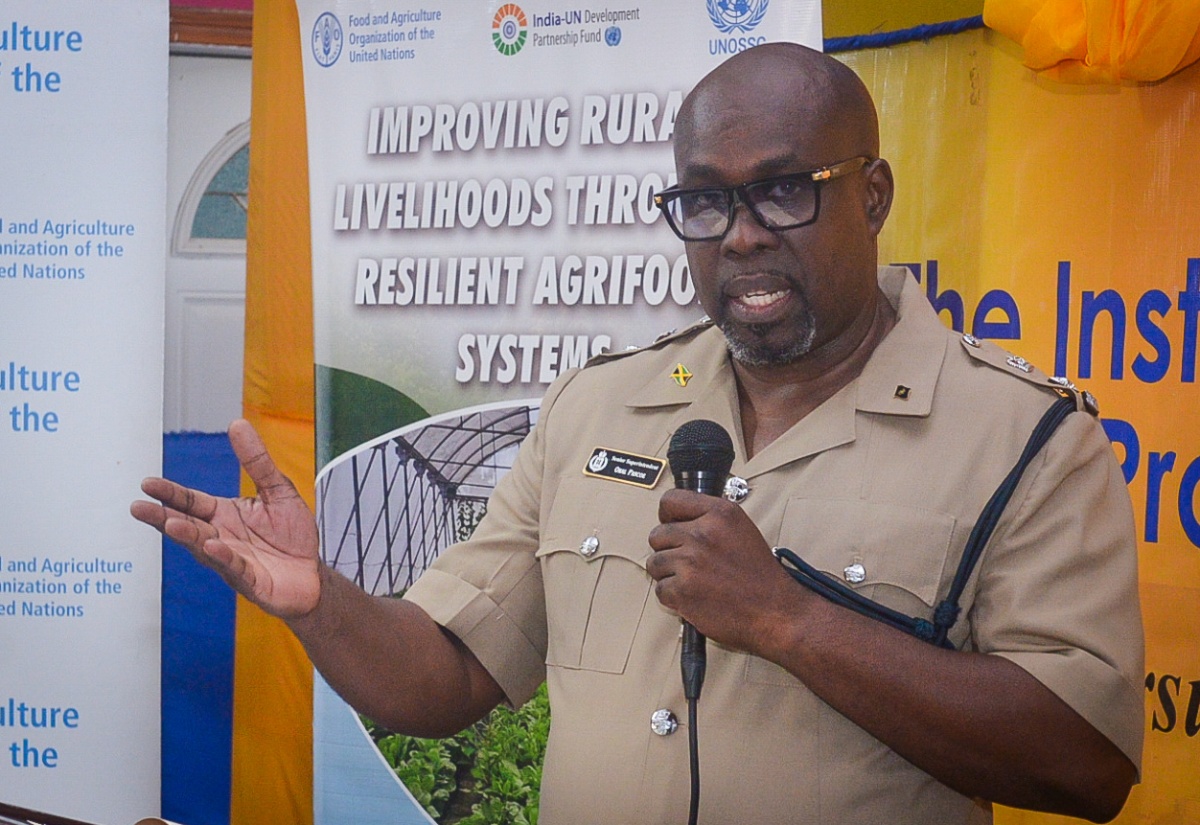
Photo: Dave Reid
Commanding Officer of the Jamaica Constabulary Force (JCF) Agricultural Protection Branch (APB), Senior Superintendent of Police (SSP) Oral Pascoe, addresses Monday's (February 23) certification ceremony for persons who participated in the Improving Rural Livelihoods Through Resilient Agrifood Systems Project, held at the Spring Village Community Centre in St. Catherine.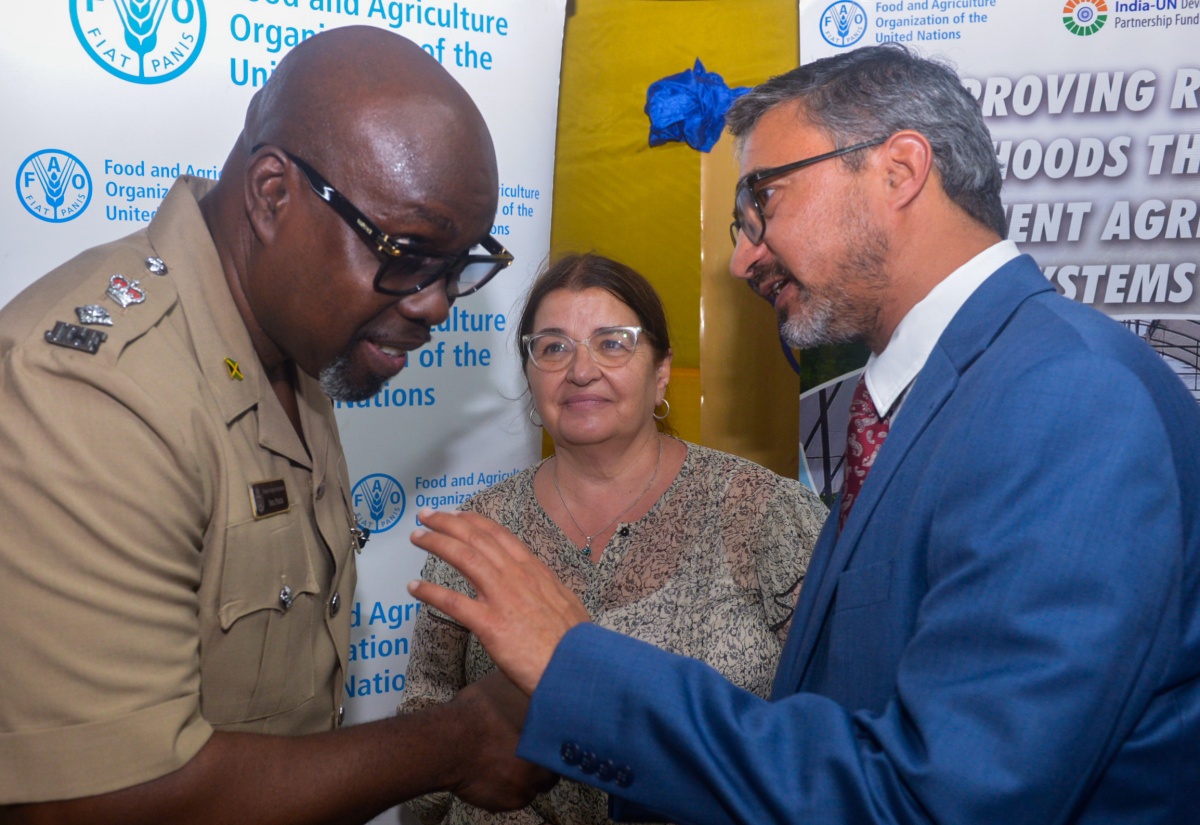
Photo: Dave Reid
Commanding Officer of the Jamaica Constabulary Force (JCF) Agricultural Protection Branch (APB), Senior Superintendent of Police (SSP) Oral Pascoe (left), is in conversation with Indian High Commissioner to Jamaica, His Excellency Mayank Joshi (right), during Monday's (February 23) certification ceremony for persons who participated in the Improving Rural Livelihoods Through Resilient Agrifood Systems Project, held at the Spring Village Community Centre in St. Catherine. Looking on is Food and Agriculture Organization Representative for Jamaica, The Bahamas and Belize, Dr. Ana Touza.The Full Story
Commanding Officer for the Jamaica Constabulary Force’s (JCF) Agricultural Protection Branch (APB), Senior Superintendent of Police (SSP) Oral Pascoe, is encouraging more cattle farmers to safeguard their animals by getting them tagged.
He said that tagging provides “very effective protection” against praedial larceny, imploring farmers to, as best as possible, tag from birth.
“The tagging is free at the moment and the passport is free, and we encourage farmers to tag cattle; goats are coming next. It is very important because what it does, it means that if you have cattle, it increases the chance of persons not stealing them and moving them into the market,” he said.
SSP Pascoe was speaking at a certification ceremony for persons who participated in the Improving Rural Livelihoods Through Resilient Agrifood Systems Project, held on Monday (February 23) at the Spring Village Community Centre in St. Catherine.
The tagging of cattle is done under the National Animal Identification and Traceability System (NAITS), which is administered by the Veterinary Services Division (VSD) in the Ministry of Agriculture, Fisheries and Mining.
Visual ear tags are affixed to the animal’s ears and a passport containing the same identification number as that on the ear tags is issued to the owner and must accompany the animal when moved from one establishment to another.
The passport incorporates information on the animal’s identity, ownership, geographical location and movement activity, from birth to death.
All information gathered is stored electronically in a database.
SSP Pascoe informed that the system has enabled the police to recover about $1.5 million worth of cattle in recent times.
“Along with the receipt book system, it is very difficult to beat, and that is why it has proven to be very effective,” he said.
SSP Pascoe informed that farmers have welcomed the system, with more of them indicating they are going into goat and cattle production “because they feel more secure”.
“Traceability is a good thing,” he said.
Implemented by the Food and Agriculture Organization (FAO) of the United Nations (FAO) in collaboration with the Government of Jamaica, the Improving Rural Livelihoods Through Resilient Agrifood Systems Project aims to advance rural development and build climate-resilient food supply chains.
It is funded under a United Nations South-South Cooperation Initiative through the India-United Nations Development Partnership Fund.
To date, the project has reached some 201 beneficiaries across St. Catherine, equipping farmers, students and technical officers with practical skills in livestock management, entrepreneurship, protected agriculture, food safety management, animal housing construction, photovoltaic installation and training delivery.