


Justice Minister Wants More Agencies to be Involved In Child Diversion Programme
By: , March 26, 2026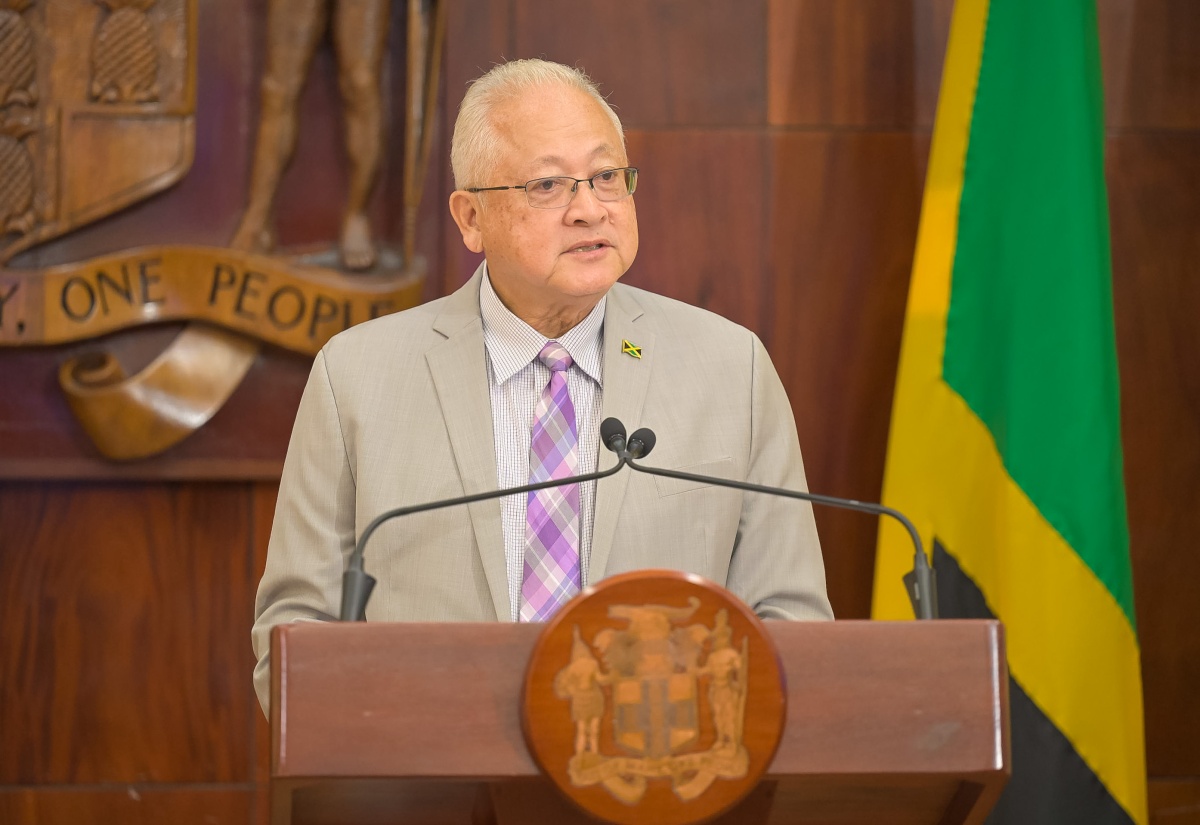
Photo: Donald De La Haye
Minister of Justice and Legal and Constitutional Affairs, Hon. Delroy Chuck.The Full Story
The National Child Diversion Programme should be expanded to allow for greater involvement of agencies other than the police in diverting children charged with offences, says Minister of Justice and Constitutional Affairs, Hon. Delroy Chuck.
Speaking at a Joint Select Committee meeting to review the Act in the House of Representatives on March 25, the Minister emphasised the need for more inclusive measures in addressing the behaviour of young people at risk of entering the criminal justice system.
Mr. Chuck, in highlighting concerns that the Act currently restricts the scope of intervention by limiting referrals to only the police and the courts, argued that agencies such as the Child Protection and Family Services Agency (CPFSA), the Centre for the Investigation of Sexual Offences and Child Abuse (CISOCA), the Children’s Advocate, and school Guidance Counsellors should also play a greater role in referring children to diversion programmes.
The National Child Diversion Act, which came into effect in 2019, aims to reduce the number of children who are charged with offences and exposed to the formal criminal justice system. It was designed to encourage the use of diversionary programmes, focusing on rehabilitation rather than punishment.
The Act primarily applies to children aged 12 to 17, directing those who commit certain offences away from criminal courts and towards free-of-cost mentorship programmes.
“Why do we wait until a child offends?” the Minister asked, adding that the focus should be on identifying children at risk before they commit an offence.
He noted that there is often a window of opportunity when children are on the brink of engaging in risky behaviour, but the current system does not allow for intervention until an offence has been committed.
According to Mr. Chuck, the child diversion system must be expanded to proactively address these situations and prevent children from being drawn into crime.
The Minister acknowledged that the role of the CPFSA overlaps with the child diversion programme in some cases. He told the Committee that a way must be found for agencies to work together, where CPFSA or guidance counsellors can step in and refer children at risk to the Child Diversion Programme, even before a formal offence occurs.
Mr. Chuck pointed out that the current law’s limitations mean that a significant number of children who might benefit from diversionary programmes are not included, while urging the Committee to consider broadening the referral process to include a wider array of professionals who interact with children on a daily basis.
He also proposed that schools could play a more active role in the process, suggesting the creation of a school-based disciplinary committee that could refer students who commit minor offences to either the CPFSA, the Child Diversion Programme, or to a school constable.
If the child fails to engage satisfactorily with the programme, the constable would have the discretion to charge the child and take him or her to court. This approach, Mr. Chuck explained, could ensure that young people are given the chance to correct their behaviour before facing legal consequences.
“We are all trying to protect our children,” the Minister said, urging continued discussions on how to expand the child diversion programme without losing sight of its primary objective – to help children before they reach a point of no return.