


Students Being Empowered Through Mental Health Programme
By: , March 25, 2026
Photo: Garfield Angus
Acting Principal of the Jonathan Grant High School in St. Catherine, Cheryll Shippey, addresses an adolescent mental health forum, held recently at the British High Commission in St. Andrew.The Full Story
Students at Jonathan Grant High School in St. Catherine are being equipped with far more than academic knowledge.
Through a comprehensive three-year adolescent mental health initiative, they are gaining the tools, confidence, and support needed to navigate the increasingly complex realities of modern life.
The programme, which began recently, is designed to strengthen mental wellness among high-school students by promoting a balanced approach to academics, social life, and personal development.
It also addresses emerging challenges such as responsible use of artificial intelligence (AI), managing social media pressures, and coping with digital stress issues that are becoming central to adolescent experiences worldwide.
Organised by the Chevening Alumni in Jamaica, in partnership with the British High Commission, the initiative was recently showcased during a workshop at the High Commission, held under the theme ‘Empowering Minds, Building Resilience, Supporting Adolescents on the Academic Journey’.
The event brought together educators, policymakers, mental health professionals and students to highlight practical, evidence-based approaches to adolescent well-being.
Acting Principal at the school, Cheryll Shippey, described the programme as a transformative journey, aimed at empowering students from within.
She emphasised that the initiative goes beyond acknowledging mental health challenges, focusing instead on equipping students with practical, evidence-based strategies to manage them.
“The programme is meticulously designed and comprehensive in its scope. Its central purpose is to foster recognition of the resilient inner strength that already exists within each student, while providing them with tools to confidently and proactively manage life’s complexities,” she said.
According to Miss Shippey, the initiative seeks to build a strong foundation of emotional and mental fortitude, ensuring that students are prepared to face both everyday challenges and significant life obstacles with clarity, self-awareness, and resilience.
She argued that this focus on long-term well-being is essential to academic success and personal growth.
Supporting this perspective, Director of Mental Health and Substance Use Services at the Ministry of Health and Wellness, Dr. Kevin Goulbourne, highlighted the critical developmental stage of adolescence.
He noted that this period is marked by identity formation, peer relationships, and future planning, making it a pivotal time for mental health intervention.
“Young people today are navigating a global environment filled with influences that did not exist decades ago. These factors impact their social, physical, and mental well-being, as well as their academic performance,” Dr. Goulbourne said.
He pointed to global data indicating that a significant proportion of mental illnesses begin before the age of 14, underscoring the urgency of early intervention.
The Ministry, he explained, has already implemented school-based mental health leadership programmes to encourage awareness, early help-seeking, and positive coping strategies among students.
Importantly, Dr. Goulbourne emphasised that modern tools such as AI and social media, while often sources of stress, can also enhance learning and social interaction when used responsibly.
He expressed confidence that the initiative at Jonathan Grant High School could serve as a model for expansion across Jamaica.
Delivering the keynote address at the workshop, Quality Assurance Coordinator at the Office of the Children’s Advocate, Anna-Maria Dawkins-Johnson, provided a relatable perspective on adolescence.
She described it as one of the most challenging periods of life, a time of uncertainty, responsibility, and self-discovery.
“Adolescents are not unaware of the world around them. They experience their own stressors while also absorbing the realities of their environment,” Mrs. Dawkins-Johnson said.
She pointed to recent events, including Hurricane Melissa, as reminders that young people are often exposed to trauma and disruption while still being expected to perform academically at high levels.
In this context, she stressed the importance of resilience, not as an innate trait but as a skill that can be nurtured over time.
“A resilient student is one who can face adversity, adapt, and rise above challenges,” she said, highlighting key traits such as persistence, adaptability, and self-efficacy.
Mrs. Dawkins-Johnson made it clear that resilience begins with empowerment. This involves fostering self-awareness, encouraging open communication, and creating environments where young people feel seen, heard and valued.
“It’s about giving young people the tools, the voice, and the environment to take charge of their mental health and academic growth,” she noted.
Assistant Chief Education Officer in the Guidance and Counselling Unit at the Ministry of Education, Skills, Youth and Information, Kennecy Davidson, reinforced the national importance of such initiatives.
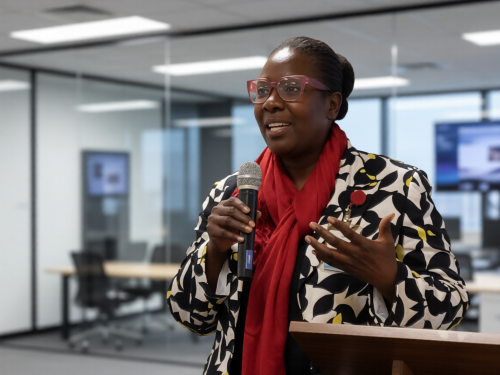
She reminded students that their well-being is directly tied to Jamaica’s future.
“If we are serious about the future of our country, we must take care of you. You are not here because you are lacking; you are here because you have potential that must be nurtured,” Ms. Davidson emphasised.
Child Protection Officer at UNICEF Jamaica, Alyssa Allen, described adolescence as both a period of possibility and vulnerability.
She acknowledged that many young people are carrying emotional burdens, particularly in the aftermath of disruptive events like Hurricane Melissa.
“Adolescents are dealing with anxiety, depression, and uncertainty, often while trying to maintain academic performance,” she said, emphasising that mental health is a fundamental right, not a luxury.
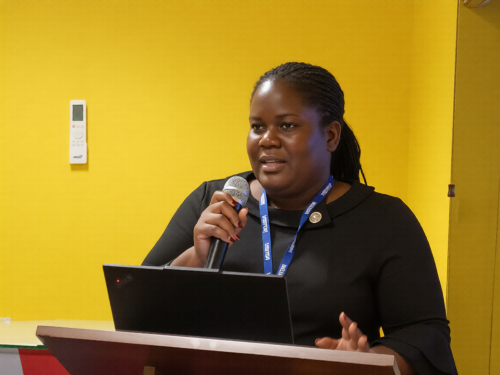
Ms. Allen argued that young people must be seen as partners in shaping mental health solutions.
“They are not just beneficiaries; they have ideas, voices, and solutions,” she continued.
The collaborative approach was further reinforced by Advisor at the Pan American Health Organization (PAHO), Dr. Patrice Lawrence-Williams, who underscored the importance of building resilience at every level from individuals to families and communities.
Sharing a poem written by an adolescent, Dr. Lawrence-Williams illustrated the often-hidden struggles young people face.
The piece captured feelings of internal chaos, emotional suppression, and the pressure to appear strong, experiences that resonated deeply with the audience.
The poem also highlights a concerning reality – increasing numbers of adolescents are grappling with thoughts of suicide.
Dr. Lawrence-Williams stressed the need for early intervention and proactive engagement to address these issues before they escalate.
“We must identify opportunities for action before crisis points are reached,” she urged.

At the school level, Guidance Counsellor, Alicia Harris, provided insights into the specific challenges faced by students across different grades.
She noted that younger students often deal with bullying and peer pressure, older students grapple with family relationships and social expectations, and students in the middle grades are particularly affected by social media use.
Chevening scholar and past student, Sherika Ballingsing, highlighted the broader objective of the initiative: empowering students both academically and socially.
“Sometimes academic struggles are not about understanding the material. They are linked to how students feel about themselves, their environment, and the support they receive,” she said.
The initiative is supported by a range of partners, including the British High Commission, Mother’s Jamaica, National Baking Company, WB Trophies, Wisynco, Lasco, and Jamaica Teas.