


Government Launches Public Sector Flexible Work Arrangement
By: , January 30, 2026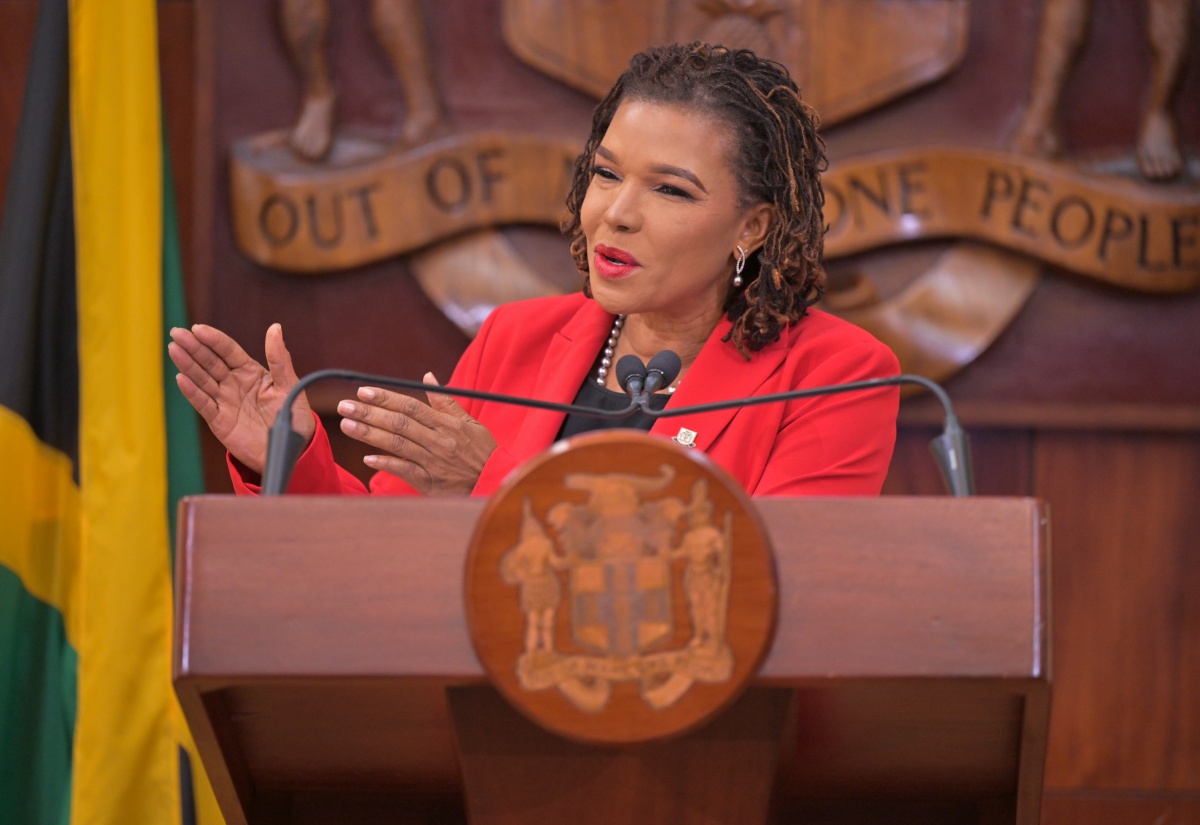
Photo: Yhomo Hutchinson
Minister without Portfolio in the Office of the Prime Minister with Responsibility for Efficiency, Innovation and Digital Transformation, Ambassador, the Hon. Audrey Marks, addresses the ceremony for the official launch of the implementation of the flexible work arrangement in the public sector at Jamaica House, St. Andrew, on January 29.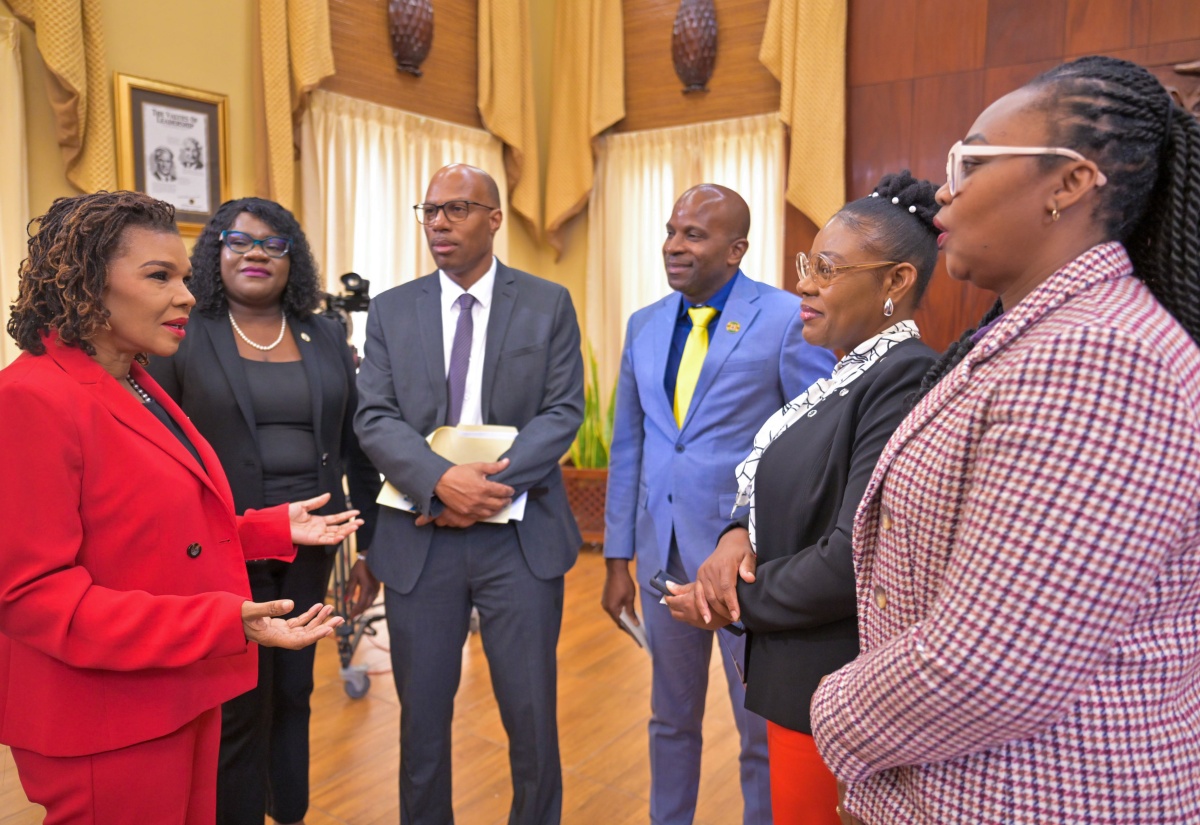
Photo: Yhomo Hutchinson
Minister without Portfolio in the Office of the Prime Minister with Responsibility for Efficiency, Innovation and Digital Transformation, Ambassador, the Hon. Audrey Marks (left), in discussion with President, Jamaica Civil Service Association, Techa Clarke-Griffiths (right), during the official launch of the implementation of the flexible work arrangement in the public sector at Jamaica House, St. Andrew, on January 29. Others present are (from second left) President of the Probation Aftercare Officers’ Staff Association, Department of Correctional Services, Kerryann Davis; President, Jamaica Confederation of Trade Unions (JCTU), St. Patrice Ennis; former President, Jamaica Teachers’ Association, Dr. Mark Nicely, and President, Jamaica Association of Education Officers, Dr. Euphemia Burke Robinson.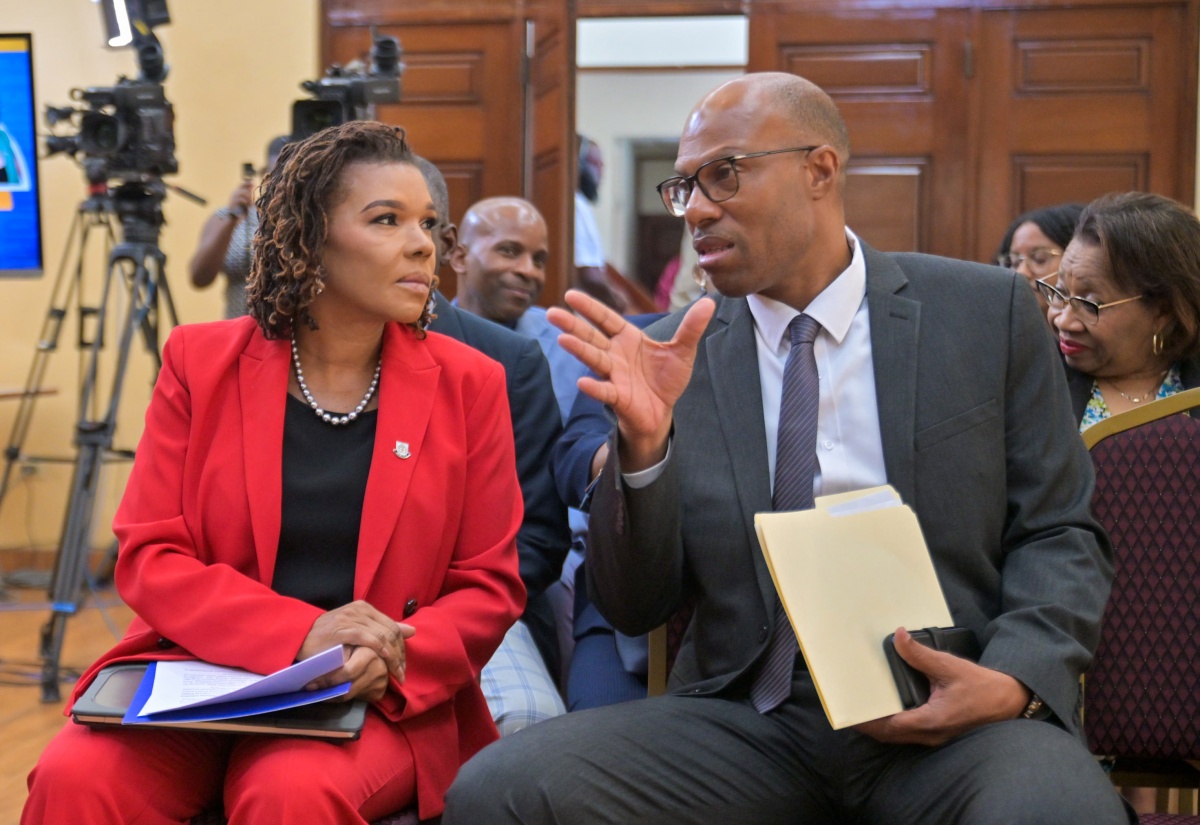
Photo: Yhomo Hutchinson
Minister without Portfolio in the Office of the Prime Minister with Responsibility for Efficiency, Innovation and Digital Transformation, Ambassador, the Hon. Audrey Marks (left), in discussion with President, Jamaica Confederation of Trade Unions (JCTU), St. Patrice Ennis, during the official launch of the implementation of the flexible work arrangement in the public sector at Jamaica House, St. Andrew, on January 29.The Full Story
The Government has officially launched the implementation of flexible work arrangements within the public sector, starting on a phased basis on February 2, 2026, with staggered working hours.
The staggered working hours include 6:30 a.m. to 3:00 p.m.; 7:30 a.m. to 4:00 p.m.; 8:30 a.m. to 5:00 p.m., 9:30 a.m. to 6:00 p.m., and 10:30 a.m. to 7:00 p.m.
Minister of Efficiency, Innovation and Digital Transformation, Ambassador, the Hon. Audrey Marks, said the implementation represents an important and deliberate step in Jamaica’s ongoing public-sector transformation programme.
Minister Marks noted that the initiative is designed to build a public service that is more efficient, accountable, customer focused and better equipped to meet the needs of a modern Jamaica.
“There are approximately 32 government entities that have already implemented some aspects of the Flexible Work Programme and have shared positive feedback. So, we are now going into the full implementation of flexible work arrangements starting on a phased basis on February 2, 2026,” she said.
“I wish to highlight that traditional working hour 8:30 a.m. to 5:00 p.m. in the public sector will remain available to all employees,” the Minister said.
Ambassador Marks was addressing the official launch of the programme at Jamaica House on January 29.
The Minister said while the implementation of staggered working hours is not mandatory, it is strongly recommended.
“Given the nature of employees’ duties, staggered working hours may not be available to all categories of staff, but where there is flexibility, the government entities are encouraged to implement Flexible Working Arrangements and those that have implemented it before will, of course, continue,” she said.
In 2014, Jamaica introduced the Employment Flexible Work Arrangements Miscellaneous Provisions Act, which established a legal framework for flexible work arrangements.
The law strikes a careful and necessary balance, supporting worker well-being while maintaining standards, service standards and organisational performance.
The law facilitates options such as staggered working hours, hybrid work, telecommuting, compressed work week and banking of hours.
Ambassador Marks noted that the launch signals the Government’s intention to move beyond policy into systematic implementation, starting with the public sector.
She added that flexible work arrangements directly support the objectives of the Public Sector Transformation Programme (PSTP), especially its focus on improving service delivery, strengthening performance management and modernising human resource systems.
“On the PSTP, we are shifting from a process-driven public service to a results-oriented one. Flexible work arrangements reinforce the shift by encouraging managers to focus on outputs, service quality and accountability, rather than hours spent in the office. This is fully consistent with the programme’s emphasis on performance-based management and continuous improvement,” she said.
The Minister pointed out that for public-sector employees, flexible work arrangements offer tangible benefits, adding that it promotes better work-life balance, reduces commuting costs and time, and supports mental health and physical well-being.
“For the government, as an employer, flexible work arrangements enhance our ability to attract and retain talent, improve staff morale and optimise the use of public resources,” she said.
She added that it also allows ministries, departments, and agencies to optimise use of physical and human resources, while maintaining or improving productivity and efficiency.
Importantly, the initiative complements other key PSTP reforms, including digital government initiatives, the use of shared services and the modernisation of business processes.
The Ministry of Finance and the Public Service has prepared guidelines on the implementation of staggered work hours with consideration for core working hours.
Implementation oversight will be executed by the Ministry of Efficiency, Innovation and Digital Transformation, in collaboration with the Ministry of Finance and the Public Service and the Ministry of Labour and Social Security.
Ambassador Marks said in the coming weeks she will be reaching out to the private sector through the PSOJ, to discuss total adoption across the private sector.
In welcoming the initiative, President, Jamaica Confederation of Trade Unions (JCTU), St. Patrice Ennis, said this approach recognises the daily realities faced by workers, including the long commutes, the transportation costs, the family responsibilities and the need for greater resilience in an increasingly uncertain environment.
“We particularly acknowledge the inclusive approach adopted through consultation with key stakeholders, including the trade union movement… . We note this initiative is grounded in an established legal and policy framework and is being pursued through a phased approach,” he said.
“This allows for careful monitoring, evaluation, and adjustment as the programme evolves. From the perspective of the JCTU, flexibility must never mean insecurity. Flexible work arrangement must enhance work not erode rights,” he added.
He added that the initiative must not be used to weaken terms and conditions of employment, bypass collective bargaining, or impose unilateral changes without consultation.