



Road Users Urged to Exercise Caution During Busy Festive Season
By: , December 20, 2025
Photo: JIS File
Corporate Communications and Public Relations Manager, Island Traffic Authority (ITA), Dontae Matthews.The Full Story
The Island Traffic Authority (ITA) is appealing to road users to exercise greater caution during the busy festive season to prevent road crashes and fatalities.
ITA statistics for December 2024 indicate that fatalities recorded in the seven days leading up to Christmas day accounted for 42 per cent of total deaths for the entire month of December.
The total number of road deaths recorded in December 2024 was 28 from 23 fatal crashes.
Noting that the Christmas season typically brings increased traffic activity, Corporate Communications and Public Relations Manager at the ITA, Dontae Matthews, tells JIS News that heightened vigilance by all road users is important in avoiding road crashes.
“During the Christmas season, we normally see heavier traffic because there are persons going about their business, going to get supplies, going out, going to pick up family members from the airport, just generally traffic on the road. We also see more social events – parties, family gatherings – and these also cause [congestion] on the roads,” he says.
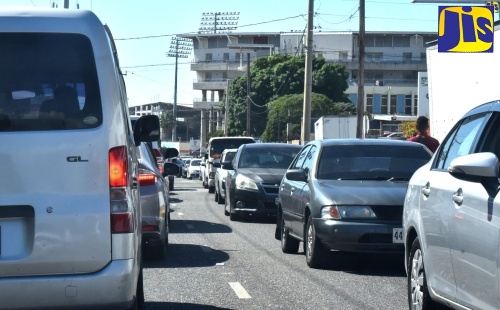
The ITA Public Relations Manager says there are simple safety measures that all road users can observe, including avoiding speeding, obeying traffic lights and signage, keeping a safe following distance, and only overtaking when it is safe to do so.
“We want persons to obey the speed limits. We have a tendency to break the speed limit and even though we know that there is a grace limit, sometimes we even break that grace limit. Persons must obey the speed limits,” he appeals.
Warning that distracted driving can cause crashes, Mr. Matthews is urging drivers to be alert when getting behind the wheel.
“Avoid distractions and when we talk about distractions, we are talking about the three main types of distractions –manual distraction, when the driver takes their hands off the steering wheel; visual distraction [where] the driver takes their eyes off the road; and then we have the cognitive distraction when drivers take their mind off the road,” he explains.
“We are asking persons to do what it takes to avoid those distractions, especially when it comes to using cell phones or other electronic devices,” he implores.
Mr. Matthews further urges persons not to drive under the influence of alcohol.
“Never drink and drive. That’s another thing that we must keep in mind for this Christmas season. Nothing is wrong with having a drink, but if you are going to drink, do not drive. What you need to do is designate a sober driver. If you plan to consume alcohol, (then the designated) sober driver should not be drinking and should commit to driving to taking you and other passengers home safely,” he points out.
Mr. Matthews says there are safety precautions when using the highways.
“Another tip for motorists is merging on highways. When you are merging, use indicators and check your mirrors before entering the highway or before you merge into traffic on the toll road. There are major speed limits on the toll roads. On the north-south highway it is 80 kilometres, on the PJ Patterson Highway, the speed limit is 110 kilometres, and the section that goes to Williamsfield, that is 80 kilometres. Persons need to obey those speed limits,” he says.
He is further reminding drivers to engage the appropriate gears for inclines and to familiarise themselves with the exits on highways.
With anticipating heavy travel to hurricane Melissa impacted parishes, Mr. Matthews says that drivers should be vigilant when traversing these areas.
“Visibility is limited in these areas, and the roads are usually narrower. Drivers should reduce their speed and watch out for pedestrians, livestock, and pedal cyclists who may be in areas that are not well lit. Motorists should also avoid overtaking on blind corners. That is something that you should not be practising at all,” he says.
Mr. Matthews warns drivers to proceed with caution when approaching corners or going around bends as some roads have been significantly damaged by floodwaters from the passage of the storm and are unpaved or uneven.
He says motorists must ensure that vehicles are in good working order for road trips.
“Ensure that your vehicle is well maintained and you have enough fuel because you do not want a case where you are out of fuel or your vehicle breaks down and you cannot get to anybody for help. So, you want to ensure that your vehicle is in good condition before going to those rural areas. Ensure that if you are coming from the Corporate Area or another parish, get everything in place before you go to those parishes,” he advises.
The ITA Public Relations Manager further encourages drivers to plan routes ahead of time and to begin the journey well in advance to avoid traffic congestion and other hazards.
“Some common hazards include… what is called mixed traffic. So that’s when we have drivers, motorcyclists, pedestrians, pedal cyclists, all kinds of road users in the same space. That can be a hazard, especially for those who are most at risk. When we talk about most at risk, we’re talking about the pedestrians, the pedal cyclists, the disabled road users. So those persons are at risk in mixed traffic,” he notes.
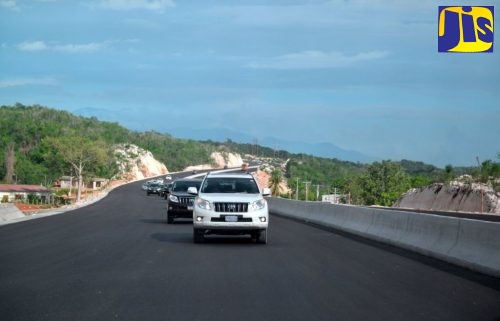
For pedestrians and cyclists, Mr. Matthews says visibility is the best protection for these road users.
“Last year, we lost 69 pedestrians and 15 pedal cyclists for the whole year. We are asking them to wear bright or reflective clothing and use designated crossings,” he says.
As it relates to pedal cyclists, Mr. Matthews says “They need to ensure their bicycles are working right and they should ride in a single file to the left curb going in the same direction as traffic and not in the middle of the road. They should not hold on to moving vehicles or other pedestrians”.
“For pedestrians, they must cross at safe places such as pedestrian crossings, pedestrian bridges, at a signalised intersection or at the traffic light when the light is on red for the drivers to stop. They should wait until all vehicles come to a complete stop and not a rolling stop,” he notes.
Mr. Matthews says that motorcyclists and pedestrians should also avoid walking or cycling while distracted especially by mobile phones.
“Both pedestrians and cyclists must stay aware of traffic flow and avoid sudden unpredictable movements,” he adds.