


Youth Farmers Given Opportunity to Grow New Apple from Kenya
By: , December 2, 2025
Photo: Garfield Angus
Executive Director of the Jamaica 4-H Clubs, Peter Thomas (third right), observes while Brand Ambassador for the Wambugu Apple, developed in Kenya, Catherine Wambugu (fourth right), leads a recent planting exercise held at the Ebony Park Agro Park in Clarendon.
Photo: Garfield Angus
Brand Ambassador for the Wambugu Apple, developed in Kenya, Catherine Wambugu (left), addresses the audience at a recent training session on Wambugu Apple production and seedling distribution held at the Ebony Park Agro Park in Clarendon.
Photo: Garfield Angus
Brand Ambassador for the Wambugu Apple, developed in Kenya, Catherine Wambugu (right), points out planting techniques, during a recent training session on Wambugu Apple production and seedling distribution, held at the Ebony Park Agro Park in Clarendon. At left is Chief Executive Officer of the Agro-Investment Corporation (AIC), Vivion Scully.The Full Story
Executive Director of the Jamaica 4-H Clubs, Peter Thomas, says youth farmers are interested in things new and are innovative, and producing Wambugu Apple is one of them.
The Executive Director said the apple can generate great wealth and presents a great opportunity for growth in the agricultural sector, as Jamaica consumes thousands of apples, most of which are imported, and this is causing significant depletion of hard currencies.
“There is no apple that you can get in the market for under $100. So, this is an excellent opportunity for us to develop our own industry. We are at the embryonic stage now, and what we need to do is to invest in planting material and then we springboard from there,” he told JIS News in a recent interview, while attending a training session on Wambugu Apple production and seedling distribution, at the Ebony Park Agro Park in Clarendon.
Wambugu Apples are a variety developed in Kenya that is known for its ability to grow in warm, tropical climates where most other apples cannot. These apples are crisp, sweet, and juicy, with red and yellow specks. A key advantage is that they can start producing fruit as early as nine months after planting, with mature trees yielding hundreds of apples per year.
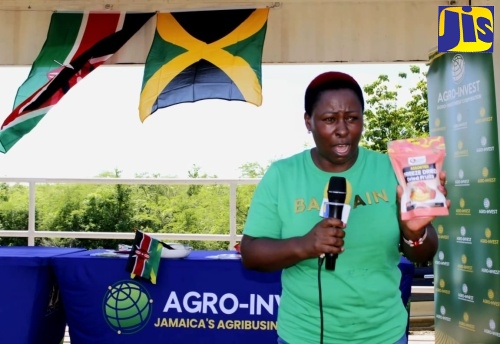
Brand Ambassador for the Kenyan-based Wambugu Apple, Catherine Wambugu, told the farmers that when they plant today, it is not “about you but also the generation to come, as the plants last for decades and take only nine months to bear”.
“The management is not so hard. You make sure that you have manure and water. If you have 1,000 plants, and one tree is giving you about, let’s go to the lowest, 300 fruits, so you multiply that by 1,000, that is big money to the country,” she said.
Jamaica imported over 1.4 million kilogrammes of apples last year, costing more than $260 million. One acre can hold up to 500 Wambugu trees, and the apple can thrive in hot or cool conditions. When mature, it can yield up to 500 apples per tree within a five-year period, and with proper care, it can produce as much as 30 to 40 tons per acre annually.
Meanwhile, Chief Executive Officer of the Agro-Investment Corporation (AIC), Vivion Scully, said that “we spend so much money importing apples, that it is nice to finally have one that can take root in Jamaica, not just in the supermarket or in the refrigerator but for export”.