

Parnassus Agro-Park Irrigation System Withstands Hurricane Melissa’s Impact
By: , December 10, 2025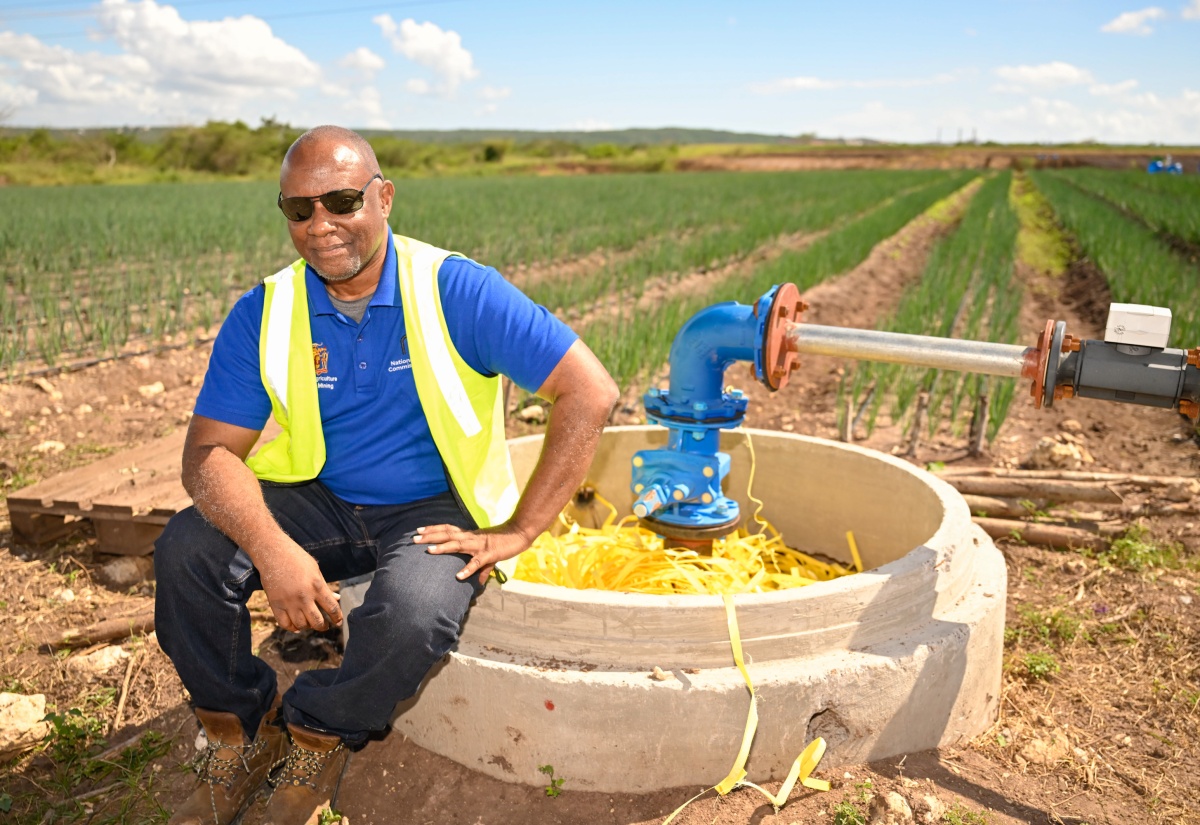
Photo: Donald De La Haye
Southern Plains Agricultural Development Project (SPADP) Project Manager, Wayne Williams, sits beside one of the National Irrigation Commission’s unit chambers supplying water to farms at the Parnassus Agro‑Park in Clarendon, during a visit on Tuesday (December 9). The agro‑park’s irrigation infrastructure sustained minimal damage during Hurricane Melissa, enabling farmers swift access to water as they rebuild their livelihoods.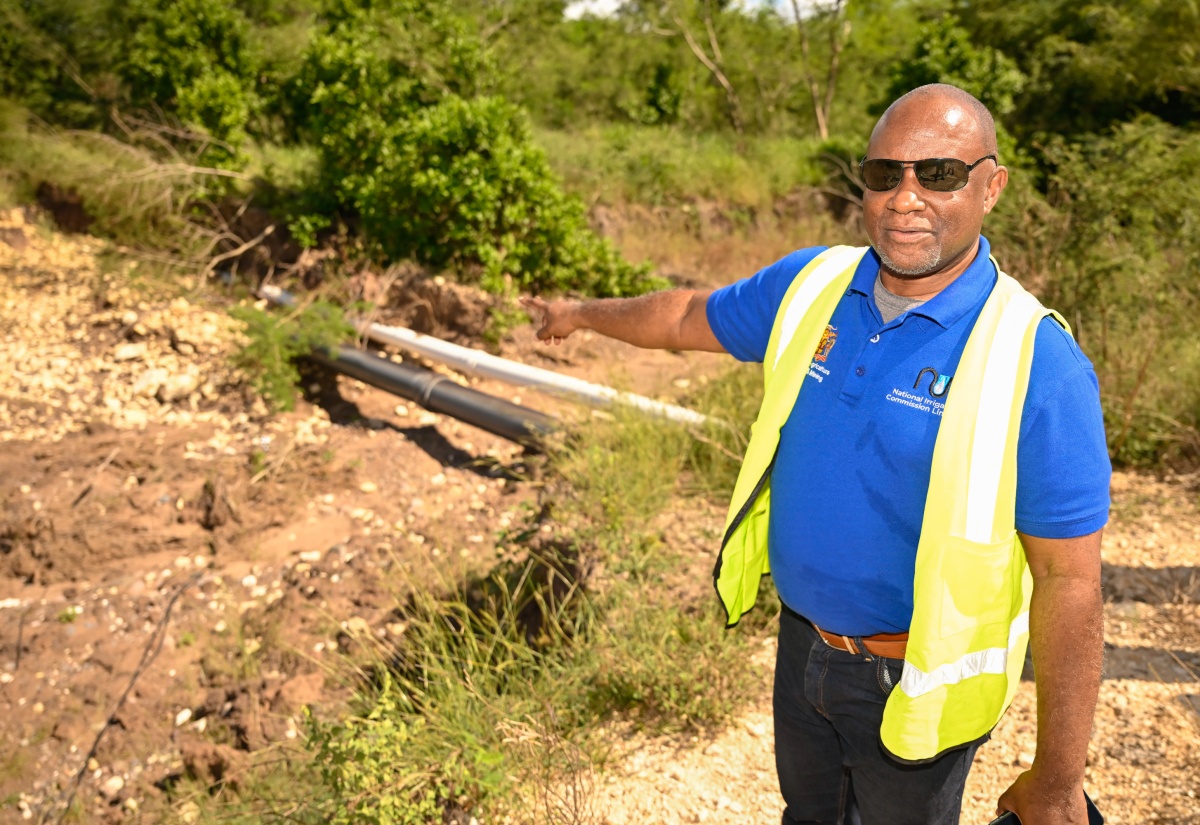
Photo: Donald De La Haye
Southern Plains Agricultural Development Project (SPADP) Project Manager, Wayne Williams, points to a pipeline exposed when a section of a secondary road at the Parnassus Agro‑Park in Clarendon was destroyed during Hurricane Melissa, during a visit on Tuesday (December 9). While much of the agro‑park withstood the storm, initial estimates place road repairs at approximately $10 million.The Full Story
Minimal damage to the core irrigation infrastructure at the Parnassus Agro‑Park in Clarendon enabled farmers to regain quick access to water as they rebuild their livelihoods following Hurricane Melissa.
The agro‑park forms part of the Southern Plains Agricultural Development Project (SPADP) and was commissioned in April 2025.
It utilises former sugar-cane lands for cultivating cash crops for small, medium, and large‑scale farmers.
SPADP Project Manager, Wayne Williams, told JIS News on Tuesday (December 9) that the scope of the project included infrastructure such as paved primary roads and secondary farm roads, along with pump houses, pipelines, and irrigation unit chambers that supply water to the farms.
He noted that following the major Category Five hurricane, an initial assessment confirmed the integrity of the infrastructure, with damage limited to some secondary roads.
“The first assessment that we did, we came and looked at our pump houses and, as you can see, we didn’t sustain any damage here. We also did a complete tour of the park area [where] the majority of the roads have stood up very well… but we did have some secondary roads that were impacted,” the Project Manager said.
Mr. Williams stated that repairing the damaged secondary roads is a priority, as they provide access to farming lots.
He revealed that one secondary road was extensively damaged, leaving a pipeline exposed. However, the pipeline remained intact, and water supply to farms at the agro‑park was not disrupted.
Mr. Williams disclosed that the initial estimate for all road repairs stands at approximately $10 million. He noted, however, that the project remains within its defects liability period, and the contractors will, therefore, undertake the repairs at no cost to the Government.
Additionally, the SPADP is collaborating with the National Irrigation Commission (NIC) to clear fallen trees and debris from farming lots at a cost of approximately $5 million.
“So, the damage has been fairly minimal. The overall park came through fairly well, [but] where we had impacts on the infrastructure, it was bad,” Mr. Williams told JIS News.
He praised the intricate design of the drainage network at the agro‑park, which enabled farms flooded by the nearby river’s overflow and other low‑lying, flood‑prone areas to drain quickly.
“The good thing is that the farmers were not displaced. Once the areas that were flooded were back up, we were able to send water to them right away… so that was a good thing,” Mr. Williams said.
For farms that were not affected by flooding, water service resumed within two days of the hurricane once electricity was restored to the project site.
Mr. Williams said the project’s recovery plan includes essential drain maintenance and collaboration with the Agro‑Investment Corporation (AIC) and National Irrigation Commission (NIC) to support rapid recovery efforts for farmers.