


BOJ Urges Stronger Economic Resilience to Safeguard Macroeconomic Stability
By: , November 25, 2026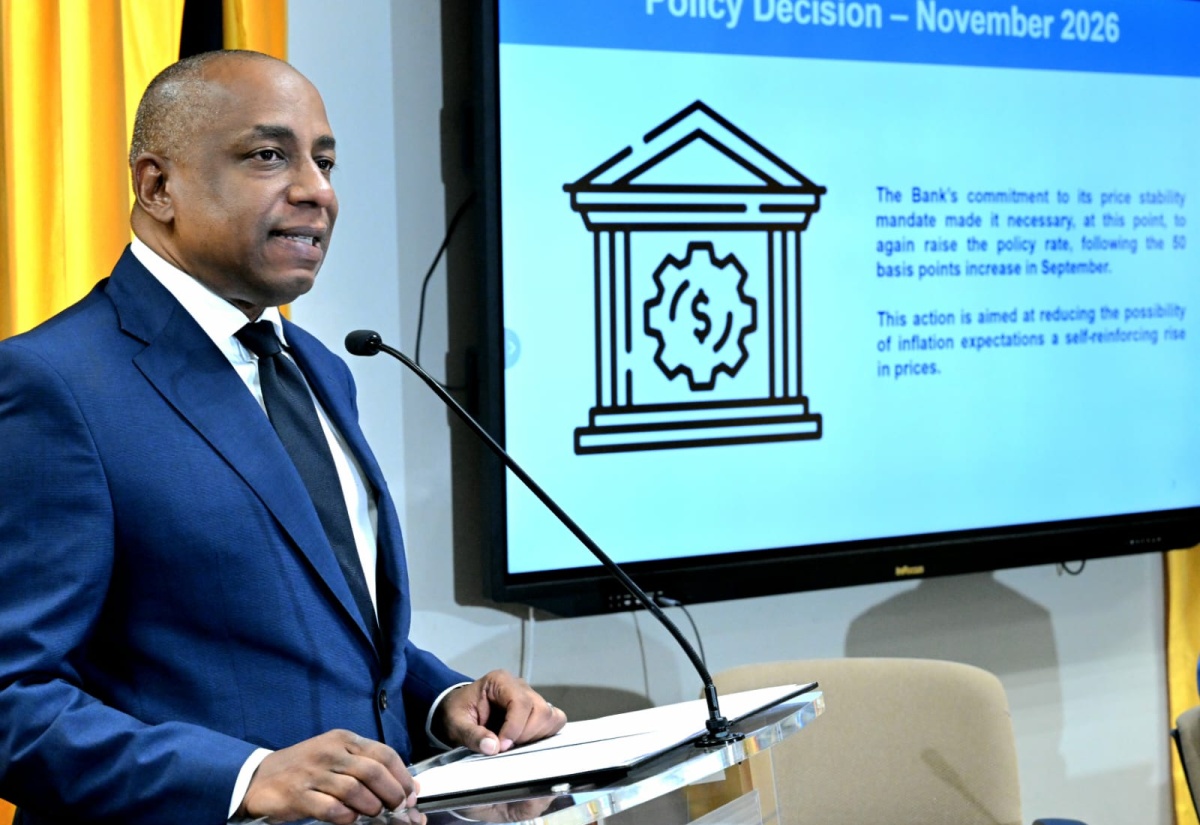
Photo: Mark Bell
Bank of Jamaica (BOJ) Governor, Dr. Brian Langrin, addresses the BOJ's Quarterly Monetary Policy Report Press Conference at its Nethersole headquarters in downtown Kingston on Monday (November 23).The Full Story
The Bank of Jamaica (BOJ) says strengthening the country’s resilience to economic shocks is critical to maintaining and improving macroeconomic stability.
Governor, Dr. Brian Langrin, underscored that Jamaica is a small, open economy that relies heavily on imported food, fuel, and raw materials, exposing the country to external and climate-related shocks.
Speaking during the Central Bank’s Quarterly Monetary Policy Report Press Conference, held on Monday (November 23), Dr. Langrin said that over the past five to six years, Jamaica has faced back-to-back global shocks.
“From the COVID-19 pandemic and its impact on global economic activity, to the conflict between Russia and Ukraine… and now the war in the Middle East. Jamaica is facing these challenges while also confronting the effects of climate change, which has intensified adverse weather, including droughts, floods, storms and hurricanes,” he noted.
Dr. Langrin added that in 2024, the country was struck by Hurricane Beryl, followed by the catastrophic Category Five Hurricane Melissa in 2025, and the more recent and intensifying El Niño weather phenomenon.
“Jamaica cannot control the global shocks that reach our shores. However, we can, to some extent, control how well we absorb the impact of some of these shocks,” he reasoned.
The Governor shared that recent research by the Bank reinforces the importance of strengthening Jamaica’s resilience to commodity price shocks.
The research, which examined the effects of global food, oil, and alumina prices on domestic inflation over a 25-year period, found that food price shocks have a substantially greater and more persistent impact on inflation than comparable shocks to oil and alumina prices.
“Food makes up about one third of Jamaica’s consumer price index basket. When food prices increase, households have limited room to adjust… and persistent increases can influence inflation expectations and future price-setting behaviour,” Dr. Langrin said.
He pointed out that monetary policy remains the Bank’s principal instrument for maintaining price stability, even in the case of persistent supply shocks.
However, the Governor maintained that interest rates cannot prevent drought, restore damaged crops, or repair a disrupted food supply chain.
“We must, therefore, look beyond interest rates and examine whether complementary measures can help reduce the economy’s vulnerability to these shocks,” Dr. Langrin said.