


NEPA Conducting Ground-Truthing to Assess Hurricane Melissa Damage
By: , December 23, 2025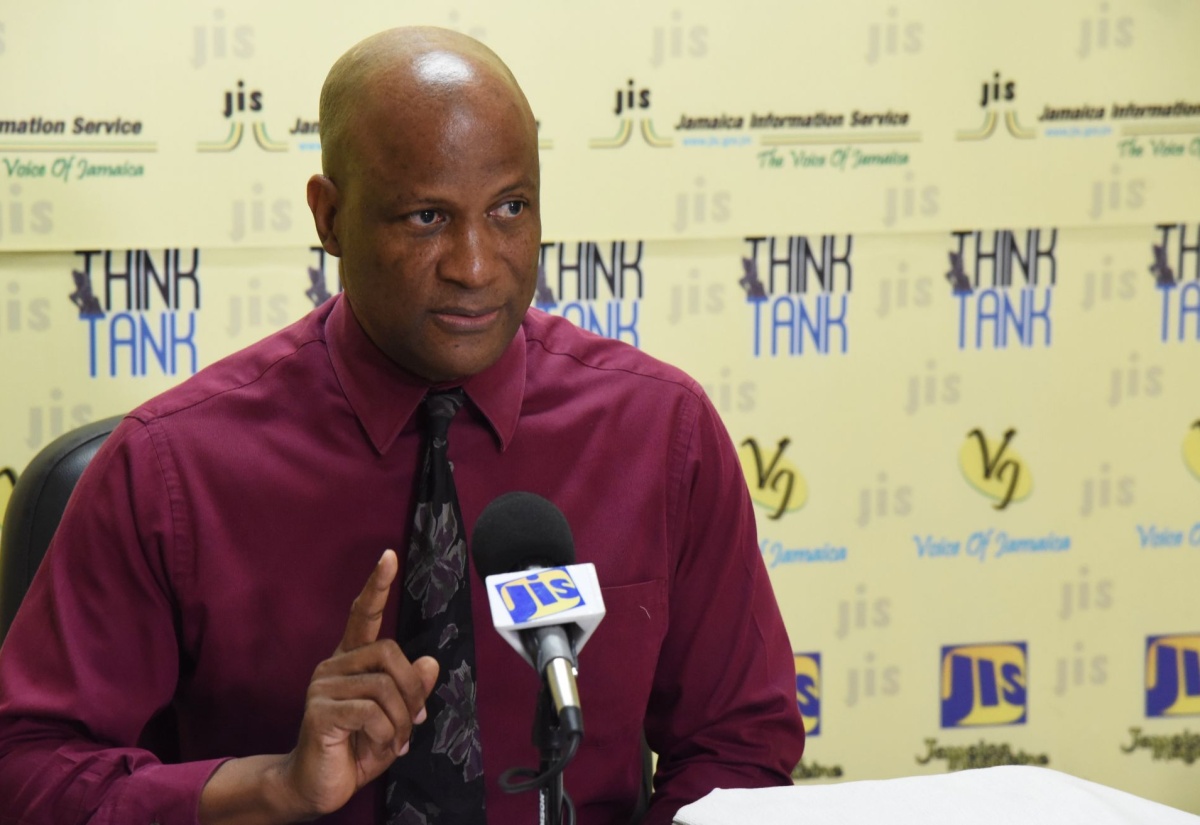
Photo: JIS File
National Environment and Planning Agency (NEPA) Deputy Chief Executive Officer in charge of Environmental Management and Sustainability, Anthony McKenzie.The Full Story
The National Environment and Planning Agency (NEPA) is currently undertaking ground-truthing activities to assess the damage caused by the recent passage of Hurricane Melissa.
Ground-truthing is the validation of remotely collected data (from satellites, aerial surveys, drones, or sensors) by conducting direct, on-site observations.
This ensures that what is seen in imagery or models truly reflects conditions on the ground.
Speaking recently on the Jamaica Information Service (JIS) television programme, ‘Get the Facts’, NEPA’s Deputy Chief Executive Officer (CEO) in charge of Environmental Management and Sustainability, Anthony McKenzie, said the hurricane significantly damaged important ecological systems, particularly in St. Elizabeth and Trelawny.
“There is the Black River Protected Area, that includes the upper and lower [Black River] morass. They are Ramsar sites, internationally renowned. Then, of course, we have the Cockpit Country, which is a protected area as well, because it has significant natural resources, biodiversity… over a hundred endemic species of plants found nowhere else,” he stated.
“Of course, over 28 endemic birds occupy there, and then two significant local endemic parrots – the Yellow Bill and the Black Bill; they inhabit that entire Cockpit Country area… 78 hectares of land… that area was devastated. We’re still doing our assessments as we enter the area… inaccessibility problems exist. But the assessment, so far, is pointing to significant damage to those two ecosystems,” the Deputy CEO added.
Mr. McKenzie stated that, according to the Forestry Department, approximately 50 per cent of Jamaica’s forested areas were impacted by the hurricane.
He noted that initial assessments revealed the vegetation was severely decimated, creating the impression that “all was lost”.
“At this point, we’re seeing some recovery. I think the lesson that we’re learning is that it’s important that as we build our natural resilience, that we keep these areas healthy and functional so that they are able to bounce back in the event of these [severe weather] systems,” Mr. McKenzie stated.
“So, trees, to some extent, will recover over time. The healthier they are before, then the quicker they’ll recover. [In relation to] animal species, birds in particular, it would be significantly impacting the bees population. Some would have moved out of the area where possible… but certainly, the habitat would have been denigrated because they inhabit certain species of trees,” he added.
Mr. McKenzie told JIS News that the Agency has been assessing the damage manually, by going into the field to measure, visualise and observe.
“Also, we use drones to assist us in the coverage, as well as satellite imagery. Because, from that, you can get pre- and post-pictures so that you can actually do the assessments using software [designed] to make the assessment. But, of course, ground-truthing can never be discarded, where you’re going inside and actually making the observation. Then we have particular methodologies to apply, in terms of how we collect the data, what we measure, and putting it into our databases,” he explained.
Mr. McKenzie informed that NEPA has completed an initial assessment of the damage, which is being incorporated into the National Assessment Report, coordinated by the Planning Institute of Jamaica (PIOJ).
In terms of rehabilitation and restoration, the Deputy CEO noted that while some plants may attempt to regenerate, in certain areas vegetation may be completely destroyed.
“So, for example, in some of our marshlands that are, perhaps, freshwater, if you had saline intrusion because of the storm surge, like the Black River area… those plants would die… so you might have to provide assisted growth,” Mr. McKenzie explained.
“The agency, from a policy point of view, [has] developed a restoration plan… . In fact, that plan was prepared even prior to the hurricane. So, we’re modifying that, so we can support that effort once we have the necessary resources,” he added.