



St. Catherine Agro-Park Farmer Gets Going Again After Hurricane
By: , November 19, 2025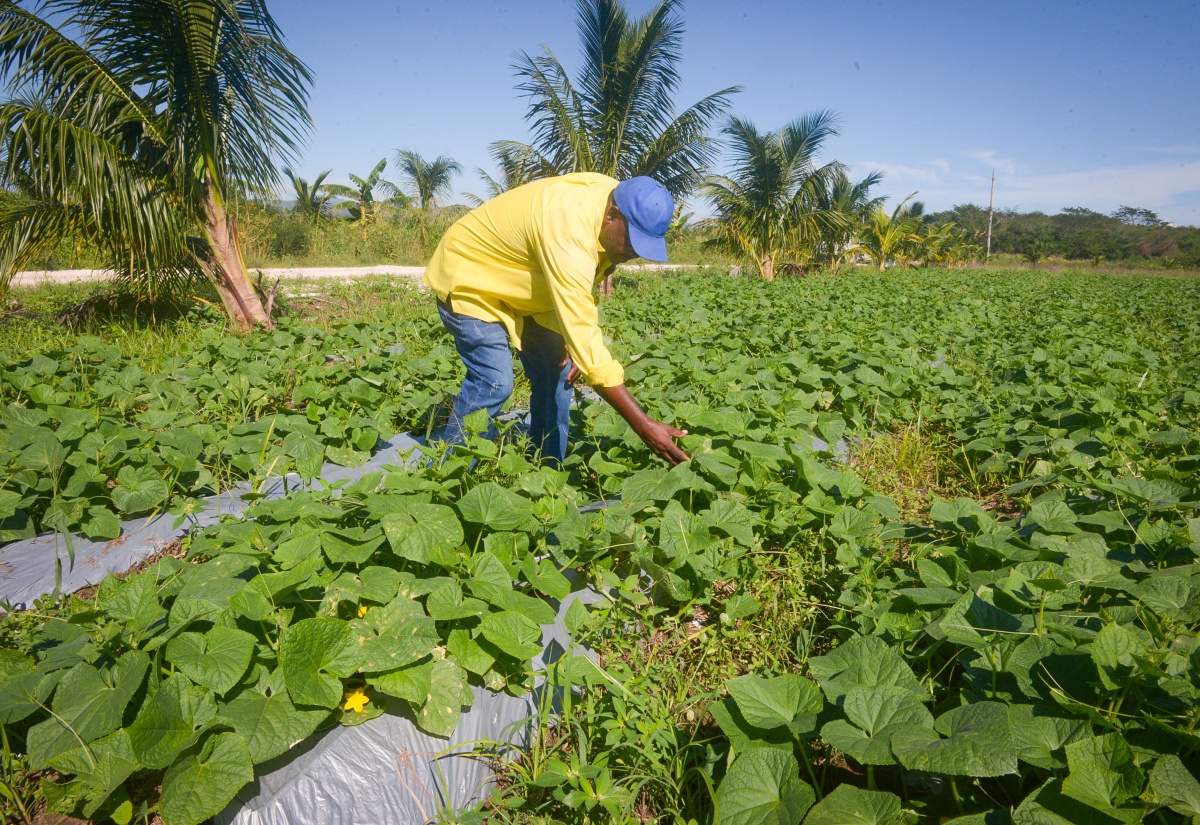
Photo: Dave Reid
President of the Amity Hall Agro-Park Farmers’ Cooperative, Codrick Farquharson, tends to his cucumber crop on Tuesday (November 18) at his farm located at the Amity Hall Agro-Park in St. Catherine. He has been diligent in his post-Hurricane Melissa recovery, as he expects that the cucumber crop will be ready for harvesting by mid-December.The Full Story
In the wake of Hurricane Melissa’s devastation on October 28, farmers across Jamaica were left to count their losses.
However, at the Amity Hall Agro-park in St. Catherine stands a beacon of resilience through the efforts of Codrick Farquharson, who has not only picked up the pieces, but is aggressively moving towards harvest.
Mr. Farquharson, who is President of the Amity Hall Agro-Park Farmers’ Cooperative, has been farming at the agro-park since 2009. He mainly plants Scotch bonnet peppers, sweet corn, sweet potatoes, pumpkins, and on a smaller scale, cucumbers, tomatoes and melons, and sells mainly to exporters and supermarket suppliers.
He is no stranger to the cyclical nature of agriculture – the highs and lows, the extreme droughts and the devastation of extensive rain and flooding. The recent category-five storm, however, dealt a serious blow to his endeavours.
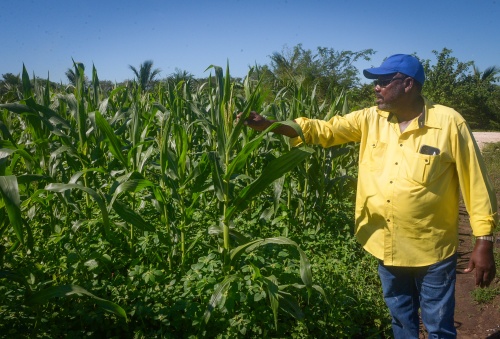
“That corn you’re looking at – everything was on its side. This cucumber which you’re looking at – it was really, really shaken up,” Mr. Farquharson says.
“But we use a lot of bio-stimulants, fungicides, insecticides, and back it up with nutrition and crop-care products and other technology, and we get it up and running. The corn is now looking good; it has made significant recovery,” he tells JIS News during a visit to his farm on Tuesday (November 18).
He also notes that he planted 10,000 Scotch bonnet pepper seedlings prior to the hurricane’s landfall in Jamaica and they were completely flooded, causing him to lose approximately 4,000 seedlings.
“If you came here after the hurricane, you’d probably just put your hand on your head, cry and walk away. But like I said, farmers are very resilient and we don’t give up. We don’t rollover and play dead,” he says with the confidence of a seasoned farmer.
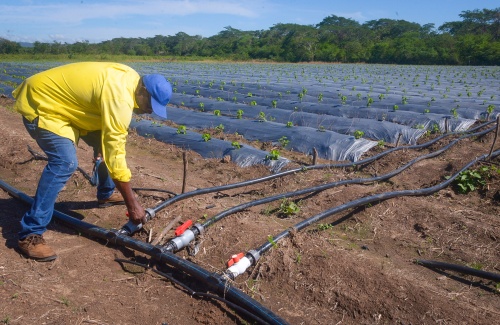
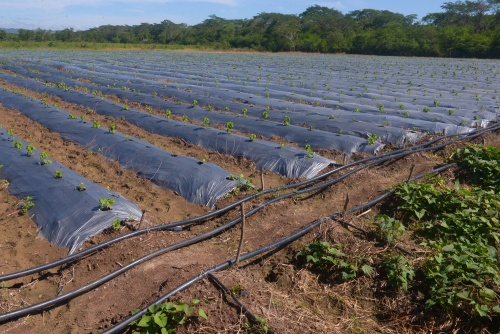
After draining the water from his field, Mr. Farquharson invested significantly and has surpassed his pre-hurricane numbers – he is now up to 20,000 Scotch bonnet pepper seedlings under plastic mulch, to reduce weed growth. He also plans to prepare land to plant more sweet corn.
Mr. Farquharson credits his speedy recovery to access to resources at the agro-park and the implementation of innovative techniques.
The infrastructure at the agro-park includes access to water, which he uses in an irrigation system for his plants, and access roads improved by the Agro-Invest Corporation (AIC), which allows him to get essential inputs to his farm.
Additionally, when Mr. Farquharson was faced with weeds almost four feet tall after the hurricane, threatening his sweet potato crop, the farmer used a risky technique to recover the plants.
“I used the agricultural herbicide named Paraquat and… normally when I try to kill tubers and vines when I want to put in a new crop, Paraquat never normally kill them. Paraquat will scorch them, and we used one paraquat and sprayed right over the entire thing,” Mr. Farquharson says.
He shares that about two days later, the longer weeds dried up, and he used fertiliser, including a lot of nitrogen, to rebuild the vegetative growth of the sweet potatoes and he has seen a marked improvement in his crop.
Mr. Farquharson says he expects that the AIC will soon visit the 28 farmers in the agro-park to hand out agricultural inputs, but Mr. Farquharson states that his recovery efforts are being completed with his personal funds.
Since the hurricane, he has invested over $750,000 into the recovery of his Scotch bonnet pepper crop alone, with approximately $250,000 for seedlings and more than $500,000 into other inputs, labour and fertiliser.
Looking ahead, Mr. Farquharson anticipates a spike in prices for produce this Christmas season, as a significant number of farmers are not back in production, which will lead to scarcity and demand driving up prices.
He points out that high market prices are not always associated directly coming from the farmer, but from middle persons like vendors who add exorbitant amounts to ensure a high profit.
Despite the challenges, Mr. Farquharson expects that by mid-December he will be able to harvest at least 10,000 pounds of cucumber from his small plot and 1,000 dozen ears of corn.
He remains cautiously optimistic that he will at least break even from his Scotch bonnet peppers, if not make a small profit, while also fulfilling the important role of putting much-needed supply back on the market.